Contentious vote on controversial Central KY industrial park set for Wednesday
AI-generated summary reviewed by our newsroom.
- Franklin County Fiscal Court to vote Wednesday on 175-acre zone change request
- Industrial park proposal draws lawsuits, ethics complaints and resident pushback
- Regional funding approved; critics cite farmland loss and infrastructure gaps
The Franklin County Fiscal Court is expected to vote this week on a contentious zone change for an industrial park on the Franklin and Anderson county line.
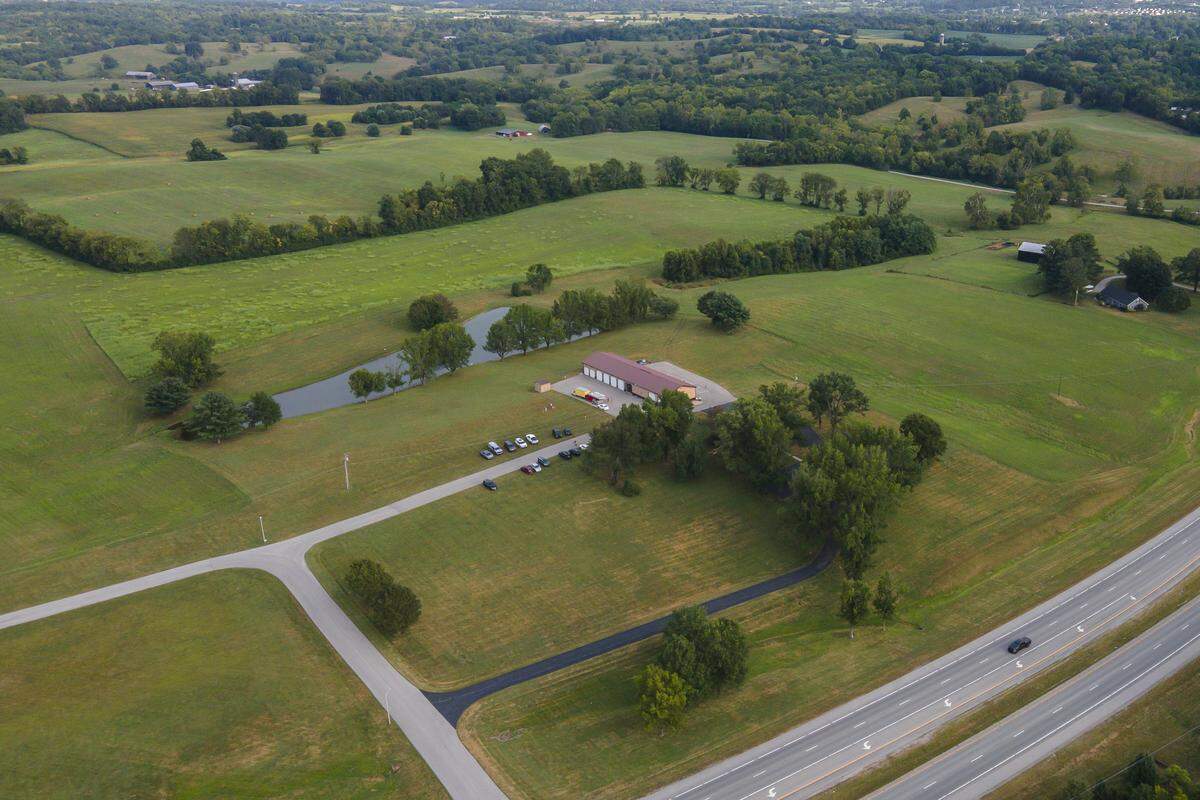
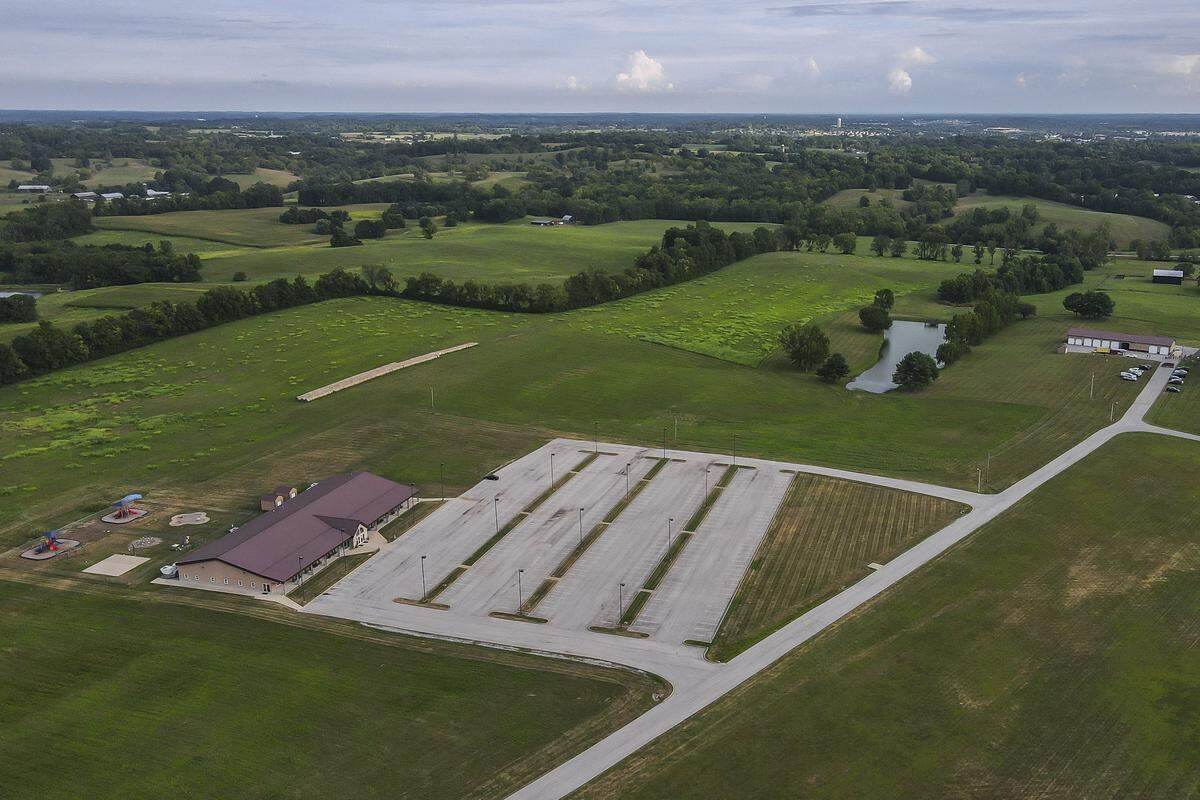
The proposed 175-acre industrial park along U.S. 127 has sparked a more than 10-month fight over land use in Franklin and Anderson counties. Two lawsuits and multiple ethics complaints have already been filed over the proposed industrial park.
The Fiscal Court on Wednesday will vote on the zone change from rural residential to a planned commercial district for the 175 acres. The Frankfort-Franklin County Planning Commission voted 5-3 in late July to approve the zone change after two contentious meetings.
Supporters of the industrial park say Franklin County has little or no industrial land and needs a new business park to bring in a more diversified work force.
The state’s Kentucky Product Development Initiative, which encourages creation of regional parks, has already approved funding for the creation of the proposed regional park.
The 175-acre proposed park is overseen by a new two-county industrial board called the Franklin-Anderson County Commerce and Technology District or FACT district. As part of that agreement, Lawrenceburg, Frankfort and Franklin and Anderson counties have agreed to put money into the park and would split occupational taxes from jobs created there.
Frankfort Mayor Layne Wilkerson said the future industrial park could be a boon for both counties, Lawrenceburg and Frankfort. Wilkerson and the city commission have no say on the proposed zone change.
“We need to strengthen our economy and bring higher income jobs to the region,” Wilkerson said.
Those who oppose it say the creation of the park has not been transparent and question why some members of the planning commission were allowed to vote on it, given perceived conflicts of interest. Others say the karst geography of the area makes the site less than ideal and the two counties need to do more to protect farmland.
More than 700 people have signed an online petition opposing the creation of the new park, according to opponents of the park.
Nate Jones, a critic of the project, urged the Franklin Fiscal Court to vote against the zone change in an email, which he provided to the Herald-leader. There have been too many questions about the park and how it was created, he said.
“There are too many unknowns to vote yes on this re-zoning,” Jones wrote. “If there is still a need, the market will let you know. Then you can make an informed decision that is not so clouded in back door deals, half-truths, and lawsuits.”
How land for park was added to the comprehensive plan
The debate over the creation of the park dates back to October, when the Frankfort-Franklin County Planning Commission was expected to take its final vote on the county’s comprehensive plan, a document that guides development and says what types of development can go where.
An advisory committee of community members, which included members of the business community, had recommended the county set aside 600 acres around Twilight Trail for future industrial development. Some in the business community had asked the advisory committee to consider setting aside 1,000 acres near the Anderson County line along U.S. 127.
John Carlton, who was a member of that advisory committee, said at a public meeting at Paul Sawyier Public Library in November 2022, where both the advisory committee recommendations and the business community’s request for 1,000 acres were proposed, the community choose the advisory committee’s recommendations.
But during an October Planning Commission meeting, commission member Timothy Luscher made a motion to amend the proposed comprehensive plan to include the 1,000 acres along U.S. 127 for future industrial development.
That was not what the advisory committee had recommended, Carlton said.
In those 1,000 acres is the 127 acres for the proposed park. If the comprehensive plan and land use map shows that land is for future industrial use, it is easier for a zone change to be approved.
Another Planning Commission member, Bill May, recused himself from the vote during the October meeting because his sister-in-law had property in the area, according to the Frankfort State Journal and recordings of the meeting.
Luscher verbally resigned during the October meeting after the commission voted 4-3 to add the 1,000 acres of industrial land to the comprehensive plan.
But because of a technical issue, the planning commission returned at its November meeting to re-vote on the comprehensive plan. Luscher rescinded his resignation and May did not recuse.
Luscher and May voted in favor of the additional 1,000 acres at the Nov. 14 meeting. The final vote at that meeting was 5-4. if Luscher or May had not voted, there would not have been a quorum of planning commission members and the vote would have failed.
Luscher, who owns Sig Luscher Brewery, has a $250,000 pending loan application with the Kentucky Capital Development Corporation, one of the groups who has pushed for the creation of the park, according to KCDC agendas. According to meeting minutes, the application was moved forward on July 10.
Carlton and Envision Franklin County, a local land use advocacy group, filed a lawsuit in Franklin Circuit Court in December challenging the last-minute addition of the 1,000 acres. The lawsuit argues Kentucky state law requires research and other due diligence before a city or county changes its land use maps.
That was not done before the 1,000 acres was added, they argued.
The group also filed a motion to stop the zone change for the 127 acres from moving forward.
In June, Franklin Circuit Judge Phil Shepherd declined to issue an injunction that would have stopped the zone change from moving forward.
Carlton also filed a lawsuit against Franklin Fiscal Court for open records violations for records Carlton and others have asked for about the zone change and the addition of the 1,000 acres.
Both lawsuits are still pending, Franklin Circuit court records show.
Dueling ethics complaints
In addition, Luscher filed an ethics complaint in January against fellow Planning Commissioner Brent Sweger, who voted against adding the 1,000 acres. Luscher said Sweger’s membership in Envision, the group that sued over the comprehensive plan, was improper and against the city’s ethics codes, according to ethics commission documents.
In April, the city ethics commission found Sweger had not violated the city’s ethics ordinances, according to a final determination letter obtained by the Herald-Leader.
Meanwhile, Carlton has filed an ethics complaint against Luscher due to his financial ties to the Kentucky Capital Development Corporation, including a pending $250,000 loan application for his company. The city declined the Herald-Leader’s Open Records Act request for that complaint. Only completed ethics investigations are released to the public, the city said in an Aug. 19 email.
However, Carlton’s attachments to that ethics compliant, which outlines many of Carlton’s allegations about Luscher’s business ties to entities involved in the creation of the industrial park, were released by the city to the newspaper.
Luscher did not immediately return phone calls asking for comment.
“The public’s right to impartial tribunals is a cornerstone of due process. When public officials have undisclosed personal or financial entanglements that could interfere with the performance of their public duties, public trust in our institutions is corrupted,” Calrton said.
“Ethics is what gives the public trust in government. Lately, Planning Commission meetings feel like they have devolved into open, brazen defiance of disclosure and recusal requirements.”
Questions about whether it was appropriate for Luscher and May to vote on the zone change for the 175-acre industrial park resurfaced during planning commission meetings on that zone change in July. May’s sister-in-law, Judy Lee, is one of the landowners who has a contract to sell her property to the new development authority if the industrial park is approved. May has acknowledged his sister-in-law owns the land.
But a lawyer for the planning commission dismissed those concerns.
At a special-called planning commission meeting July 22, Planning Commission attorney Ed Logan told the commission: “I don’t think the conflict of interest was stated sufficiently to preclude participation and the Circuit Court will make a decision on anything like that,” Logan said before the planning commission voted to approve the zone change.
May, the former Frankfort mayor, said he spoke to attorneys before the comprehensive plan vote and the zone change. May said he was told it was not an ethics violation to vote on matters involving his sister-in-law’s property.
“I was told it was okay,” May said.
Need for more industrial land, jobs
May said he supported the addition of the 1,000 acres in the comprehensive plan and the zone change because Franklin County needs more land for industry.
It has rapidly filled up all of its industrial parks, May said, who served several terms as mayor of Frankfort.
“It’s a great opportunity to attract new jobs,” May said.
Penny Peavler, the interim executive director of the Kentucky Capital Development Corporation, which is helping oversee the creation of the new FACT District, said city and county governments are dependent on occupational taxes or a tax on wages.
Those wages have largely been paid by state government employees. For the area to grow, it needs to diversify the types of jobs in the area, she said.
“Our industrial parks are all full,” Peavler said. “There hasn’t been a new industrial park since 2009.”
The location on U.S. 127, not far from Interstate 64, is ideal. U.S. 127 is a four-lane road, which can handle the traffic, she said.
Multiple residents in that area have said the 175-acre site where the industrial park is supposed to go is problematic. There are sinkholes and caves throughout the area. That means flooding could be problematic.
Peavler, however, has said they group has done preliminary geotechnical surveys of the area.
“The study revealed that the presence of karst on the site is similar to that found throughout Central Kentucky. It poses no greater risk to the development than any other Central Kentucky location. The site will be further studied as the project advances, but there is no indication at this point that the project should not move forward in the selected location,” Peavler said.
Karst is a unique landscape formed when water dissolves soluble bedrock, primarily limestone, creating such features as sinkholes, caves or underground drainage systems.
Preservation of farmland and other concerns
Emma Gay and her family were largely unaware of the fight over Franklin County’s comprehensive plan until earlier this year when the plans for the new industrial park became public.
Gay and her family live just across the Franklin County line in Anderson County. Gay lives in her great uncle’s house and has spent time and money renovating it. Multiple members of her extended family live largely in the same area on what was once her great-grandparents, Ruddy and Emma Lee Gay’s, farm.
“I host family reunions here,” Gay said. “I can host Christmases here.”
She loves being from Lawrenceburg and Anderson County and doesn’t want to move. Neither do other members of her family.
“I don’t want to live next to an industrial park,” Gay said.
She’s engaged and had hoped to raise a family on the land. But she also has asthma. Living next to an industrial site could exacerbate it.
“All of that work to leave this great resource for me and it could end with me,” Gay said.
Melissa Nesselrode, who also lives near the proposed industrial park, said there’s a lot of environmental concerns with the proposed site. The topography is karst. Flooding could become a real problem if anything is built on that property, she said.
Nesselrode and others are also concerned there has not been enough planning for future utilities and infrastructure for the park. Lawrenceburg has said it will provide sewage to the property. But none of those details have been worked out, she said.
Plus, the area still has working farms. That farmland should be conserved, she said. Of the 1,000 acres that has been set aside for future industrial development, 35% is prime farmland and 45% is deemed farmland of statewide importance. Those determinations are largely made by soil scientists by the Natural Resources Conservation Service.
Nesselrode and others who have tried to fight the park said they are disheartened, disappointed and feel left out.
“This is not how this was supposed to work. The majority of the people in this community don’t want it,” Nesselrode said. “This is a corruption of the process.”