
$1.2B in Kentucky project requests depend on budget fight in Congress
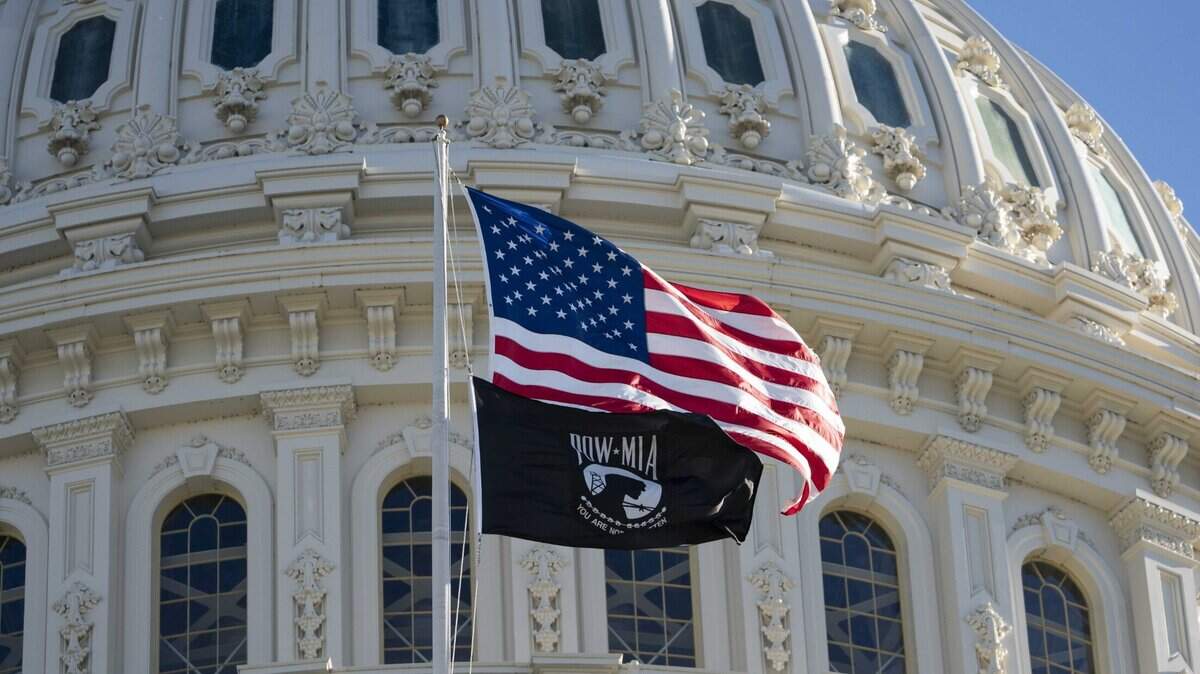
There is much to be done in Kentucky — at least, that’s what the funding requests submitted by seven of Kentucky’s members of Congress indicate.
Kentucky’s six representatives and one of its senators requested about $1.2 billion in projects via this year’s budgeting process.
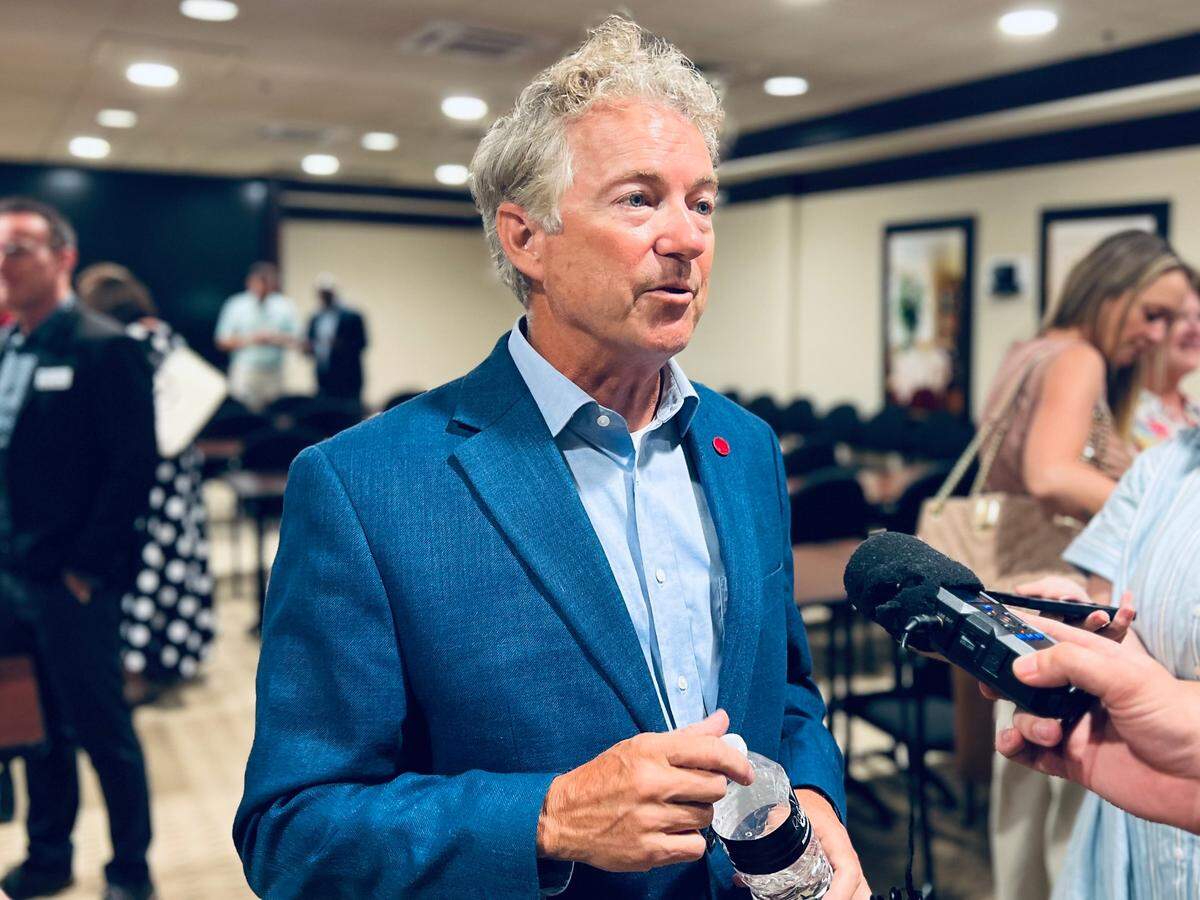
Sen. Rand Paul was the lone member who did not submit a request.
Unlike grants that are awarded through a competitive process, these projects are requested directly by members of Congress from pots of money that already exist in budget bills. Usually, they account for more than $10 billion in Congressional spending each year.
But these are not normal times for the federal budget.
Earlier this year, Congress adopted a continuing resolution to keep the government funded under the prior year’s budget, avoiding a government shutdown.
The requests — known as Community Projects Funding in the House and Congressionally Directed Spending in the Senate — were not included in the bill, and likely won’t be included if Congress has to resort to a similar budgeting process again.
That includes projects as big as a $138 million new hangar at Fort Knox, the enormous Army base south of Louisville, or as small as $96,000 for updating police equipment in Harrodsburg.
It also includes a project to benefit the long-addled water and sewer system in the Eastern Kentucky community of Martin County. While improving, water quality and high levels of water loss — down from 72% three years ago to 46% last month, still nearly three times the national average — have plagued the community for years. The sewer system that serves its county seat of Inez has also been out of compliance, according to Martin County Water Board member Nina McCoy.
That’s where a $4.8 million request filed by Sen. Mitch McConnell for the Martin County Fiscal Court comes in.
“It’s honestly needed, and I think it’s as serious as the water supply because it’s out of compliance,” McCoy said.
These projects were formerly known as “earmarks,” and were banned in 2011 during the height of anti-spending “tea party” movement over concerns about corruption and public perception of wasteful spending. They returned in 2021 and have new limitations placed on them — members of Congress have to file ethics paperwork and they can’t make up more than 1% of the entire discretionary budget, among other restrictions.
The deadline for Congress to either go through the normal appropriations process or pass another Continuing Resolution is Sep. 30, the end of the current fiscal year.
The hold up is the Senate, as 60 votes are required to break the Senate’s filibuster rule. Even in a majority-led process — Republicans boast 53 in their caucus — some Democrats need to vote to break the filibuster. That was the case for the continuing resolution to keep the government funded, though it ultimately got just two Democratic “yea” votes on final passage.
Continuing resolutions are somewhat more palatable for Democrats, according to Michael Thorning, director of the Bipartisan Policy Center’s Structural Democracy Project, for a number reasons. For one, government funding bills often get more more partisan items put in them during the budgeting process, Thorning said.
The priorities of Republicans and Democrats are also starting to drift away from consensus.
“In the last 20 or so years we’ve seen a real divergence among the two parties on spending priorities, and the appropriations process has just become increasingly difficult to find the kind of cross-partisan agreement that was once normal,” Thorning said.
Democrats are also weighing how best to push back on the wishes of their GOP counterparts and, in particular, President Donald Trump. Senate Minority Leader Chuck Schumer, D-NY, took some flack from his left flank for his support for the continuing resolution earlier this year.
While it’s unclear how Democrats will respond to this round of budget talks, they could either support a more traditional appropriations process — a handful of bills have already been passed by the Senate — go with another continuing resolution or force a government shutdown if they filibuster past Sep. 30.
Thorning added while it hasn’t been done before, there’s nothing technically barring Congress from tacking some of the requests onto a continuing resolution.
Kentucky’s requests
Most of the $50.9 million in requests coming from Central Kentucky’s 6th Congressional District Rep. Andy Barr would serve smaller communities outside of Lexington. The only Lexington-based request Barr filed was $4 million for a University of Kentucky Center for Applied Energy Research program on graphite, an important mineral that can be derived from coal.
When asked to comment on the process, much of the federal delegation saw a benefit from the Community Projects Funding and Congressionally Directed Spending programs — but not Senator Paul.
Paul has long been a fiscal hawk wary of any new spending, and notes that the program is similar to the old congressional tradition of “earmarking” projects in the budget for one’s district.
While McConnell requested $715.9 million in funding, Paul did not file a single request.
“Earmarks were banned for a reason: they’re Congress’s backroom currency of influence,” Paul wrote in a statement to the Herald-Leader. “Washington attempts to sugarcoat them as ‘Community Project Funding,’ but it’s the same slush fund for special interests.
“I’ve never filed for earmarks and never will. Kentuckians deserve transparency, not trillion-dollar bills stuffed with pork.”
Fifth Congressional District Rep. Hal Rogers, who has long been involved in the appropriations process, said that the requests offer a way to cut through the traditional red tape that comes with government funding.
“Community Project Funding requests give members of congress the opportunity to direct federal funding to projects where it is needed the most in our congressional districts. Too often, funding requests for rural communities are overlooked or slowed down by unnecessary red tape,” Rogers said in a statement, highlighting the 15 projects totaling more than $149 million that he’s requested.
There was very little Rogers asked for that he didn’t get in the initial House appropriations “markups” — the first drafts of the bills by subcommittees before they’re passed by the House. The markups kept $141 million, or about 95%, of his requests, more than half of which came from road projects for the Mountain Parkway expansion and a bypass in Somerset. That was the second-highest total of any member of Congress, according to Congressional Quarterly.
McConnell sees the requests as an opportunity to keep Kentucky “punching above its weight.”
A majority of the requests that he’s made have been included in the Senate’s appropriations bills thus far. A handful of those bills have been passed by the Senate but not the House, while others have been marked up in committee.
For instance, the $4.8 million for the Martin County wastewater treatment improvements made it through in its entirety to the marked up version of the bill funding the Department of the Interior, Environment and related agencies bill.
The same goes for the $5.4 million to the Blue Grass Airport in Lexington requested to “facilitate relocation of the airport’s air traffic control tower.” Other projects are partially funded, like $20 million of McConnell’s $24 million requested improvement funds for the Hal Rogers Parkway in Perry County shows up in the latest version of the bill, and $10 million of the requested $16 million to fund the I-69 Ohio River crossing project at Henderson made the cut.
In the latest version of the Senate bill dictating funding for Transportation, Housing & Urban Development and related agencies, it’s one of several McConnell-requested projects included in full. Of the $156.3 million he requested in the bill, $115.4 million made it through — that’s about 74%.
The total in this current iteration of the bill is higher than both states with similar population totals to Kentucky, despite McConnell being the lone senator from Kentucky to request funding.
Oregon, a state with two Democratic senators, is slated to received $47.7 million in the bill, though its senators requested $158.8 million. Louisiana is set to get $113.8 million of the $292.9 million its Republican senators requested.