
With KY delegation split, hemp ban passes. Some hope it can die another day
The passage of a bill to fund the federal government after a weekslong shutdown is the biggest story in America.
But in Kentucky, a lot of political energy has been spent on the relatively small provision in the bill that will ban the sale of hemp-derived products that include more than .4 milligrams of THC per container. Those products are most commonly sold as Delta-8 and Delta-9.
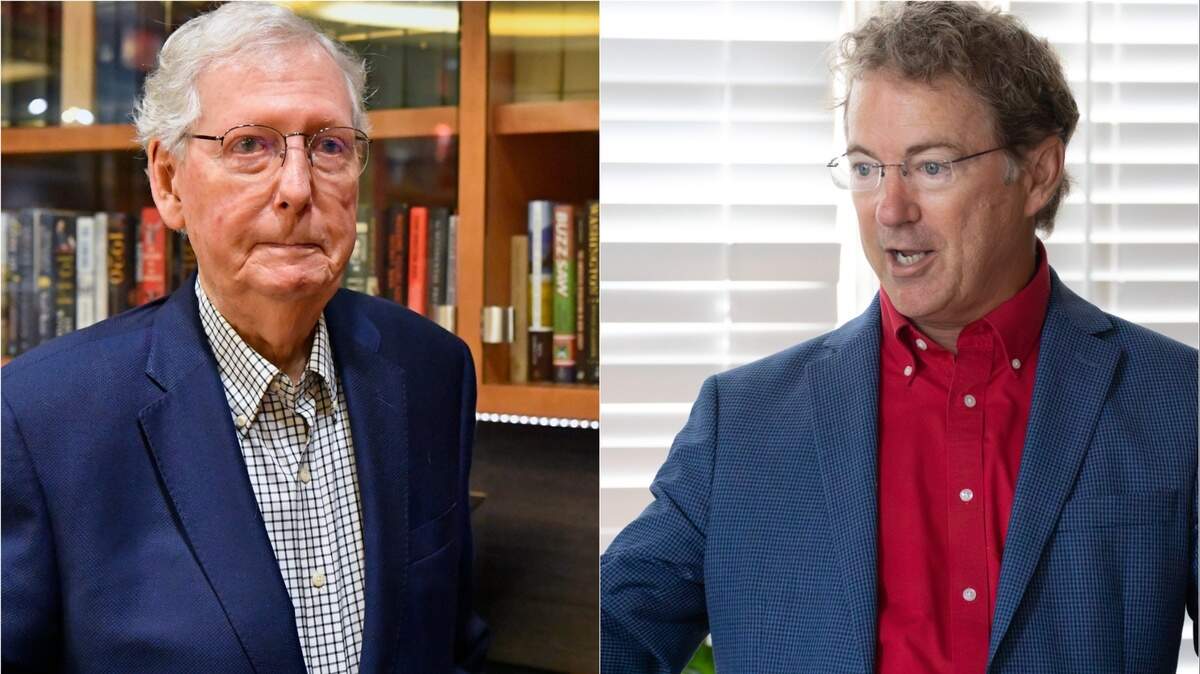
Many hemp farmers and cannabis-based product distributors across Kentucky say the language, championed by Sen. Mitch McConnell, will devastate their bottom line. Sen. Rand Paul has been the loudest opponent in the Senate, saying it will kill jobs and crush farmers in Kentucky.
“Our farmers have turned to hemp as a lifeline when fertilizer, fuel, and equipment costs skyrocketed and crop prices fell. Instead of working with us to crack down on bad actors and synthetic cannabinoids, some in Congress chose prohibition. Kentucky jobs are not collateral. Our farmers are not bargaining chips,” Paul wrote in a post to X.
McConnell says the language is necessary to protect children from consuming the intoxicating products, and adults from getting high without knowledge of what they’re getting into.
“Unfortunately, companies have exploited a loophole in the 2018 legislation by taking legal amounts of THC from hemp and turning it into intoxicating substances and then marketing it to children in candy-like packaging and selling it in easily accessible places like gas stations and convenience stores across our country. Children are unknowingly consuming these poisonous products and being sent to the hospital at an alarming rate,” McConnell said in a floor speech this week.
All of McConnell’s GOP colleagues minus Paul appeared to agree — or at least were not bothered enough to vote against the bill funding the government. Paul was the only member of the GOP conference to vote against the package.
McConnell won the fight, for now. The language was included in the deal to end the shutdown and will take effect in one year. The minimum number of Senators needed, 60, voted to pass the overall funding deal. Paul’s amendment to strike the language from the deal was killed in a decisive 76-24 vote.
It is currently legal at the federal level to sell hemp-derived THC products containing no more than 0.3% THC, the active ingredient in marijuana, by dry weight. The new language institutes a THC limit of 0.4 milligrams and would effectively ban products like Delta-8 and Delta-9.
But the regulation is not set to take effect until November 2026. CBD and hemp product advocates like Jonathan Miller, partner-in-charge at the Lexington office for Frost Brown Todd, see a path to a compromise before that time comes.
Miller called the inclusion of the language in the bill “a body blow,” but not one the industry can’t recover from.
He says that statements from opponents to CBD and low-dose THC products are overblown, but there are plenty of issues the industry is willing to work on in a deal next year.
“The focus has been on synthetics and targeting the kids, and those are issues that we agree with them on, and we’re very hopeful that we can demonstrate in the next several months that we can come up with a robust regulatory plan that cracks down on these bad actors but allows CBD products and hemp beverages and other lower-dose THC products to continue to be sold across the country,” Miller said.
The support for the McConnell-backed language in the national GOP is pretty unanimous. Most Republicans have voted for or signaled support for the overall funding package. That includes Trump. Despite many in the industry previously thinking he would side with them, a White House official told NBC News he “supports the current language in the bill on hemp.”
The divide in Kentucky includes members of the U.S. House as well as conservative figures in the state.
Republican Reps. James Comer, Thomas Massie and Andy Barr as well as Democratic Rep. Morgan McGarvey signed onto a letter opposing the language. Barr and Comer ended up voting for the bill, while Massie was one of only two Republicans to vote no, and McGarvey joined most of his Democratic colleagues in voting against it.
Andrew Cooperrider, a former GOP candidate and influencer, opposed the language in a post to X.
“You may not like hemp, but it doesn’t change the fact that small business owners have risked everything to build a legal business that, with a stroke of a pen, the government might close. It isn’t right, and it isn’t America First. That’s why McConnell is behind it,” Cooperrider said.
Some in Kentucky see Second Congressional District Rep. Brett Guthrie as the path to getting a deal. Guthrie chairs the powerful U.S. House Committee on Energy and Commerce, and could have the oomph to get a regulatory bill through Congress.
“Brett Guthrie is now the most important person to save hemp in America, and we have to run a bill through his committee to prevent Mitch McConnell’s plan to eradicate the CBD industry through government,” Cornbread Hemp founder Jim Higdon told Louisville Public Media.
But Guthrie, along with Rep. Hal Rogers, was one of two members of the Kentucky delegation that did not sign onto the letter.
Guthrie’s office did not return a request for comment on his stance.
This story was originally published November 13, 2025 at 7:47 AM.