‘A model system’: Kentucky courts celebrate 50 years of unified justice system
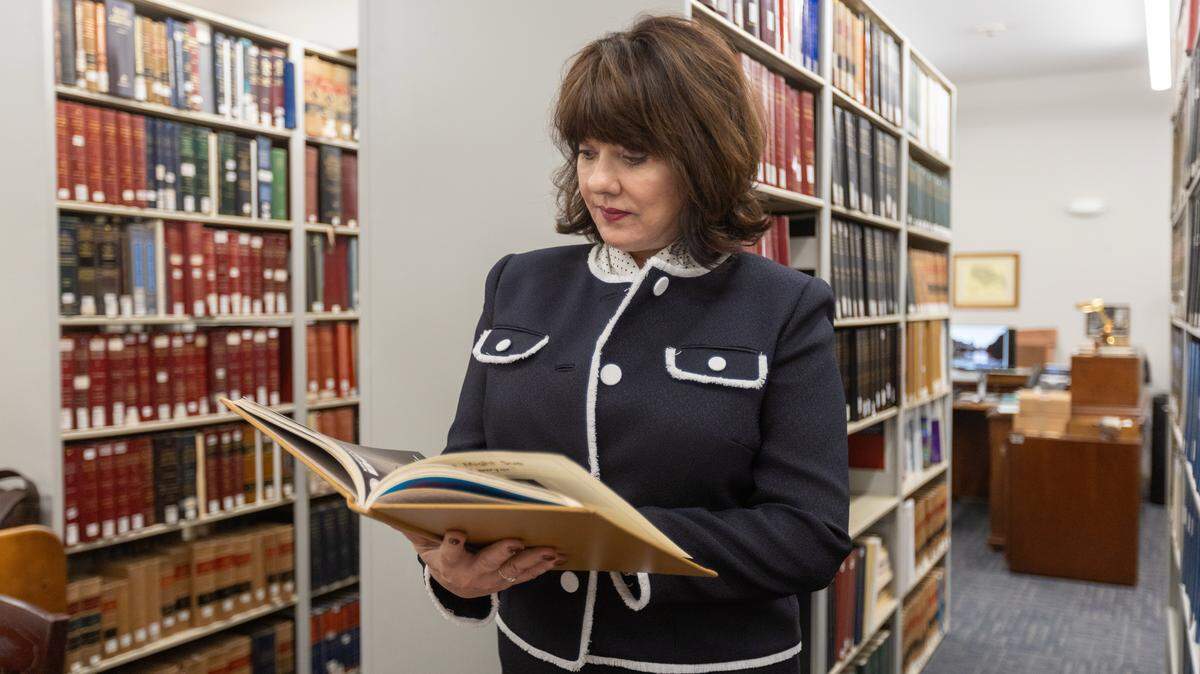
During Kentucky’s first snowfall of the season this past fall, the chief justice of the Kentucky Supreme Court moved slowly along rows of leather-bound books, fingertips grazing spines stamped in gold.
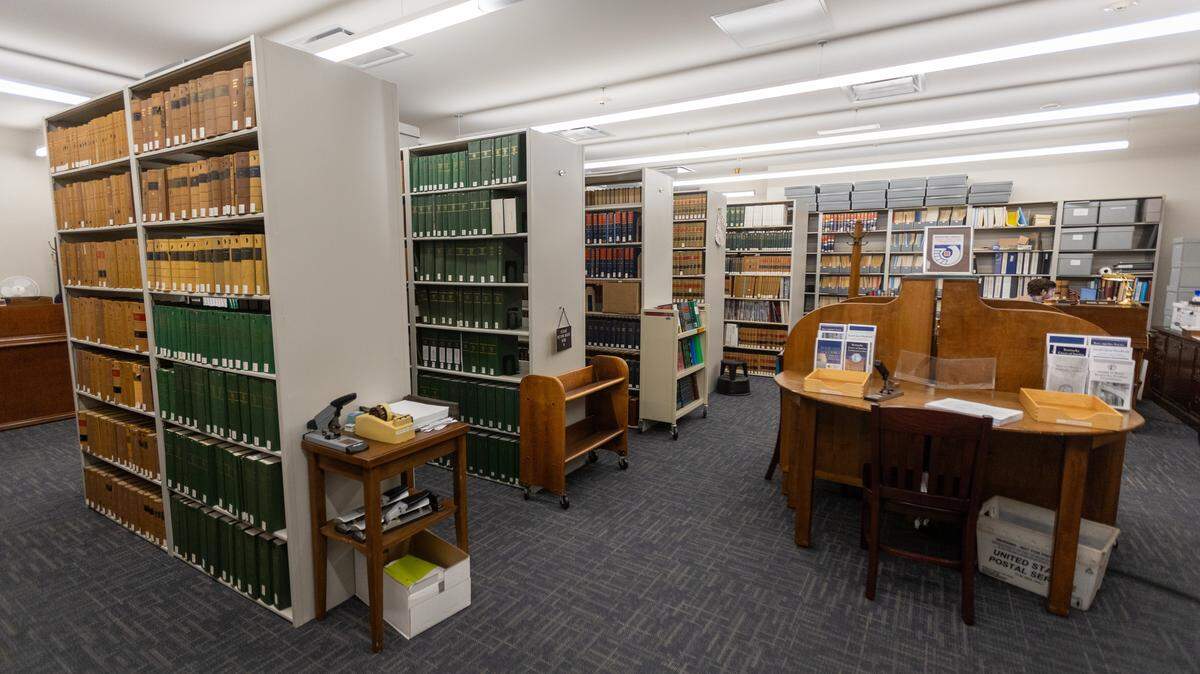
The state law library was buzzing with longtime courts staff and librarians, with books and decades-old legislation drafts arranged on a long, wooden table.
The drafts tell the tale of state court system once on the brink — bar association reports warning of two-year backlogs, and legislative records outlining the need to rewrite things from the ground up.
Fifty years ago, a constitutional amendment known as the judicial article was adopted to address court system issues including crushing workloads, public frustration and patchwork structures. A judicial article is a section of a constitution that establishes the judicial branch of government, outlining its structure, powers, and appointment of judges.
The article’s implementation in 1976 created a unified, four-tiered court system with the Kentucky Supreme Court at its head, a new, intermediate Court of Appeals, and clearly defined district and circuit trial courts for serious and lesser matters, respectively.
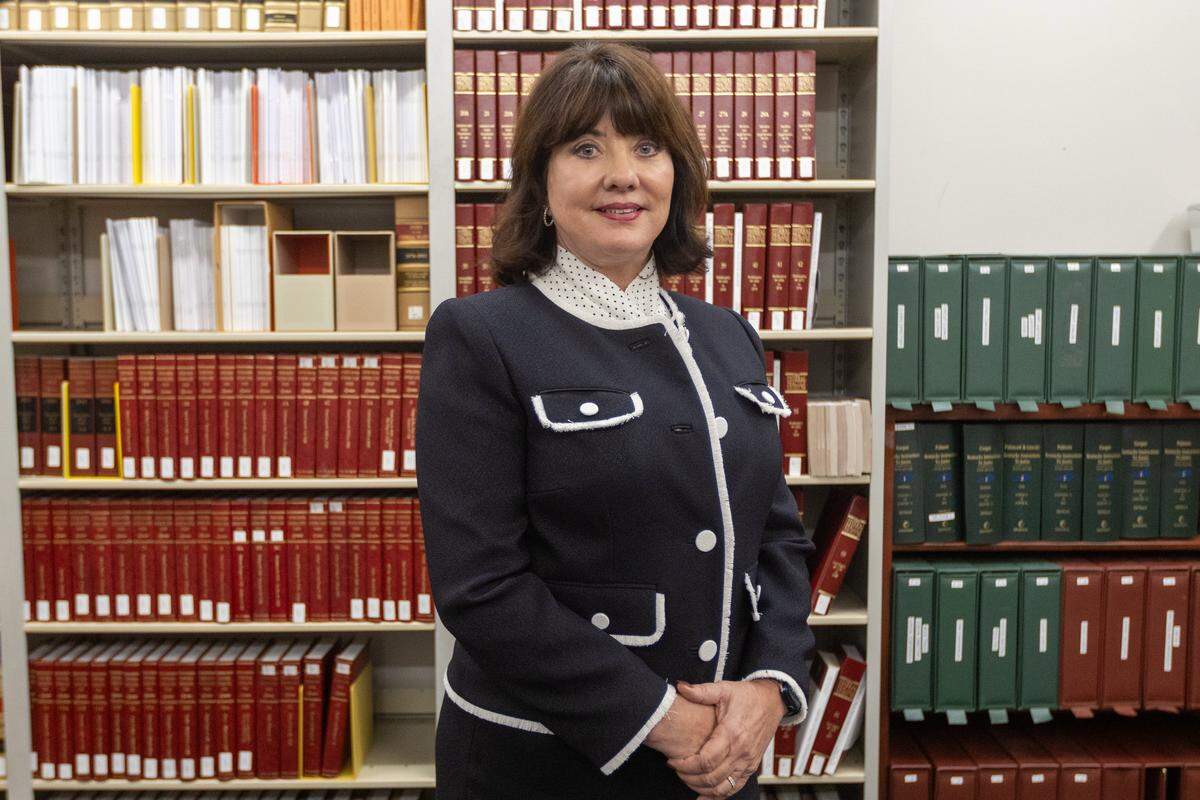
Chief Justice Debra Hembree Lambert was on hand that November day to speak with the Lexington Herald-Leader about the article’s upcoming anniversary.
“The folks who were behind this movement treated this like a statewide campaign, and that really was they were very forward-thinking and the way they organize themselves, there’s a lot to learn from the way they did it,” Lambert said.
Now, as the 50th anniversary approaches, court officials like Lambert are looking back on the changes — and forward to the future of Kentucky’s courts.
Why Kentucky’s courts needed reform
Some of the problems in Kentucky’s early 1970s courts system will look familiar today: a massive backlog, heavy workloads, lack of public knowledge, lagging technology and unstable funding.
But before the 1975 judicial article, Kentucky’s 85-year-old court system functioned independently in each county, with some 300 or more separate courts, each of which a different set of rules.
“I think it was a little bit of a haphazard,” Lambert said. “I think the system was almost a wasteful system. Each county had its own personality and its own folks in charge, and there would be no consistency.”
There was no state supreme court before the article’s passage, either. The court of appeals served as the highest court in the state.
Back in 1924, an efficiency committee analyzing Kentucky’s institutions found an “overworked” court of appeals that was two years behind the trial courts, according to “United at Last: The Judicial Article and the Struggle to Reform Kentucky’s Courts,” a 2006 book by Kentucky Rep. Jason Nemes R-Middletown, and Michael Whiteman, a lawyer and academic.
The report noted there was poor judicial pay throughout the system, a lack of uniformity in the trial courts and “innumerable specific defects” such as non-lawyer judges, overly politicized county judges and a decentralized system at the lower court level.
A 1960s analysis showed that the court of appeals remained overworked, writing about 900 opinions a year, according to Nemes and Whiteman’s book.
Parties in civil cases complained it took too long for the court to decide on appeal, and the new ability to appeal criminal convictions only worsened the high court’s backlog.
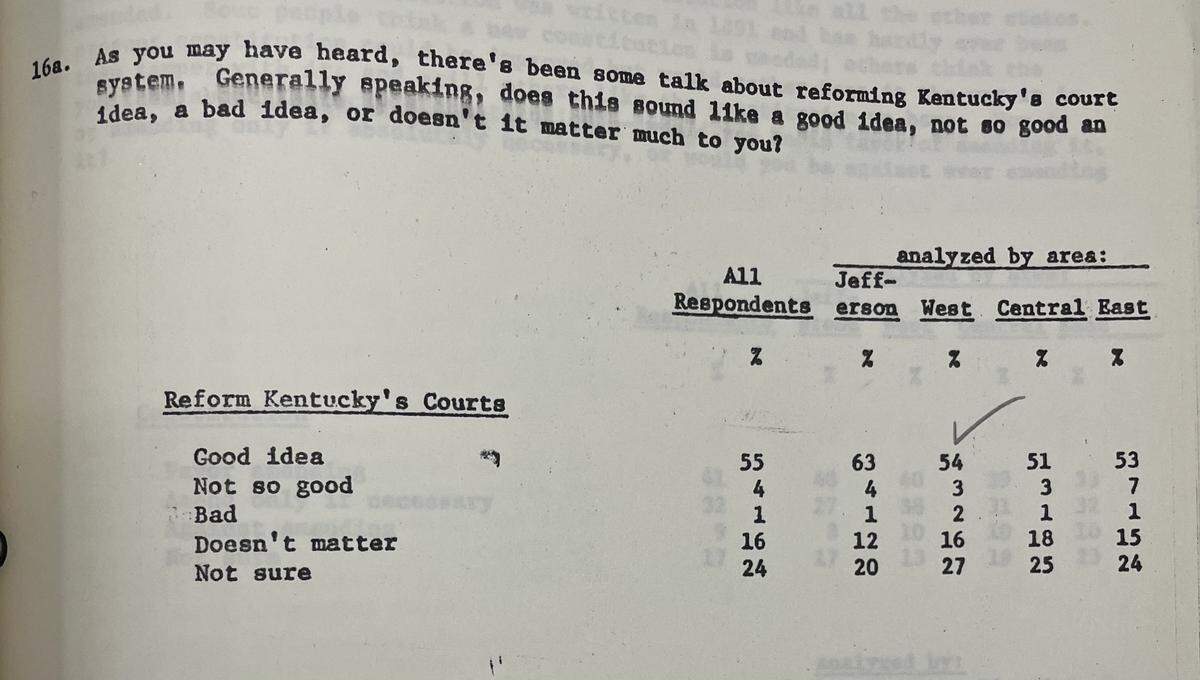
The same polls showed that the inefficiency and perceived unfairness of the lower courts brought down public opinion of the court in general.
“They were really bogged down with cases, and people were frustrated with the delays,” Lambert said. “So I guess the courts must have come to a real crisis point to cause this big reform to move.”
What Kentucky’s judicial article established
The sweeping judicial article created the court system as we know it today, with the three-tier structure of the high, intermediate and lower courts. It helped establish a modern, operational organization, the Administrative Office of the Courts, that manages more than 3,000 court employees and 412 elected judges, justices and clerks.
It created the judicial branch as an independent one — separate from the executive and legislative branches and local government control that allowed small town politics to dominate case outcomes.
The chief justice was dubbed the leader of the entire court system, which was officially named the Kentucky Court of Justice.
The article solidified that judicial offices should remain elective, a practice that went back to Kentucky’s third constitution in 1850. In fact, when the unification of Kentucky’s courts was originally presented as an amendment in 1966, the measure failed because it was partnered with a stipulation that judges would revert to gubernatorial appointment.
Kentucky is one of only 14 states where judges — a non-partisan position — are elected, according to the National Center for State Courts.
“With the passage of the judicial article, I think that Kentucky is very much a model system, and looked to by other courts,” Lambert said.
To mark the 50th anniversary of the landmark article, the Kentucky Administrative Office of the Courts unveiled a commemorative logo featuring Lady Justice. The emblem will appear on official judicial branch materials, social media and public outreach throughout 2026.
“Kentucky Courts: 50 Years of Unified Justice” will be the tagline for the yearlong commemoration.

The commemoration will include educational initiatives, historical features and community engagement opportunities to highlight the past, present and future of Kentucky’s judiciary.
For example, some programming will consist of tools for “pro se” litigants, or people who choose to represent themselves.
To view any of the original materials about the establishment of Kentucky’s 1976 Judicial Article, the state’s law library is open to the public from 8 a.m. to 4 p.m. Monday through Friday.
The law library is temporarily at 669 Chamberlin Ave., Suite E100 in Frankfort while the Capitol undergoes renovations.