KY Supreme Court limits COVID liability shield put in place by state lawmakers
AI-generated summary reviewed by our newsroom.
- Kentucky Supreme Court limited 2021 COVID liability shield for businesses.
- Court revived negligence and wrongful-death suit against Mayfield nursing home.
- Immunity applies only if injuries were caused by COVID or COVID-related actions.
The Kentucky Supreme Court on Thursday put limits on a COVID-19 legal liability shield that the General Assembly crafted for businesses during the pandemic in 2021, ruling that businesses aren’t protected from litigation unless they can show the alleged damages were caused by COVID.
“It seems that the majority of the court has forgotten how difficult and challenging a time it was when COVID was still running rampant and this was prevalent,” said Pete Pullen, an attorney for the owners of Mayfield Health and Rehabilitation, the Graves County nursing home at the center of the case.
“The ruling really renders the immunity statute meaningless, because if it’s not going to be applied to such a clear-cut case as this one, then I don’t think it’s ever going to be applied,” Pullen said.
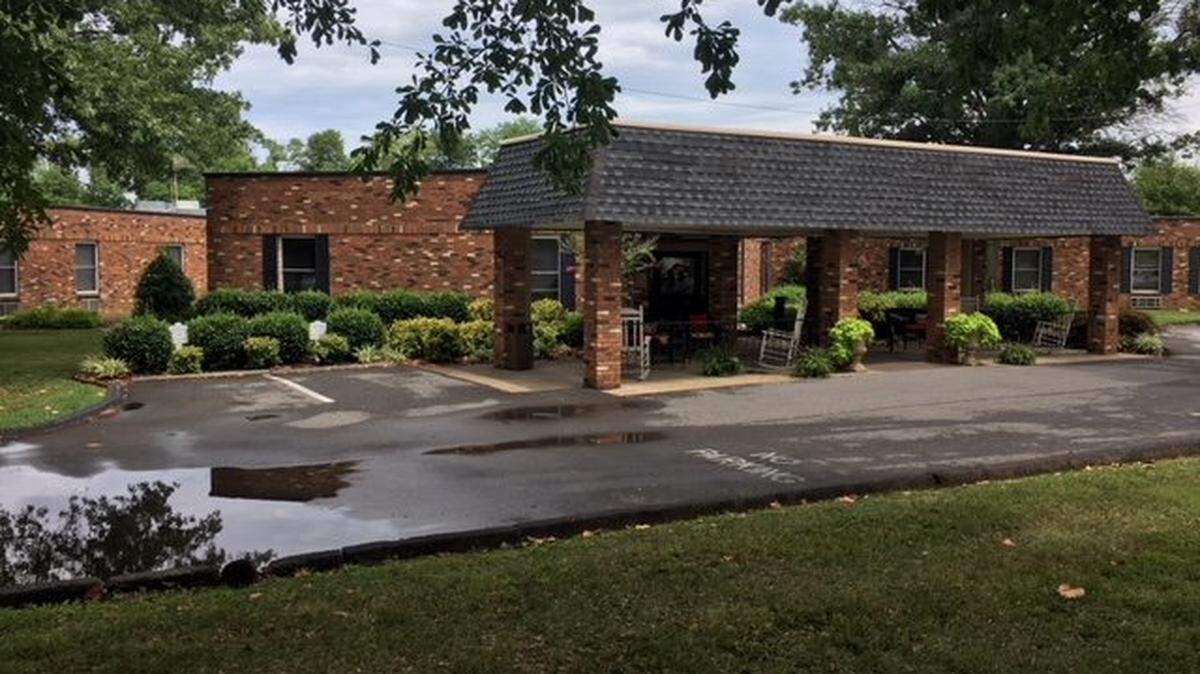
The high court reinstated a negligence and wrongful death lawsuit against Mayfield Health and Rehabilitation, where Emma Elizabeth Hayes lived for three years before becoming critically ill at the age of 88 and dying at a local hospital Dec. 3, 2020.
The nursing home’s owners successfully invoked Senate Bill 5, Kentucky’s legal liability shield for certain businesses and service providers operating during the COVID emergency, to have the suit dismissed in Graves Circuit Court. The Court of Appeals upheld the dismissal.
When Kentucky lawmakers passed Senate Bill 5 at the urging of the Kentucky Chamber of Commerce and other business groups, they said it would be unfair if those serving the public during the chaos of the pandemic later were held liable for things that went wrong.
“There are thousands of us across the state who did the best we could,” state Sen. Chris McDaniel, R-Taylor Mill, said at the time, speaking for the bill.
But the Supreme Court noted in its decision that Hayes’ estate isn’t making a claim against the nursing home because of COVID, although she did test positive for COVID — among other ailments — before she died. In fact, the court said, the complaint doesn’t even mention the word COVID.
The estate’s claim is for negligence, alleging the nursing home did not have enough staff on duty or provide adequate care and alleging it falsified Hayes’ medical records to conceal its failures, the court said.
For example, the court said, on the day Hayes died, there was a five-hour gap when Hayes could not be roused for her medications, but the staff took no action with her.
Hayes finally was moved that afternoon to the hospital, where she died. Yet her medical notes at the nursing home “mysteriously state” that on the night shift, after she died elsewhere, she somehow seemed to be making progress with repositioning herself in bed, dressing herself and other tasks, the court said.
Hayes’ estate is entitled to proceed with discovery in the case in Graves Circuit Court to determine more of the facts about her treatment at the nursing home, the court said.
The fact that Hayes sickened and died during a pandemic does not guarantee the nursing home immunity from lawsuits under Senate Bill 5, the court said.
“The statute does not, as Mayfield argues, apply to any injury occurring during the declared COVID emergency. Rather, it applies to ‘any claim or cause of action for an actor or omission arising from COVID-19,’” Chief Justice Debra Hembree Lambert wrote for the court’s majority.
“Stated differently, Mayfield cannot prove entitlement to immunity simply by demonstrating that Emma had COVID at the time of her death,” Lambert wrote.
“Rather, it must demonstrate that the injuries Jackson alleged were caused by her contraction of COVID; were caused by services, treatment or other actions Mayfield performed to limit the spread of COVID; or were caused by services Mayfield performed outside the normal course of business in response to COVID,” she wrote.
Pullen, the attorney for the Mayfield nursing home’s owners, said there are probably dozens of similar lawsuits against Kentucky nursing homes from the pandemic that are waiting in the lower courts. Thursday’s Supreme Court decision would seem to give those suits the green light to proceed, he said.
Nursing homes believed they had some measure of protection under Senate Bill 5, Pullen added.
“Most businesses were being closed, (but) they had to stay open to try to take care of the sick and the elderly,” Pullen said. “And so it was a welcome act to be afforded some grace through the statute. But this opinion basically takes it away, and it renders the statute meaningless.”
Juliette Symons, an attorney for Hayes’ estate, said in a phone interview that she was gratified by the court’s decision in favor of her client.
“We are back in the circuit court, and this will be an interesting process for sure,” Symons said. “We’ve encountered cases against this company before, so we’re gonna give it the workup that it deserves now.”
Mayfield Health and Rehabilitation doesn’t operate anymore. It was destroyed in the December 2021 tornado that hit Western Kentucky, although all of its 74 residents survived. Its owner, ClearView Healthcare Management, which in turn is owned by private equity company The Portopiccolo Group of Englewood Cliffs, N.J., built a new facility in Murray as a replacement.