KY veterans centers gain comfort, lose capacity as they switch to single rooms
AI-generated summary reviewed by our newsroom.
- Kentucky converted veterans’ rooms to single-occupancy, cutting 235 beds.
- Staffing rose from 54% in 2022 to 72% in 2025, enabling 183 hires.
- State expects 120 more beds in near future, but new expansion remains uncertain.
Kentucky’s state-run nursing homes for military veterans are making life more comfortable for residents by turning their double-occupancy rooms into single-occupancy suites, according to a new report.
But it comes at a cost: The larger units mean there are 235 fewer beds available statewide.
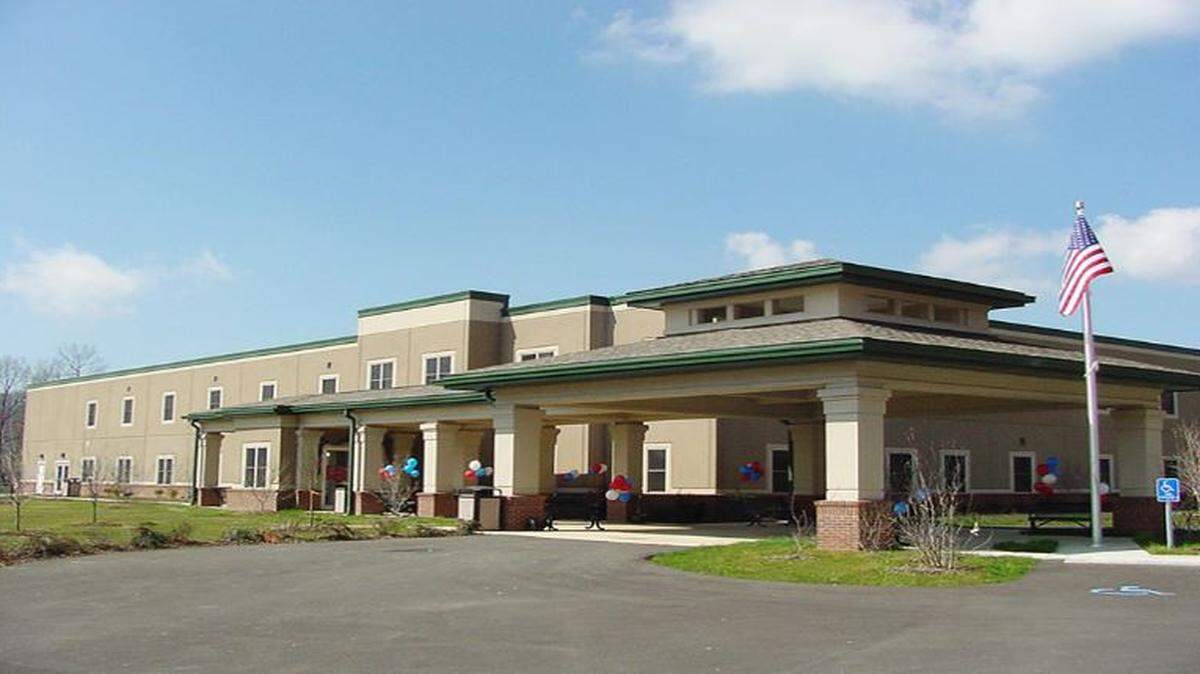
The Legislative Oversight and Investigations Committee on Thursday heard testimony about the four veterans centers run by the Kentucky Department of Veterans Affairs in Perry, Jessamine, Hardin and Hopkins counties.
A fifth veterans center, in Bowling Green, is supposed to open later this year after several delays.
For years, lawmakers have heard about aging veterans waiting long periods for an available space at a state veterans center. Some died before a bed opened. Veterans and their families also complained to lawmakers that state officials do a poor job of communicating with them about the length of wait lists for beds.
Investigators for the committee on Thursday said staffing and occupancy rates appear to be improving at the veterans centers since the COVID-19 pandemic put a strain on them, as it did on nursing homes generally, with the deadly virus sweeping through the facilities nationwide.
Staffing rates across the four veterans centers — the number of positions filled — rose from a low of 54% in 2022 to 72% in 2025, according to the committee’s report. Despite stiff competition for health care staff, special pay incentives helped the state add 183 employees during this time, according to the committee’s report.
Changes in occupancy rates are a little harder to compare, investigator Shane Stevens told lawmakers.
As Kentucky’s veterans centers have converted their rooms from double-occupancy to single-occupancy — a transition required by the U.S. Department of Veterans Affairs — their official number of beds has looked a lot higher than their actual number of beds, Stevens testified.
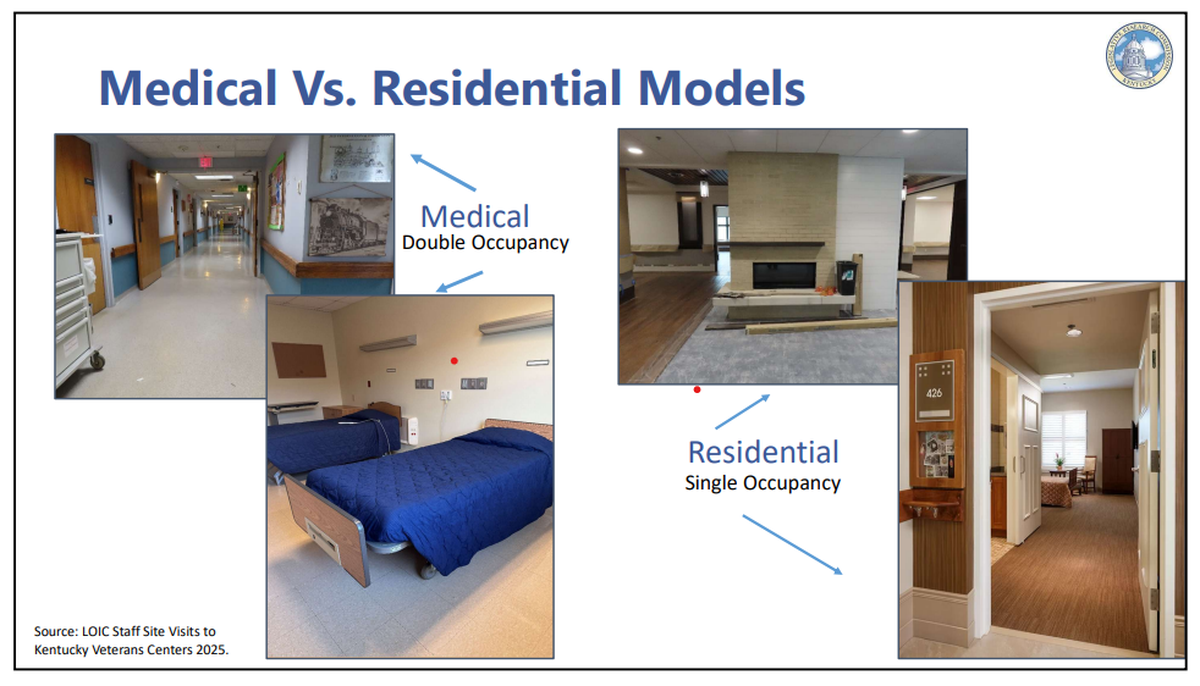
The “certified” capacity of the four veterans centers is 681 beds. In reality, the “functional” capacity — with two centers now converted to single-occupancy and a third mixed between single- and double-occupancy — is 446 beds, with an average occupancy rate of 85%, Stevens said.
“This compares favorably to national averages, and in fact, two of the facilities are at nearly maximum capacity, unless they were to revert to double-occupancy,” Stevens said.
The state should get 120 more beds over the next two years when the 60-bed Bowling Green veterans center opens and the veterans center in Radcliff finishes repairs to its HVAC system, allowing it to reoccupy a 60-bed section of the building that it’s been forced to temporarily stop using, Stevens said.
“Meaningful expansion of capacity will likely require new construction, and it’s unclear if demand will justify new construction,” Stevens said.
But some lawmakers on the committee expressed interest in expansion.
They said Kentucky should formally move to “decertify” the veterans center beds that don’t exist anymore — a bureaucratic process requiring the approval of state and federal officials — so they can be returned to the state’s federal allotment for use in a sixth center somewhere else.
At present, there is no state-run veterans center within a convenient drive of northern or northeastern Kentucky, according to the committee’s report.
“There’s beds that sitting there under the certification that’s not even, I guess, present in the facilities now,” said Rep. John Blanton, R-Salyersville.
Lawmakers said they’re also concerned that Kentucky veterans centers typically aren’t equipped to handle “high-acuity” patients, who have special medical or mental health needs beyond the usual geriatric care.
The high-acuity patient population is growing among veterans, according to the committee’s report.
“Thank you for the Hazard facility. My dad spent his last five years there, and it was a great experience for me, for the family and for him,” state Rep. Tom Smith, R-Corbin, told leaders of the Department of Veterans Affairs who attended the hearing.
However, Smith said, “We found out he was starting to get dementia. We found out there was no facility in Kentucky that he could go to for mental (health care) for a veteran. Is there something that’s being looked at?”
Mark Bowman, executive director of the Office of Kentucky Veterans Centers, acknowledged that the lack of such mental health care at the facilities is “a real problem.”
Ohio and Indiana offer such services in their veterans centers, Bowman added. Kentucky lawmakers just need to be prepared for the fact that specialty nursing care for high-acuity patients is more expensive, he said.
“So there’s models out there,” Bowman said. “Let’s get these experts in here. Let them tell us ... if we will sit and listen, then it’s (whether there’s) an appetite for the cost of that.”