
Kentucky police would be required to work with ICE under GOP-backed bills
Though carrying out immigration law typically falls to federal officers, some Kentucky lawmakers want to see local law enforcement enter agreements in order to aid U.S. Immigration and Customs Enforcement across the commonwealth.
Several bills filed in the first seven days of the Kentucky General Assembly aim to require local agency participation in immigration enforcement and limit sanctuary policies that restrict local police from cooperating with agencies like ICE.
The policies proposed by Republican lawmakers come as protests continue across the country — including in Central Kentucky — following the Jan. 7 death of Renee Good, 37, in Minneapolis where she was shot by an ICE agent.
Some GOP leadership said while there’s often appetite for local government to take on national issues, the Republican caucus has yet to rally behind one topic this early into session.
“We’ve had different conversations about different measures that have been filed,” Speaker of the House David Osborne, R-Prospect, told reporters Jan. 14. “Clearly, that (immigration) is a national conversation right now. By and large, there hasn’t been anything that the caucus has kind of grabbed hold of as an issue that they want to unify behind.”
Gov. Andy Beshear said Jan. 15 following his Team Kentucky update he had not reviewed the immigration proposals yet, but said, “any bill that mandates that our law enforcement work with ICE upon their request is going to make us less safe.”
He reiterated his previous comments about the shooting in Minnesota.
“The actions of ICE appear overly aggressive outside the bounds of normal law enforcement, outside procedures that would be used by normal law enforcement to even keep the community around their operations safe,” he said.
Beshear said local officers likely do not have immigration law training, and he questioned how much training ICE agents receive. He added that money from Congress for ICE should give the agency enough wiggle room to hire an appropriate number of officers without the need to ask for local support.
The governor’s greater concern, he said, was what sort of public safety might be forgotten if local officers are focused on enforcing immigration.
“We have counties where we only have two troopers and maybe a sheriff and a deputy that do all the law enforcement in it,” Beshear said. “They respond to domestic violence incidents. Are they now not going to do that because they have to respond to this immigration call?”
Local agencies could help ICE
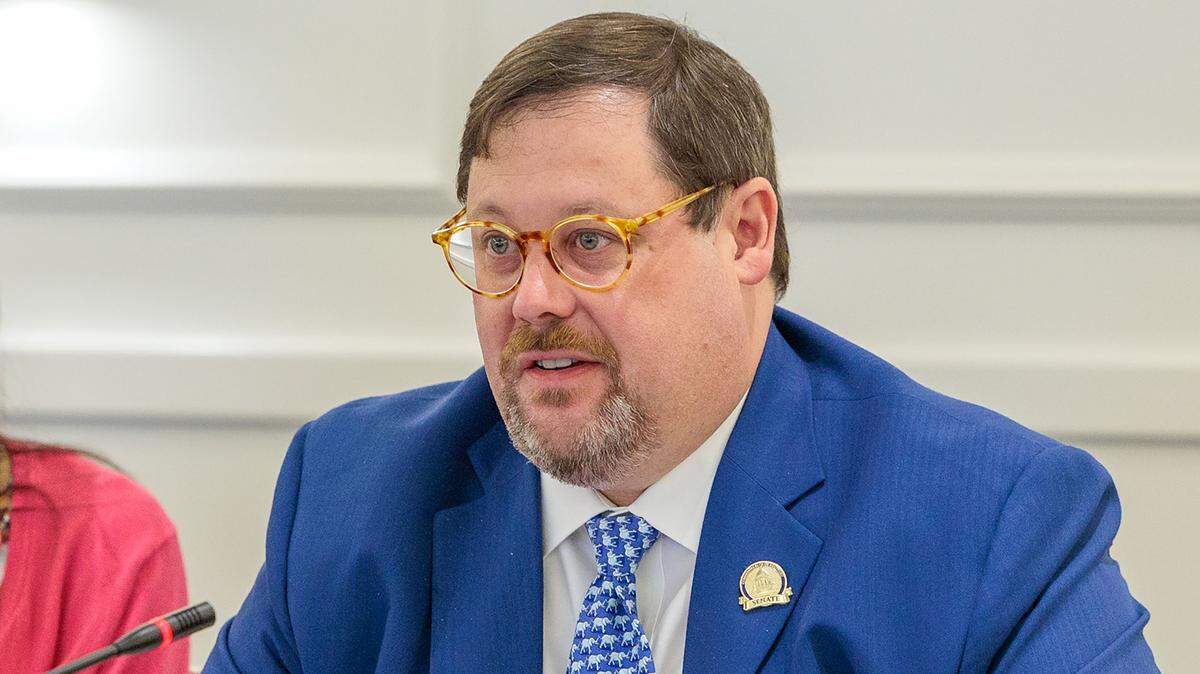
Sen. Phillip Wheeler, R-Pikeville, wants every local Kentucky law enforcement agency and the Kentucky State Police to partner with ICE.
Wheeler told the Herald-Leader he believes the majority of Kentucky “firmly stands behind these measures,” and his Senate Bill 86 encourages municipalities to stay “on the straight and narrow.”
“Given some of the efforts by Democrat-led cities and states to essentially move ICE out of their jurisdictions, I would call it a preemptive measure to make sure that places like Louisville and Lexington don’t get any bad ideas,” Wheeler said.

The bill would require local law enforcement agencies to participate in all three models of the partnership program run by ICE.
A section of federal immigration policy, the Immigration and Nationality Act, has allowed ICE to partner with local law enforcement agencies since 1996. Under ICE’s direction, those local officers are allowed to identify, process and detain people to be deported; typically those who already have criminal charges.
More than 20 county and municipal Kentucky law enforcement agencies already have agreed to help ICE through one of three models in Section 287(g), according to a list of participating agencies kept by the organization.
The jail enforcement model allows officers to identify and process immigrants who could be deported and have pending or active criminal charges, while the task force model lets officers enforce some immigration authority while performing routine police duties.
The warrant service officer model lets officers serve and execute administrative warrants on immigrants in an agency’s custody.
Wheeler’s one-page bill would require local law enforcement agencies and KSP to participate in all three.
“I have firmly been on the side of law and order since I’ve been in the General Assembly,” Wheeler said. “I have also been there for second chances, but I think you need to earn those second chances. You don’t need to encourage bad behavior.
“So, this is just an effort to nip things in the bud, make sure that the process that the American people voted for continues unabated, and that we don’t have any problems here in the Commonwealth of Kentucky.”
Wheeler said he’s confident some version of the policy will pass since Rep. TJ Roberts, R-Burlington, introduced a similar bill in the House.
The difference between Wheeler’s bill and House Bill 47 is that Roberts’ proposal would just require participation in the task force model and an additional 40 hours of training for officers.
Other immigration bills filed early
Roberts also filed House Bill 76 that would add a law to require those being released ahead of trial to provide citizenship documentation. If no papers materialize, the bill would require the agency with custody to notify the U.S. Department of Homeland Security.

Rep. Jared Bauman, R-Louisville, filed House Bill 361 to eliminate sanctuary policies from police departments, essentially lifting restrictions on local police from asking about someone’s immigration status and sharing information with ICE.
His bill also asks jails to work with ICE when asked to house people who may have immigrated illegally or who are “the subject of immigration detainers.” Localities that do not comply could be investigated and be at risk of losing road funding, the bill said.
Rep. John Hodgson, R-Fisherville, filed House Bill 62 would classify those “unlawfully present” and seeking work or performing work as engaging in unlawful employment, which is a Class A misdemeanor.
Rep. Shane Baker, R-Somerset, filed House Bill 186 that would block anyone not born in the U.S. or who has citizenship in another country from holding the offices of mayor, city council, county fiscal court, local school board and soil and water conservation district supervisor. He also filed a bill proposing a constitutional amendment to extend the ban to almost every other elected office in Kentucky .
The Herald-Leader’s politics reporters Austin Horn and Hannah Pinski contributed to this story.
This story was originally published January 15, 2026 at 12:40 PM.
.JPG)