Providing meds for abortion, assisted suicide further penalized under KY bill
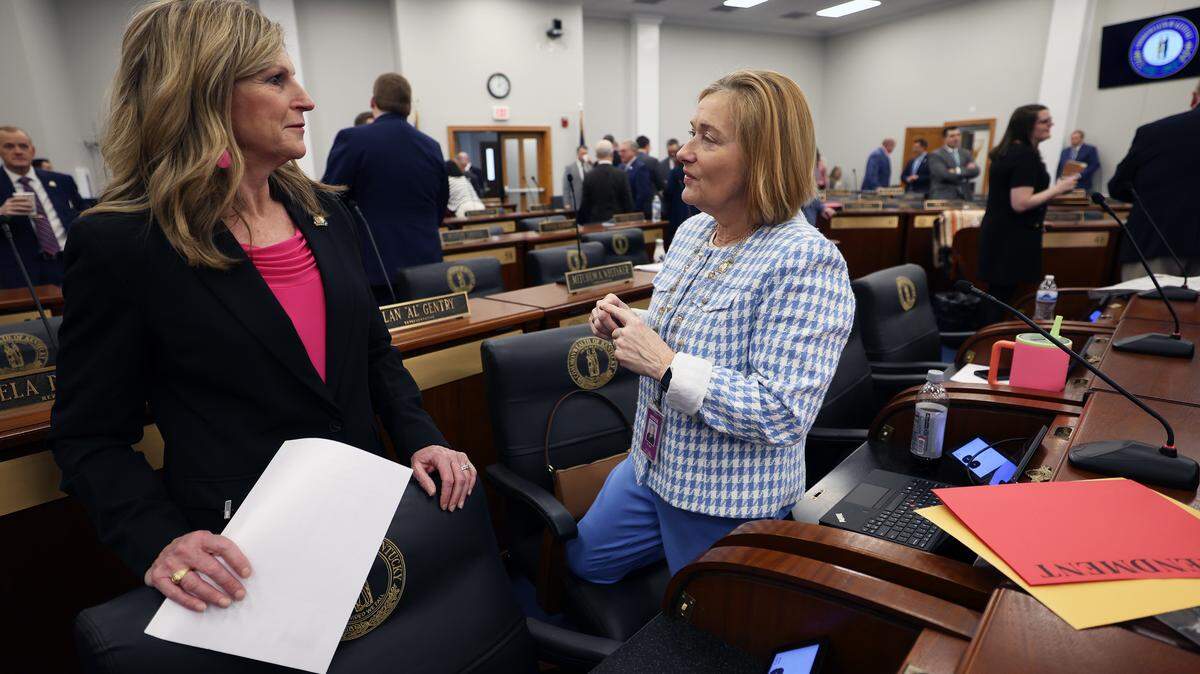
A bill in the Kentucky House would expand and create new penalties related to “abortion-inducing drugs” and assisted suicide.
Friday morning, Rep. Nancy Tate, R-Brandenburg, filed House Bill 646, which would criminalize importing “abortion-inducing drugs” to Kentucky with “the intent to sell or distribute,” punishable by a Class D felony.
The legislation also provides judicial relief for pregnant women, a spouse or a guardian against anyone who mails the drugs to Kentucky, prescribes them to a Kentucky resident, or places it into the stream of commerce. That includes attorney fees, injunctive relief and compensatory and punitive damages.
Kentucky already has a near-total abortion ban law that took effect in 2022 following the U.S. Supreme Court ruling in Dobbs, which overturned landmark case Roe v. Wade. The law prohibits pregnancy terminations in all scenarios, except when a pregnant woman’s life is in danger, and prohibits mailing or delivering abortion medication in the state.
Opponents of the bill say it will target anyone who helps those seeking abortion medication out-of-state where it is legal.
During her tenure as a lawmaker, Tate, who is not seeking reelection, has been a strong opponent of abortion.
In 2024, she filed a bill that would require public schools to teach students about “human growth and development” by way of a computer-generated video produced by an anti-abortion nonprofit. Tate has introduced a similar proposal this session, House Bill 359, which has been assigned to the House Primary and Secondary Education Committee.
Medication used to end pregnancies made Kentucky headlines at the beginning of the year.
In December 2025, a Wolfe County woman was charged with fetal homicide, abuse of a corpse and tampering with physical evidence after she used medication to abort a “developed male infant,” according to police.
A grand jury in January indicted her for first-degree fetal homicide, and other charges, after taking abortion medication without a doctor’s advisement. However, the Wolfe County prosecutor later dismissed the fetal homicide charge because state statute says the charge does not apply to “any acts of a pregnant woman that caused the death of her unborn child.”
In late January, Attorney General Russell Coleman launched an investigation into gas stations and companies that “could be participating” in delivering pills for medical abortions. His office sent subpoenas to six gas stations in Western Kentucky counties that had abortion medication advertisements from Mayday Health, a reproductive health education nonprofit.
Some Democrats meanwhile have filed legislation to protect medical privacy and prevent criminalization of those who seek reproductive health care outside of Kentucky.
Rep. Lindsey Burke, D-Lexington, filed a bill that would establish protections against criminal, civil or administrative penalties for people receiving abortion care where it is legal. Her bill, House Bill 23, also puts safeguards on medical records used to prosecute patients and providers.
Tate’s HB 646 also would require health care providers to give a mandatory written notice to patients who they believe are experiencing complications due to abortion medication. The written notice would explain potential civil causes of action against the “manufacturer, distributor or prescriber” of the abortion medication and health care providers who fail to advise complications of the drug.
It also says taking abortion medication will not result in penalties for the patient.
Tamarra Wieder, Kentucky state director for Planned Parenthood Alliance Advocates, said in a statement Tate’s bill would threaten providers, manufacturers and “supportive networks while turning deeply private pregnancies into potential evidence in court.”
“This bill closely mirrors efforts moving across the country to restrict access to medication abortion by misclassifying a safe, evidence-based medication as a controlled substance and targeting anyone who assists patients accessing medication abortion out-of-state,” Wieder said. “...Yet again, we will fight back against Nancy Tate’s efforts to attack the very few reproductive rights we have left in the Commonwealth and demonstrate how deeply unpopular these efforts are.”
In addition to creating new penalties related to abortion medication, the bill also creates the new crime of “medically assisted aid in dying.”
That occurs when someone prescribes, provides, participates in the use of or coerces a substance that “will be used to cause or hasten the death of another person.” The penalty would be a Class B felony, and the bill outlines a list of exceptions, including the “provision(s) of appropriate pain management” and palliative care, hospice services and spiritual support.
Another crime established by the bill is “assisted suicide,” which includes a definition of when a person “provides the physical means, including any drug, medication or other substance” to someone who attempts or dies by suicide and would be punishable by a Class B felony.