KY lawmakers advance crime bill after early release of man who killed 6-year-old
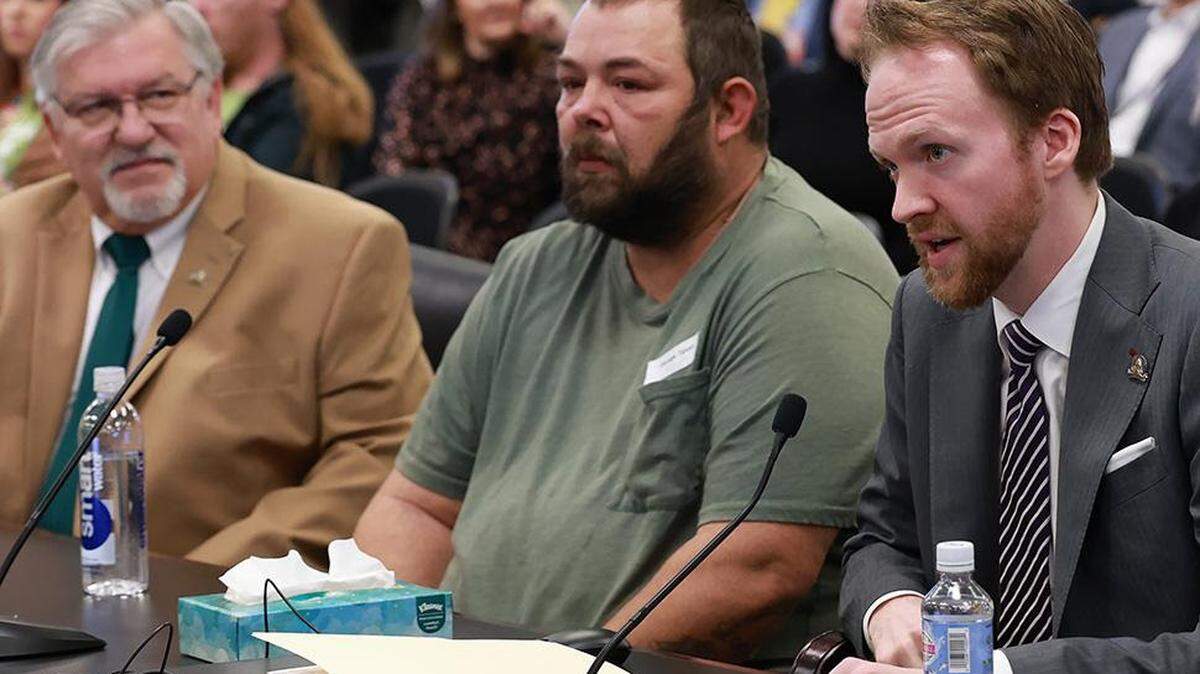
Kentucky House members have united around an anti-crime bill in response to the horrific killing of 6-year-old Logan Tipton in his Versailles home in 2015.
The House Judiciary Committee on Wednesday advanced House Bill 422 to close what lawmakers see as legal loopholes exposed by the controversial early release of Ronald Exantus, the Indiana man who stabbed Logan to death.
The bill, to be called Logan’s Law, would reword the state’s insanity defense in criminal cases; lengthen prison sentences for some of the most serious crimes; and respect the Parole Board’s opinion when it ruled unanimously that inmates should not be released early on mandatory reentry supervision.
The bill proceeds to the full House.
“We don’t want these people getting out ever, not in 35 years, not in 75 years, not in 105 years. We don’t want them getting out,” state Rep. Jason Nemes, R-Middletown, said as he voted for the bill. “I hope our judges and our prosecutors and lawyers across the state hear that.”
The bill’s price tag remains unknown. Its “corrections impact statement” — the estimated expense for Kentucky’s jails and prisons, where it can cost an average of $42,488 a year to incarcerate a person — was not prepared by legislative staff in time for the committee vote.
Kentucky currently houses more than 19,000 state inmates in its 14 prisons, with spillover in county jails that are paid by the state Department of Corrections to hold lower-level felons.
The unknown price worried two Democrats who voted “pass” on the bill. Nobody voted against it.
“I do think that the cost of this bill will be astronomical,” said state Rep. Lindsey Burke, D-Lexington.
“And I’m not saying that it’s not worth it, but I need to know how much it is,” Burke said. “The back of the napkin math says one sentence, 10 years additional, is half a million dollars. So I need to know, how many people are we talking about?”
Money isn’t as important as public safety, countered state Rep. TJ Roberts, R-Burlington, one of the bill’s 62 sponsors.
“If we can’t protect a 6-year-old child in their own home while they sleep, if we can’t ensure there is justice when somebody slips through the cracks, there’s no point in us existing. There’s no point in us being here,” Roberts said.
“I’m about as close to a fiscal hawk as there can be, but to ensure that there isn’t another Logan Tipton situation in this commonwealth? Yeah, I’ll spend money to do that,” Roberts said.
A controversial verdict
Exantus was released from prison last October on mandatory reentry supervision after serving less than half of his 20-year sentence.
He was arrested in Florida 12 days later for violating the terms of his release by failing to register as a convicted felon.
Mandatory reentry supervision is reserved for inmates who are — like Exantus — denied discretionary parole by the state Parole Board. When lawmakers created the program 15 years ago, they said they wanted these inmates to have some supervision and guidance when they return to the community rather than just walk free.
But the early release proved hugely controversial in Exantus’ case, especially because of the unusual split verdict at his trial and the relatively short prison sentence that resulted from it.
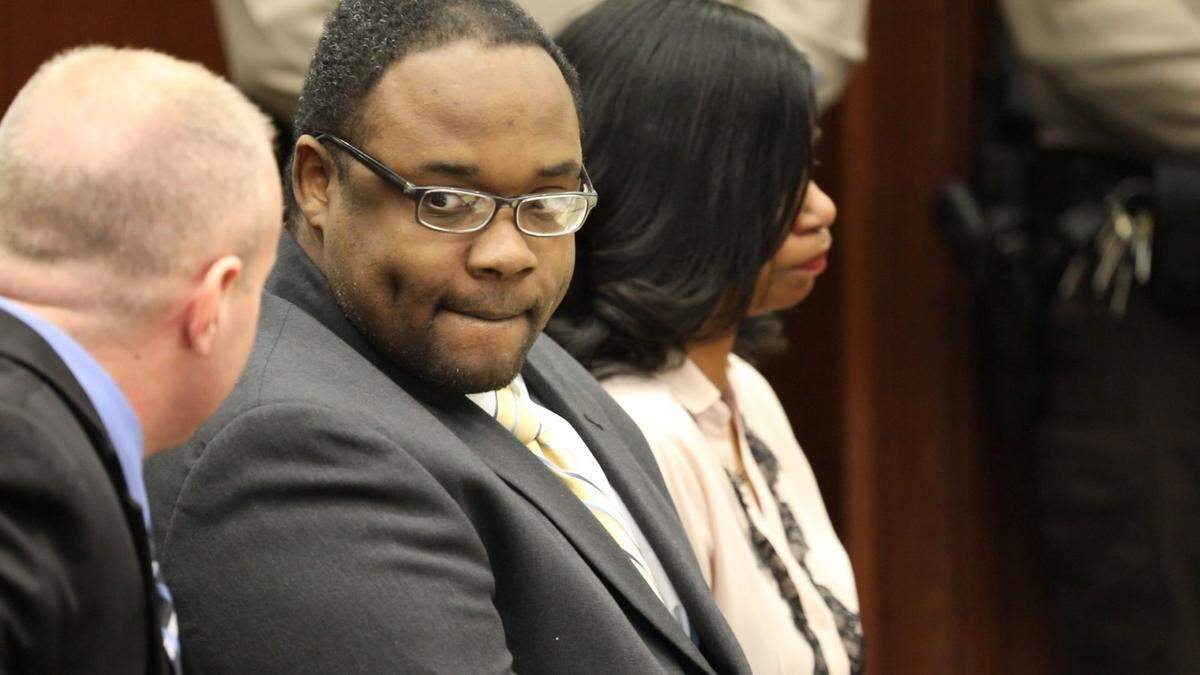
A Fayette County jury found Exantus not guilty by reason of insanity on a murder charge in Logan’s death, absolving him of criminal responsibility, but guilty of second- and fourth-degree assault in his attack on other family members in the Tipton home.
The verdict was appealed to the Kentucky Supreme Court, which upheld it.
Speaking to the House committee on Wednesday, Logan’s father, Dean Tipton, said the only insanity that he could see was the split jury verdict that let his son’s killer back onto the streets after just 10 years.
“Logan was 6 years old. He was a light to my family and to our community,” Dean Tipton told the lawmakers.
“No family should ever have to suffer the fact that their child was not important enough to keep this man behind bars,” Tipton continued. “He brutally — he stabbed my son 27 times while he slept. My 11-year-old daughter, at the time, saved our lives. She fought this man until her sister could get to me to come up and subdue him.”
How the bill works
Under the House bill, mandatory reentry supervision no longer would be allowed for Class B felons or violent felony offenders for whom — like Exantus — the Parole Board voted unanimously to deny discretionary parole. Currently, inmates charged with capital offenses and Class A felons are ineligible for the program.
“Insanity” would be redefined as mental illness or intellectual disability that left someone unable to appreciate the “nature and quality” of their conduct, a standard based on 19th Century British criminal law. The bill’s sponsors say the current definition, which talks about the inability to “conform one’s conduct to the requirements of the law,” is confusing to jurors.
If a defendant was found guilty but mentally ill, treatment would be provided until the end of his sentence. After that, if his treating physician determined he still needed treatment, either the doctor or the state could file a petition to have him involuntarily hospitalized.
Juries would be allowed to sentence a murder defendant to life without parole without the current need to cite an “aggravating circumstance,” such as prior convictions for murder or serious assault; murder for profit; murder while committing another serious felony, like rape or robbery; or the death of a law enforcement officer.
Finally, the serious crimes for which the sentences must be served consecutively, not concurrently, would grow longer, which means more people would spend more time in prison. Currently, that’s limited to felony sex crimes involving two or more victims; this bill would add two or more capital offenses, Class A felonies, Class B felonies or any combination.
Defense lawyers who testified against the bill on Wednesday warned that juries and judges should have the discretion to impose sentences as they see fit, based on the individual facts of a case.
If defendants charged with serious felonies know in advance that they’re looking at long back-to-back prison terms, few will agree to the plea bargains that clear most of the court docket, said Scott West of the Kentucky Association of Criminal Defense Lawyers.
“What this does is it means that, once again, plea bargains are going to be very hard to get, and we are a state, we are a nation of plea bargains,” West said.
“When I was at (the Department of Public Advocacy), we did an analysis,” West said. “We were trying less than one-third of 1% of all the cases that were in circuit court, and that’s because there’s — it’s not about resources. It’s about there’s not enough prosecutors, there’s not enough defense attorneys, public or private, and there’s not enough courts or courtrooms. There’s not enough hours in the day to try all the cases that are brought.”
This story was originally published February 19, 2026 at 5:00 AM.