
Several Kentucky Republicans give ‘resounding no’ to education cuts in House budget
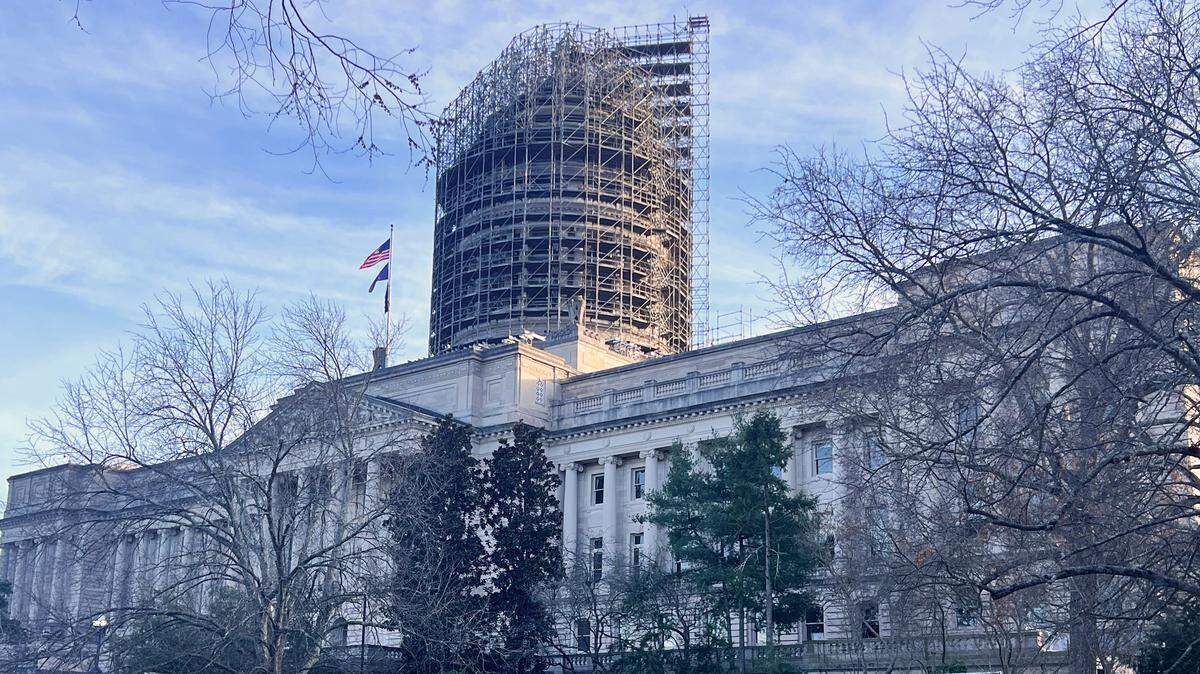
A growing number of GOP lawmakers in the Kentucky legislature think the proposed House budget, House Bill 500, goes too far with education cuts.
State Rep. Patrick Flannery and state Sen. Brandon Smith, both Republicans, say they would vote no on the budget in its current form. They are two of several lawmakers and others who took to social media this week to protest the current House budget bill, sponsored by Rep. Jason Petrie, R-Elkton.
Smith, R-Hazard, said Wednesday he doesn’t think the budget bill will see any movement in the legislature in its current form.
“Rest assured I have seen your emails, messages and appreciate your calls,” Smith said in a social media post. “I have always stood with my teachers and state workers. This bill, in its current form, is a resounding no vote from me.”
Flannery, R-Olive Hill, expressed a similar message.
“In its current form, I would be a NO vote,” Flannery, R-Olive Hill, said Tuesday in a Facebook post. “Obviously folks are very concerned about the potential ramifications. I am too after reviewing documents over the weekend and yesterday. The budget and supporting bills are in early stages and are being developed. Changes need to be made and I am confident that they will be made.”
Flannery raised issue over how public employees’ health care would be affected, something experts say would face significant cuts if the bill passed as it is. He also said he is “confident that necessary changes will be made (to the budget) as the session progresses.”
When the budget proposal was rolled out in late January, Republican leadership emphasized the bill was a “starting point” for the long budgeting process to follow.
“We do not have a revenue problem. One day we may. Today, we do not have a revenue problem, but we always have to fight spending that’s out of control, and that’s what a major theme of this budget is going to be,” Petrie, the House Appropriations and Revenue committee chair, said on the House floor last month.
State Rep. Richard White, R-Morehead, also was among the critics of the proposed budget and said he would vote “no” if voting on the current version. In a social media post Tuesday, he said he “will be working closely with my colleagues to address this budget issue, as well as many other critical funding decisions that will impact our district and state.“
More joined the growing chorus, criticizing the current bill:
- Sen. Phillip Wheeler, R-Pikeville
- Rep. Bill Wesley, R-Ravenna
- Rep. Felicia Rabourn, R-Turners Station
- Rep. William Lawrence, R-Maysville
- Rep. Mike Clines, R-Alexandria
“I would be a big no on this bill in its current form,” Wesley said in a post.
Policy analyst on the issues for Kentucky education in HB 500
“HB 500, the House budget bill, doesn’t just propose major cuts to the health care of school and state employees, it proposes major cuts to education generally,” Jason Bailey, of the Kentucky Center for Economic Policy, said in a Facebook post.
Bailey says the introduced version of HB 500 would cut school transportation funding and freeze the guaranteed base funding level used to determine payments to school districts under the SEEK formula, which is a state-provided funding approach for schools based on per-student calculations. Schools would not see increases in 2027 or 2028 for per-pupil funding.
“Like everything else, the cost of providing an education goes up every year,” Bailey told the Herald-Leader Wednesday. “To freeze funding is to cut it. School districts will not be able to make up for this loss of revenue. State limitations placed on local property taxes discourage fast-growing districts from setting rates that would fully tax the value of spiking property values. In other, primarily rural districts, property values are low and are not growing.”
The Executive Branch General Fund budget is set to be $14.8 billion in 2027 and $14.9 billion in 2028 under this proposal, Bailey said.
Bailey said the state puts just under $399 million toward school transportation, but that would fall nearly $40 million to less than $359 million in 2027 and 2028 under the proposed budget.
Republican critics see support from advocates
The advocacy group Protect Our Schools, praised Flannery in a post, with the group saying it was “grateful to him.”
“He recognizes the devastating impact this bill could have on Kentucky’s public schools, school staff, and retirees,” Protect Our Schools said.
The group made a prior post criticizing the bill’s plans to freeze SEEK funding, cut transportation budgets, limit health care funding, and not include money for educator raises or new preschool investment.
Laura Leigh Goins, spokesperson for House Speaker David Osborne, R-Prospect, told the Herald-Leader Wednesday, “I want to stress again that the version of HB 500 filed is not the version that will pass. It is a starting point for conversation and will change several times.”
Thursday is Day 30 of the 60-day legislative session.
This story was originally published February 19, 2026 at 5:00 AM.