Senate bill would significantly change Kentucky utility regulator
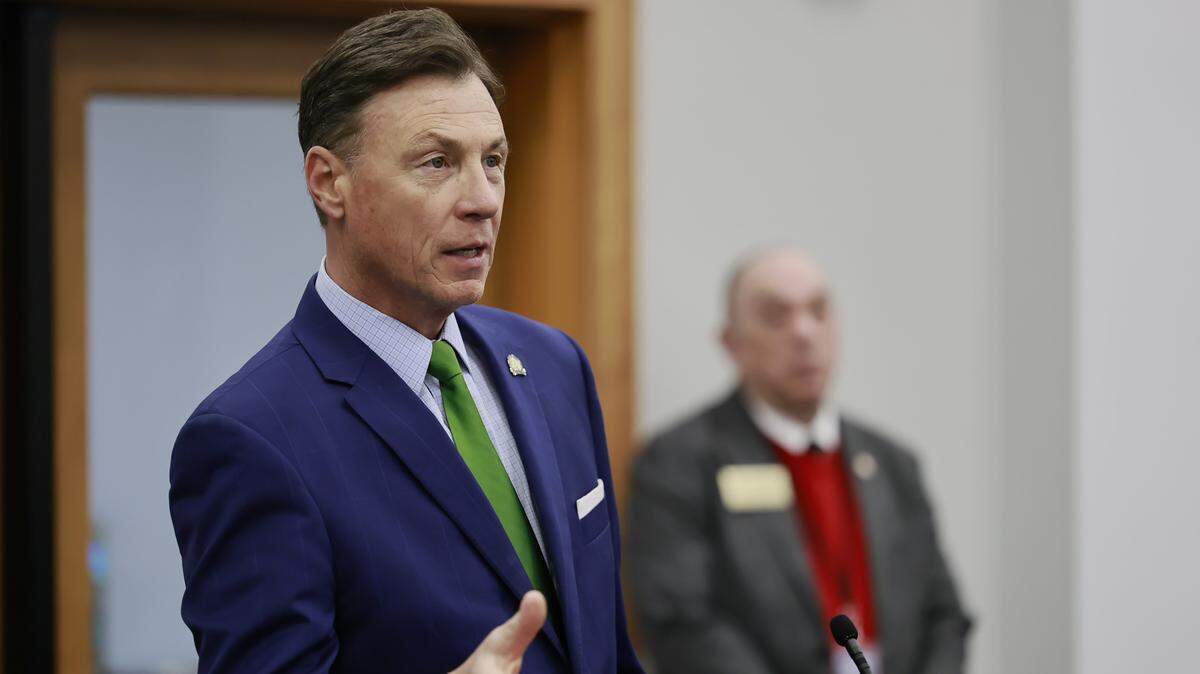
An Eastern Kentucky state senator filed legislation to significantly change the Public Service Commission, the powerful group regulating the state’s utility providers.
Sen. Brandon Smith, R-Hazard, introduced Senate Bill 8 on March 2, the last day to file bills in the Kentucky Senate. It would expand commission membership, shifts appointment powers and impose new intervention limits, among other provisions.
Smith told reporters Tuesday afternoon he is committed to passing the best version of the bill, which aims to address rising utility bills, including in the Eastern Kentucky region he represents.
“I think if there’s anything to take away from this, is that the Senate stands unified.,” Smith said. “This is a message we get loud and clear. We’ve been very thoughtful about it all the way from (GOP Senate President) Robert (Stivers) to all... members down.”
The commission regulates Kentucky’s utility and water providers and is charged with protecting utility customers, vetting power generation plants and utility sales and rate hikes. It’s also one of the most important bodies whose members are appointed by the governor, and Democratic Gov. Andy Beshear has the authority to appoint all three members.
The commission currently consists of Chair Angie Hatton, Commissioner Mary Pat Regan and Commissioner Andrew Wood.
The bill passed out of the Senate Natural Resources and Energy Committee on a 10-1 vote on Wednesday. Sen. Keturah Herron, D-Louisville, was the lone no vote.
Senate Republicans haven’t been happy with how the group is functioning.
Smith’s bill would increase membership from three to five members to serve four-year terms, but two of those members would be appointed by the state auditor, who is currently Republican Allison Ball.
Ball said in a statement “Kentucky has the resources, people and support from the federal government to make energy costs affordable again.” She also mentioned a recent case where the commission approved Kentucky Power to implement a 6% residential base-rate increase this year despite Attorney General Russell Coleman’s objection.
“I will do everything in my power to deliver those results for Kentuckians,” Ball said.
The governor would still appoint three members, but the bill implements new criteria for membership. One of the members appointed by the governor must be a licensed attorney who has practiced for at least seven years, and the two other members must have at least five years of experience in a specialized field. Those qualified fields include economics, engineering and accounting, among others listed.
SB 8 also prohibits no more than two members of the same occupation serving on the commission, and no more than three members may be from the same political party.
All appointments and reappointments would still be subject to confirmation by the Senate.
Smith said he has always had issues with the commission being under the governor’s authority and wants to remove the appearance of political involvement. In his bill, the commission would be removed from the Energy and Environment Cabinet to the auditor’s office.
“We are looking at moving it under the state auditor, which is usually very non-political for most purposes,” Smith said. “They’ve got a straightforward job to get the numbers done.”
Scottie Ellis, a spokesperson for Beshear, said in a statement that the bill is “another partisan move” to remove appointment power and authority from a Democratic governor to Republican officeholders.
“The bill’s provisions likely violate the Kentucky Constitution and will result in less representation and transparency for Kentucky families that are worried about their power bills,” Ellis said.
When asked about Ellis’ comments, Smith said he has yet to see an energy plan from Beshear.
“Unless you guys have got one, my answer to him is ‘show me your energy plan, and then I’ll take criticism from you’ because I haven’t seen one or anything even close to an energy plan,” Smith said.
Smith’s bill is very similar to legislation that was filed last year by Senate President Robert Stivers, R-Manchester. Stivers’ bill, which was also Senate Bill 8 during the 2025 legislative session, contained similar provisions that expanded the commission and imposed new membership criteria.
Stivers’ bill never made it out of committee, and he questioned the expertise of some commission members. One of those members at the time was former Democratic state lawmaker John Will Stacy, who Beshear appointed in September 2024. Stacy lost his seat on the commission in 2025 after the Senate did not confirm him.
Smith’s bill has been assigned to the Senate Natural Resources and Energy Committee and is scheduled to receive a hearing Wednesday morning.
New Intervention
A section of Smith’s bill that was not included in Stivers’ SB 8 from 2025 is new intervention limits.
The commission is responsible for handling complaints and cases regarding unfair rates, poor quality service or service outages, among other complaints.
Under current law, people who have a “special interest” can intervene in a case before the commission.
In Smith’s bill, a person cannot intervene unless the person can demonstrate “clear and convincing evidence” that they have “a special and unique interest in the specific rates or service of the utility that are not at issue in the case.”
According to the bill’s language general expertise as insufficient for intervention, which could limit third-party participation from organizations, including groups representing low-income customers.
Sierra Club Kentucky Chapter Director Julia Finch said the environmental organization opposes the bill because it makes it harder for local communities to have “a real say” in front of the commission.
“The bill ultimately means that the PSC will hear from fewer experts with experience and knowledge before they make a decision,” Finch said. “Our legislators should want to ensure instead that PSC members have all the information needed to make a ruling.”
Smith said provision surrounding intervention participation is still being worked on, and the bill could change as it goes through the legislative process.
This story was originally published March 3, 2026 at 5:04 PM.