House moves bill allocating $801 million. It doesn’t say where the money will go
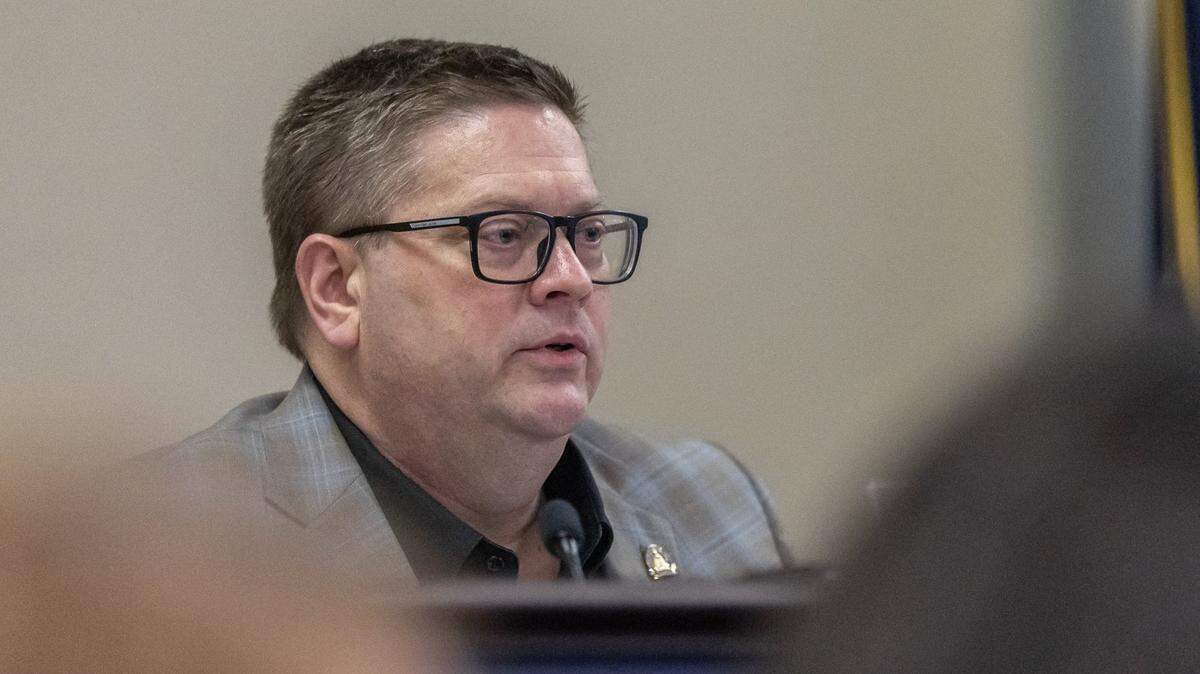
A House committee passed a bill Tuesday allocating $801 million to various Kentucky projects, but the bill is short on details of where exactly that money would go.
House Bill 900 is the latest version of the anticipated one-time expenditure bill, separate from the state’s Executive Branch budget bill, which has been passed by the House and is in possession of the Senate. Unlike the final version of the bill from two years ago, it is much slimmer and lists broad categories of where the money could go instead of specific projects.
House Appropriations & Revenue Chair Jason Petrie, R-Elkton, sponsored the bill. It passed out of the committee in a 17-2 vote. Minority Floor Leader Pamela Stevenson, D-Louisville, and Minority Caucus Chair Lindsey Burke, D-Lexington, voted no.
Burke said the vote felt like a “trust fall” and felt like voting yes would be taking a leap.
“This isn’t how I want to pass bills, and I appreciate that there’s more process to come, but this isn’t the right starting place, so I’m a no,” Burke said.
The $801 million spending would come from the Budget Reserve Trust Fund, also known as the “rainy day fund.”
Instead of bullet points that include allocations to individual projects, the bill simply lists that the money — split into $1 million for this current fiscal year, $400 million for the one beginning July 1, and $400 million for the next — can be used in three ways:
- Water and sewer project pools
- Economic Development investments
- Smaller one-time local infrastructure projects and investments
The total price tag is much smaller than the one-time spending bill in 2024, which allocated $2.7 billion in spending from the Budget Reserve Trust Fund.
A committee substitute to the initially-filed version of the bill was adopted Tuesday, but the only change was adding the $1 million allocation for the current fiscal year.
Later in the afternoon, the House passed HB 900 on an 85-13 vote. Majority Floor Leader Steven Rudy, R-Paducah, said the bill sets the threshold for the dollar amount lawmakers can use for one-time spending.
“Future legislation in this General Assembly will establish and decide and appropriate where that dollar amount is invested,” Rudy said.
Minority Whip Josh Watkins, D-Louisville, said he hopes to see housing projects funded in future legislation. Rep. Chad Aull, D-Lexington, said he didn’t understand why the bill contains an “artificial cap” for projects.
“We should just put forth our version, like we did with the budget, say what’s our priorities?” Aull said. “(Then) send it down to the Senate, let them fiddle with it, like they do with the House Budget.”
When asked why the House decided not to outline what projects will receive funding, House Speaker David Osborne, R-Prospect, told reporters there are still disagreements between the chambers on how much money should be spent.
“This time around, there’s about $30 billion in a request for those one time allocations,” Osborne said. “Clearly, that’s going to take an exhaustive negotiation to come to an agreement on how we pull a billion out of those requests. It’s a process that is larger than can happen just in one chamber. It’s got to be both chambers talking.”
Included in the bill was a provision barring its spending from being considered by the state’s “trigger” formula meant to allow the state to cut personal income taxes again. Spending is one of multiple triggers, including revenue and the size of the Budget Reserve Trust Fund, taken into account that would allow the state to cut the income tax rate down from 3.5%.
The GOP-led legislature cut taxes shortly after taking full control of the legislature in 2017. In 2022, the legislature set the state on a path to get to zero income tax via “trigger” system. Since then, the income tax rate has fallen in 0.5-point increments three times, down from 5%.
The committee had a busy Tuesday afternoon beyond its passage of House Bill 900. It also passed bills related to other revenue matters, including the all-important road plan, which dictates which state roads get funding over the next two years.
Petrie did not take questions from reporters after the committee meeting adjourned.
This story was originally published March 10, 2026 at 2:17 PM.