Lexington pet store sues city over law banning puppy, kitten sales
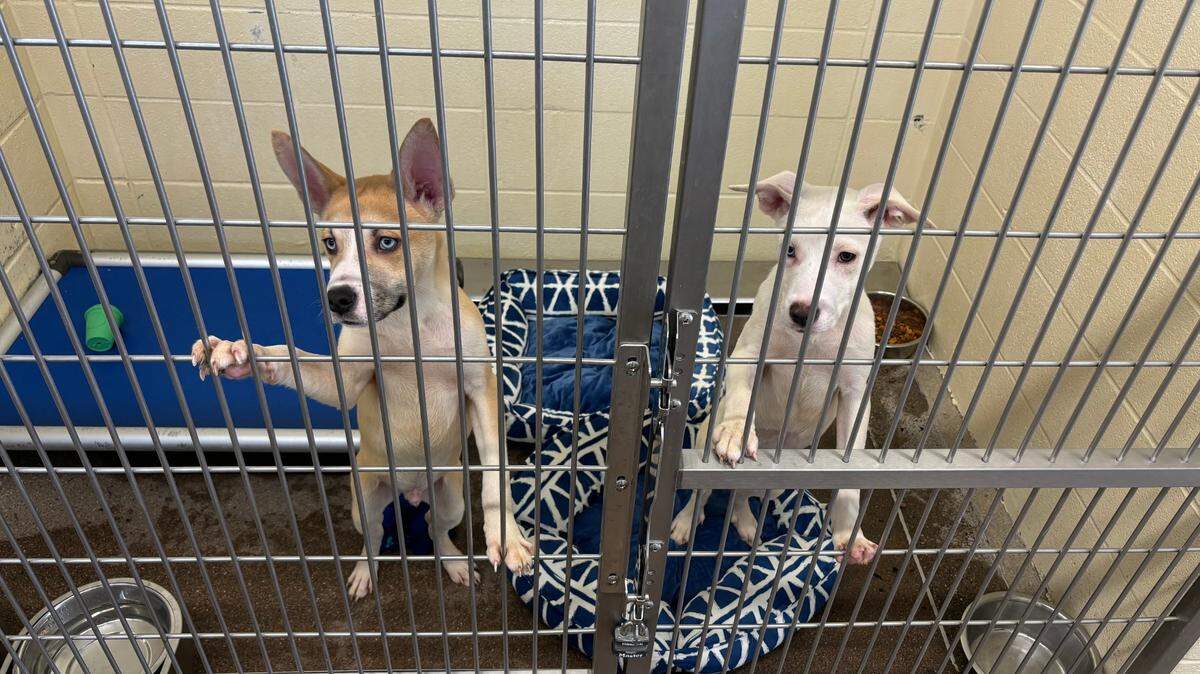
The last local store known for selling puppies and kittens is suing Lexington-Fayette Urban County Government over its ban on the retail sale of those animals.
Most Valuable Pets, or MVP, is asking the Fayette County Circuit Court to overturn a 2024 ordinance stripping the ability of stores to sell puppies and kittens for profit, though those stores can partner with nonprofit animal shelters like the Lexington Humane Society to house pets up for adoption.
Stores in violation of the ordinance are subject to a $500 fine for each dog or cat they have for sale. Other pets like birds, reptiles and hamsters are still allowed to be sold by stores.
MVP is hoping to earn a temporary injunction that would prevent the city from enforcing the ordinance while the lawsuit plays out in court.
MVP’s attorney, Richard Getty, is representing the store. He represented a local Petland location in a similar suit over the same ordinance last year. That lawsuit was dismissed in December 2025 because Petland’s Richmond Road location went out of business.
Petland closed because it could not retain staffers, who feared they would be arrested for selling pets even though the ordinance was not being enforced during the lawsuit against the city, Getty told the Herald-Leader after the previous lawsuit’s dismissal.
“We thought the ordinance was invalid from the beginning,” Getty told the Herald-Leader.
Susan Straub, a spokesperson for the city, said Lexington does not comment on active litigation.
Jennifer Reynolds, the 11th District council member who led efforts to pass the ordinance, also declined to comment.
The arguments in court filings for the MVP suit are similar to the arguments Getty made when representing Petland.
“It’s the same theory of unconstitutionality,” he said, “Which never got decided in the first case. So (MVP) came to me and said they had to do something to preserve or save their business.”
MVP argues the ordinance is unconstitutional because it retroactively nullifies existing contracts between the store and breeders it supplies animals from, which is illegal under both the U.S. and Kentucky constitutions, the lawsuit claims.
Many of those breeders are out-of-state entities, and the lawsuit argues the ordinance unfairly benefits local breeders and animal shelters over out-of-state competitors.
The ordinance allows local breeders to sell animals to customers directly, rather than supplying animals to a store for retail sale.
Roughly 50% of MVP’s store revenue comes from the sale of puppies and kittens, according to court documents. The store has sold 890 puppies and 274 kittens since July 2022, when new owners paid $750,000 to purchase the store and made $80,000 worth of updates to the space.
MVP will not be able to pay off those costs, on top of maintaining its general lease and paying its staff, without the revenue earned from puppy and kitten sales, the lawsuit says.
Cutting down on the ‘puppy mill pipeline’
The Humane World for Animals, formerly known as the Humane Society of the U.S., advocated for the ordinance’s passage in 2024. The group argued that retail stores get their animal supply from large-scale breeding mills with unsafe conditions.
Banning retail sales at the local level means those puppy mills have fewer customers, earn less profit and hopefully shut down, the group argued.
“These types of ordinances are a crucial tool to cutting down on what we call the puppy mill pipeline — that is, the sheer number of puppies that are being imported into Kentucky and being sent out into our local communities,” Todd Blevins, Kentucky state director for the Humane World for Animals, told the Herald-Leader.
The organization has argued such bans not only restrict puppy mill activity, but also encourage potential pet owners to adopt from often overcrowded local animal shelters.
“We’ve already got plenty of dogs and an overpopulation crisis to begin with,” Blevins said.
“We’re obviously disappointed to see that some bad actors in the pet store industry are trying to undo this progress when everybody else in Lexington seems to have moved on,” he added.
But Getty says the organization manipulated the council with poor evidence.
“We got our hands in discovery on a lot of stuff that showed that the council and staff were really being manipulated by the humane society,” Getty said.
Court documents allege that in emails discussing the ordinance, representatives from the Humane World for Animals admitted they did not have local statistics regarding puppy mills in Lexington.
“They bought all this stuff from the humane society, you know, what’s the phrase, ‘hook, line, and sinker?’ I mean, just bad information. Much of the information was not valid.”
MVP only supplies animals from “those who meet MVP’s exacting standards for breeders,” court documents say, although those standards are not clearly spelled out in the documents.
Getty said he hopes the council is willing to take another look at the ordinance.
“I think the council made a mistake in adopting this. It’s hurt a lot of people,” Getty said.