KY lawmakers quickly override Beshear federal tax credit scholarship bill veto
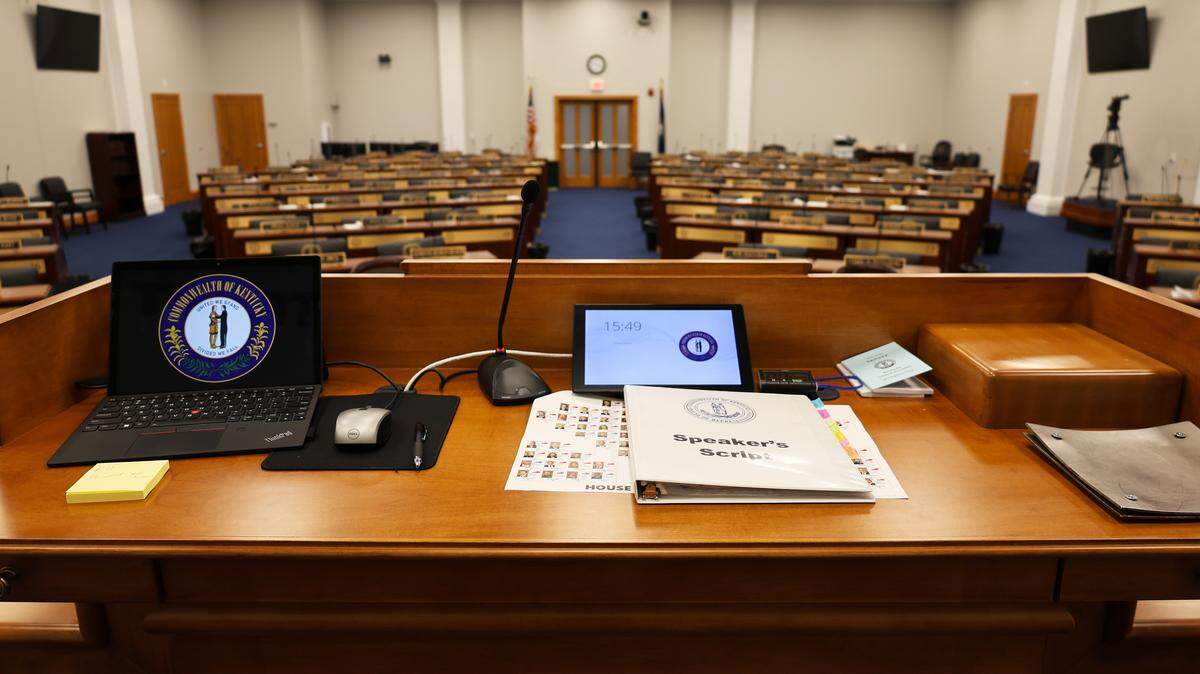
The Kentucky General Assembly on Tuesday overrode Democratic Gov. Andy Beshear’s veto of a bill authorizing federal tax credits for people who donate to private and public school scholarship organizations.
House Bill 1, which is sponsored by Rep. Kim Moser, R-Taylor Mill, and Rep. TJ Roberts, R-Burlington, would enroll the state in the federal Education Freedom Tax Scholarship program, which was created last year by Republican President Donald Trump’s One Big Beautiful Bill Act.
The program allows people to receive a credit of up to $1,700 on their federal income taxes for contributions they make to Scholarship Granting Organizations, or SGOs. SGOs would then use those donations to provide scholarships or cover school-related costs for private or public schools.
States must opt into the program, but the bill shifts that power from the governor to the Kentucky secretary of state, which is currently Republican Michael Adams.
The bill’s final passage received widespread Republican support. The Senate overrode the veto on a 31-5 vote, while the House overrode on the veto on a 77-14 vote. Rep. Kim Banta, R-Fort Mitchell, abstained.
Supporters of HB 1 say bill will expand educational opportunities and improve student outcomes. Critics, meanwhile, believe the federal tax program will only benefit the wealthy, harm public school funding and calls it a “back-door voucher” bill.
Senate President Pro Tempore David Givens, R-Greensburg, said calling the legislation a voucher bill is “totally and patently false” and that it will benefit Kentucky’s economy without impacting the state budget.
“HB 1 can be a positive impact,” Givens said. “Anytime we can infuse $400-to-$600 million annually back into the economy of Kentucky, it can only be a positive (for) tax revenue.”
Senate Minority Floor Leader Gerald Neal, D-Louisville, said not supporting the legislation isn’t about rejecting new approaches or limiting opportunities.
“It’s about ensuring that any policy we adopt is carefully structured, accountable and works well for all students and communities across the commonwealth,” Neal said. “The concerns raised give us a chance to slow down, take a closer look and continue working together toward a solution that reflects our shared commitment to both innovation and strong public schools.”
In Beshear’s veto message, he wrote that public dollars via tax credits should only go to public schools. He referenced Amendment 2 in 2024, which would have allowed the legislature to fund private, religious and charter schools. All 120 counties in Kentucky voted against Amendment 2.
He added while his veto may be seen as partisan, it shouldn’t be.
“I recognize my veto today will be politicized. Some will attack ‘teachers’ unions,’ as if they are malevolent actors when, in reality, they are our neighbors and friends who have taken on critical jobs despite the low pay. They should be appreciated instead of attacked,” Beshear wrote.
Throughout his two terms as governor, Beshear’s platform has consistently included being a strong supporter of public education. He pushed for teacher raises both this year and in 2024 in the state’s biennial budget and campaigned aggressively against Amendment 2 in 2024.
Republicans quickly criticized Beshear after he vetoed HB 1 Friday afternoon, saying his decision was driven by “pure politics” and that Beshear only cares about himself, not Kentucky families.
This is the second time during the legislative session so far that Beshear has vetoed a bill and the legislature immediately overrode it. The first one happened last week when the legislature overrode Beshear’s veto on House Bill 314, which will replace the board and remove the executive director of the Kentucky Communications Network Authority.
In previous years, the General Assembly, which has a Republican supermajority in both chambers, has overridden almost all bills vetoed by Beshear since his first legislative session in 2020. Lawmakers have until April 1, also known as the second concurrence day, to pass any bills they expect Beshear will veto.
After the veto period, legislators will return on April 14 and 15 for the final two days of session.