Kentucky AG Coleman signs onto mail-order abortion pill challenge to high court
AI-generated summary reviewed by our newsroom.
- Kentucky AG Russell Coleman joined amicus brief to stop mifepristone mail delivery.
- Coleman joined attorneys general from 22 other states in the challenge.
- Kentucky outlawed mail-order abortion drugs in 2022 through House Bill 3.
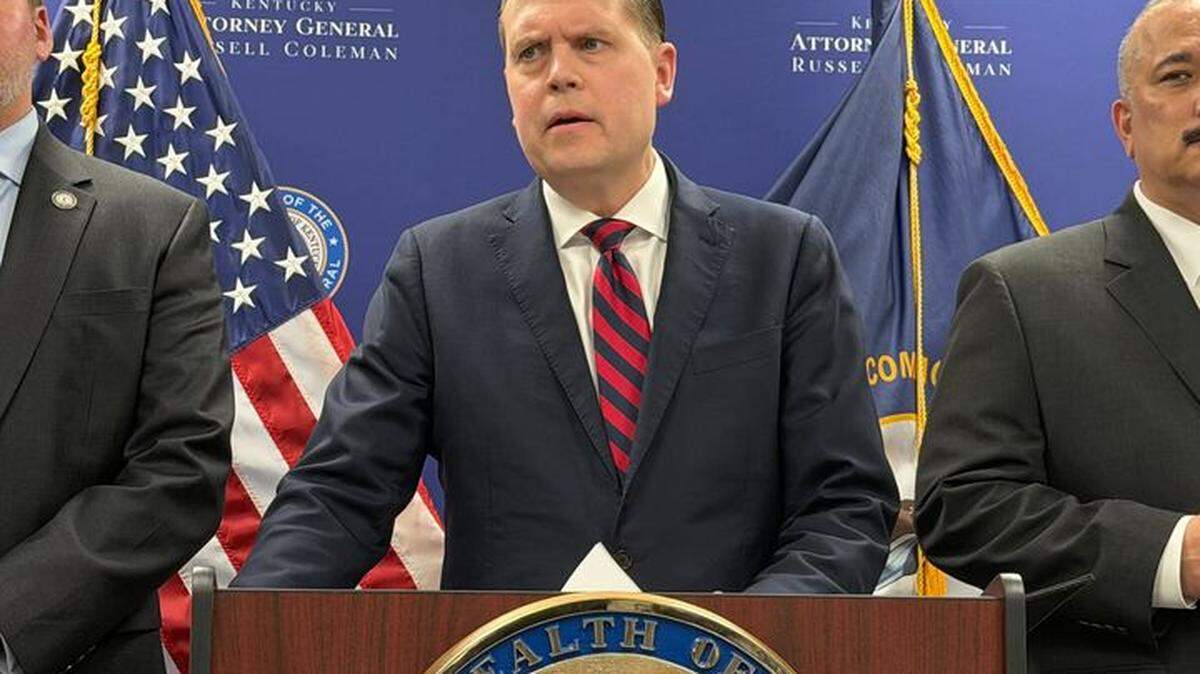
Kentucky’s Republican attorney general, Russell Coleman, said Friday that he’s signed onto an amicus brief asking the U.S. Supreme Court to prohibit the mailing of abortion drug mifepristone into Kentucky from other states.
“Activist groups from New York and California have been flooding our Commonwealth with these deadly pills without proper medical supervision,” Coleman said in a prepared statement. “We’re asking the Supreme Court to recognize that Kentucky has the ability to protect the health and safety of our citizens.”
Coleman joined the amicus brief alongside the attorneys general from 22 other states, including Missouri, Indiana, Ohio, West Virginia and Tennessee.
Coleman’s request is part of a legal battle featuring the state of Louisiana, which has successfully challenged the decision by former Democratic President Joe Biden’s administration to make mifepristone available to women by mail after the Supreme Court in 2022 struck down its Roe vs. Wade decision that guaranteed access to abortion.
Mifepristone is one of two drugs used in medication abortions, which has become the most common form of abortion in the United States.
In court filings, Louisiana says that mifepristone is responsible for “approximately 1,000 illegal abortions” in the state each month, despite a statewide abortion ban.
The 5th Circuit U.S. Court of Appeals in New Orleans upheld Louisiana’s successful challenge of the Biden era mail-order abortion drug policy on May 5. The U.S. Supreme Court has been asked to review the case.
Kentucky already outlawed mail-order abortion drugs, Coleman said in his statement Friday. The legislature did so in 2022 with House Bill 3.
Earlier this year, Coleman’s office said it was opening a civil investigation into gas stations and other businesses that “could be participating” in delivering pills to Kentucky for medical abortions.
Coleman’s office sent subpoenas to six gas stations in Western Kentucky counties — Christian, Logan and Simpson — that had advertisements for abortion medication.
The advertisements read: “Pregnant? Don’t want to be? Learn more at Mayday Health.” Mayday Health’s website says it is a reproductive health education nonprofit, which aims to “share information about abortion pills, birth control and gender-affirming care in any state.”
In the amicus brief, Coleman and the other attorneys general said the mail-order abortion drug policy lets the federal government undermine the states’ protection of their citizens by providing a workaround on abortion bans.
“There is nigh-universal agreement that a state’s enforcement authority includes the power to punish extraterritorial actions that have tangible impacts on the territory over which they are sovereign,” they wrote. “Our federalist system demands respect for the place of states in exercising their residuary and inviolable sovereignty.”
In a statement late Friday, Tamarra Wieder, Kentucky state director for Planned Parenthood Alliance Advocates, said Coleman is concerned about controlling people, not protecting their health.
“Attempts to block medication abortion have never been about the health and wellbeing of Kentuckians – not now, not ever,” Wieder said. “This is a scare tactic and a waste of taxpayer dollars to push an anti-abortion agenda. Meanwhile, Kentuckians are forced to leave their families and support systems just to access basic health care or carry pregnancies against their will.”
“Kentucky already has one of the most extreme and oppressive abortion bans in the country, and somehow, it’s not enough for AG Coleman,” Wieder said. “This sham lawsuit is about fear and control. He is so extreme he is trying in another lawsuit to stop people from even talking about abortion, period.”
This story was originally published May 8, 2026 at 11:37 AM.