
KY judicial branch to lay off 170 employees due to anticipated budget deficit
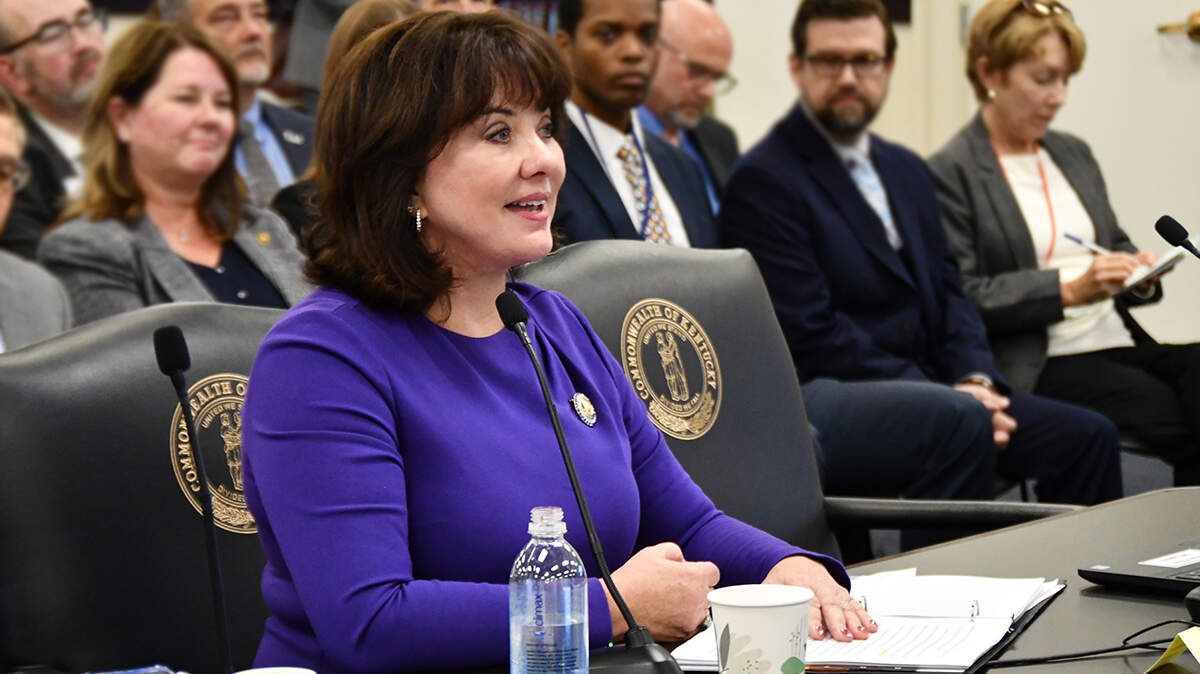
The Kentucky Court of Justice is making sweeping operational changes, including laying off nearly 200 employees in anticipation of budget deficits over the next two years, though the agency will also create more than 100 new jobs.
In an email sent to staff May 15 and shared with the Herald-Leader, State Supreme Court Chief Justice Debra Hembree Lambert said court operations will remain largely the same, but positions and programs must be cut to ensure the court’s financial longevity. The layoffs come as part of differences in funding the court system received from the General Assembly in the state budget, which covers the next two fiscal years.
The chief justice’s Friday morning email said only positions within the Office of Statewide Programs will be impacted by the reorganization and layoffs, which includes the Department of Family and Juvenile Services, the Department of Specialty Courts and the Department of Pretrial Services.
By August 1, 170 tenured and non-tenured positions will be abolished, the email said.
Those employees will be dismissed or laid off, in addition to another 45 new employees who will be dismissed if they are unable to complete their probation period before August 1.
The email said 108 tenured and non-tenured positions will be created by August 1 for “frontline workers.”
Specialty courts — including those that specialize in drug, mental health and veterans treatment — that were previously said to be at risk of closure will remain open, though use of state money used to operate them will be limited moving forward, Lambert said.
Last month, Lambert warned the state’s courts could face major cuts under the two-year judicial budget passed by the General Assembly. Republican lawmakers pointed out during session, though, that the state’s judicial branch was set to get more money from the next two-year budget in House Bill 504.
Thanks to the advocacy of the court system’s employees and others, Lambert said lawmakers put $5 million more into its operating budget.
For the current fiscal year, the judicial branch is expected to get $466 million, not counting restricted funds it collects for specific purposes or federal funds.
The next judicial budget will give the state courts $480 million in fiscal year 2027 and $497 million in fiscal year 2028.
In the judicial branch’s original budget request, it recommended $562 million for 2027 and $574 million for 2028.
While the courts are receiving more money, Jason Bailey, executive director of the Kentucky Center for Economic Policy, said the budget mandates certain spending increases, including a 2% pay raise for employees and employer health insurance costs that are set to rise 24% over the next two years.
“The Judicial Branch anticipates a general fund deficit of up to $12.6M in fiscal year 2027 and up to $17M in fiscal year 2028,” Lambert said in the email. “While some of this deficit may be mitigated through the generation of additional revenue and vacancy credits, changes are necessary to ensure the long-term stability of the branch. It is therefore necessary to implement a series of structural changes and operational efficiencies designed to align our staffing and services with the resources available to us.”
Lambert said a review conducted by the Administrative Office of the Courts identified reorganizational opportunities “that focus resources on the core mission of supporting the courts.”
“A key priority in this process has been broadening the frontline services courts provide to the public,” she said. “To accomplish that goal, we are making material changes to our organizational structure and consolidating certain management functions and administrative operations so that resources remain focused on the work performed in courtrooms and clerk’s offices across the commonwealth.”
Other changes — aside from elimination and creation of jobs — to take effect July 15 include:
- Abolishing positions that have remained vacant for over a year;
- Eliminating the annual $1,200 account for the reimbursement of justice and judge administrative expenses;
- Eliminating the judicial intern program;
- Eliminating purchases of paper copies of legal publications;
- Reducing the conferences and college budgets by 50%;
- Eliminating use of state funds for Specialty Courts treatment and reducing drug testing costs by capping the number of participants and reducing testing frequency;
- Pausing use of state funds for out of state travel, judicial colleges or circuit court colleges.
Lambert said earlier this year that the judicial branch already operates with a lean budget. Most of its expenses, about 90%, are devoted to staffing and basic costs to keep courthouses across the state running.
Those specialty courts provide supervision and guide those whose charges are tied to substance abuse disorders or mental illness to health care and other treatment services in an effort to address the root cause of criminal behavior, reduce the risk of reoffense and cut down on incarceration costs.
Lambert’s email did indicate employees impacted by dismissal or layoff would have the opportunity to apply for vacancies across the state’s court system and staff with tenure are eligible for job placement.
“I know this is a difficult moment for our court community,” Lambert said in the email. “The employees directly affected by these changes have served the Commonwealth with professionalism and dedication, and their contributions to the administration of justice are deeply valued. These decisions were not made quickly or lightly. They reflect careful review and thoughtful consideration of how to best deliver front-line services while preserving the long-term stability of Kentucky’s court system.”
This story was originally published May 15, 2026 at 1:01 PM.

.JPG)