Richmond man had clean driving record. Kentucky nearly took his license anyway
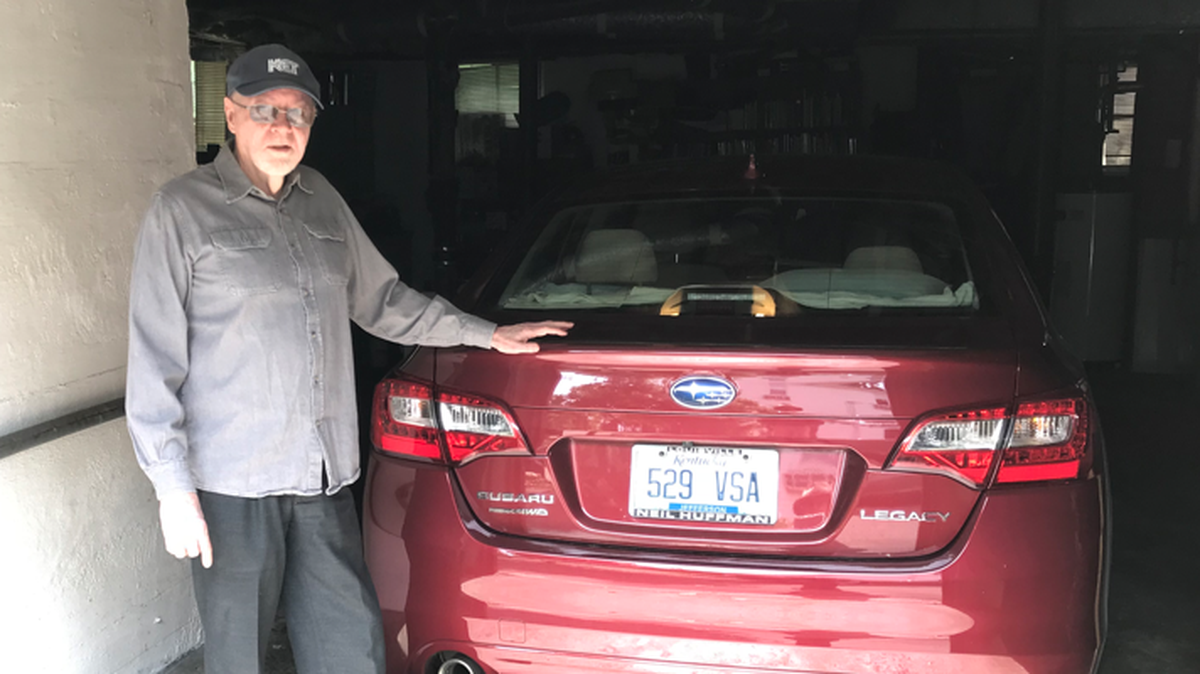
Retired public radio broadcaster Ron Smith saw a patrol car’s blue lights flashing in his rearview mirror on March 11. He pulled to the side of Richmond’s Eastern Bypass, his wife seated next to him.
As Smith tells it, police Officer Rodney Haddix politely spoke to him through his car’s passenger window for only two or three minutes.
Was Smith OK? Why, yes, Smith replied. Haddix said he was asking because Smith hesitated in the intersection as he turned left onto Eastern Bypass from Berea Road. Oh, Smith said. I didn’t realize I hesitated, but if I did, it’s because the intersection’s pavement was wet and bumpy, he said.
Smith, who is 77, offered to show Haddix his driver’s license, registration and proof of insurance. Haddix said that wasn’t necessary and wished the couple a safe drive home without issuing a traffic citation.
But the brief encounter was actually the beginning of a two-month ordeal.
After sending Smith on his way, Haddix returned to the Richmond Police Department and swore out a one-page statement about the episode to the Medical Review Office at the Department of Vehicle Regulation at the Kentucky Transportation Cabinet in Frankfort.
The “medical review affidavit,” as it’s called, tossed Smith into a state bureaucratic maze.
And it nearly cost him his driver’s license.
It required him to get forms filled out by a doctor and optometrist to prove he’s fit to drive. Then it forced him to prove it again by submitting a second round of medical paperwork. And then it insisted he be evaluated at a “certified driver rehabilitation” program that can cost more than $600, with the threat that he might have to repeat this routine annually.
Failure to satisfy these demands would result in the suspension of his driver’s license, despite the fact that Smith has a squeaky clean driving record.
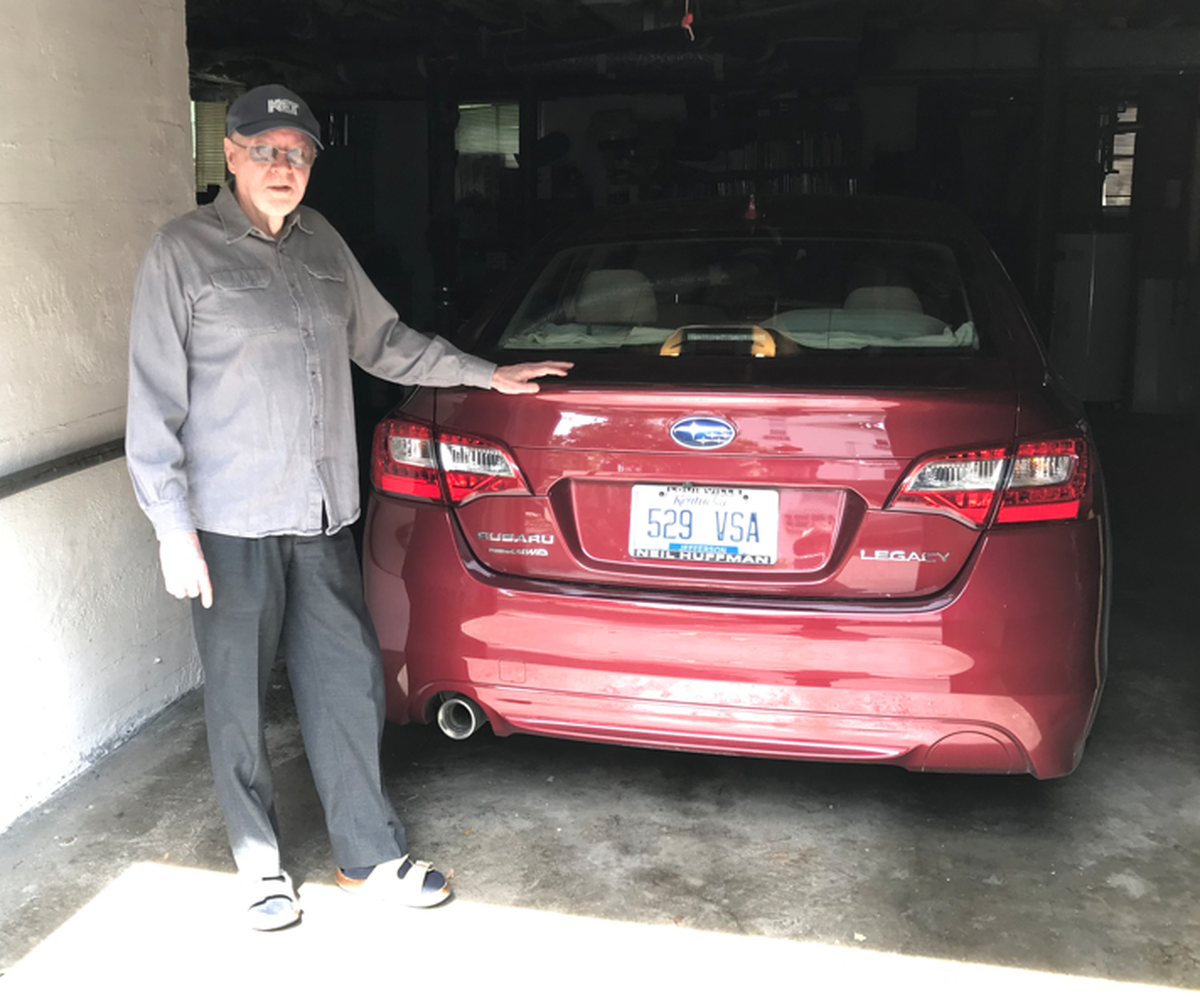
The prospect deeply distressed Smith and his wife. They rely on his 2016 Subaru Legacy to get to the grocery, to the doctor, to his part-time job in Lexington teaching English as a second language.
“Taking away someone’s driver’s license is about the same as a death sentence, especially in rural Kentucky, where there is no public transportation to speak of,” Smith told the Herald-Leader during a recent interview at his home near Eastern Kentucky University, where he spent several decades broadcasting for WEKU.
“It’s upsetting when you think about the possible consequences of it,” he said. “But also, just dealing with this faceless bureaucracy — getting these letters from people who don’t seem to be taking into consideration the evidence that’s put in front of them.”
Smith said Richmond police Chief Rodney Richardson told him that nothing could be done about the affidavit once his officer sent it to Frankfort. He said the Transportation Cabinet’s Medical Review Office told him he had no right to appeal (which isn’t accurate; the right to appeal these cases is explained in state regulations).
Neither the Richmond Police Department nor the Medical Review Office responded to the Herald-Leader’s requests for comment on Smith’s case.
But days after the newspaper asked the agencies to answer some questions, on May 19, the Medical Review Office suddenly dropped its case against Smith and told him it would delete its files related to Haddix’s affidavit.
The sequence of events is self-explanatory, Smith told the Herald-Leader later that day.
“I believe that the Medical Board’s reversal is the result of your investigation of the situation,” Smith said. “Thank you so much.”
In a prepared statement, Transportation Cabinet spokesman Allen Blair said Smith’s reprieve was due to “a missing requested document” the Medical Review Office wanted that finally turned up.
“The document has now been received, reviewed and the matter resolved without the individual being required to pay any additional costs for a driving evaluation,” Blair said.
“Team Kentucky’s top priority is ensuring our roads are safe for the families that depend on them each day,” he said. “The Medical Review Board and the Transportation Cabinet designee are legally obligated to assess the fitness of drivers when a suspected physical or cognitive impairment is reported to the Cabinet, including through an affidavit from a law enforcement official.”
Lawmaker: System needs more oversight
The story doesn’t end there.
Other motorists appear to have grievances with the Medical Review Office, which handles several thousand cases in a typical year.
State Rep. Myron Dossett, R-Pembroke, shared his concerns at a July 2025 legislative hearing with Matt Cole, commissioner of the Department of Vehicle Regulation. Cole’s department oversees the Medical Review Office.
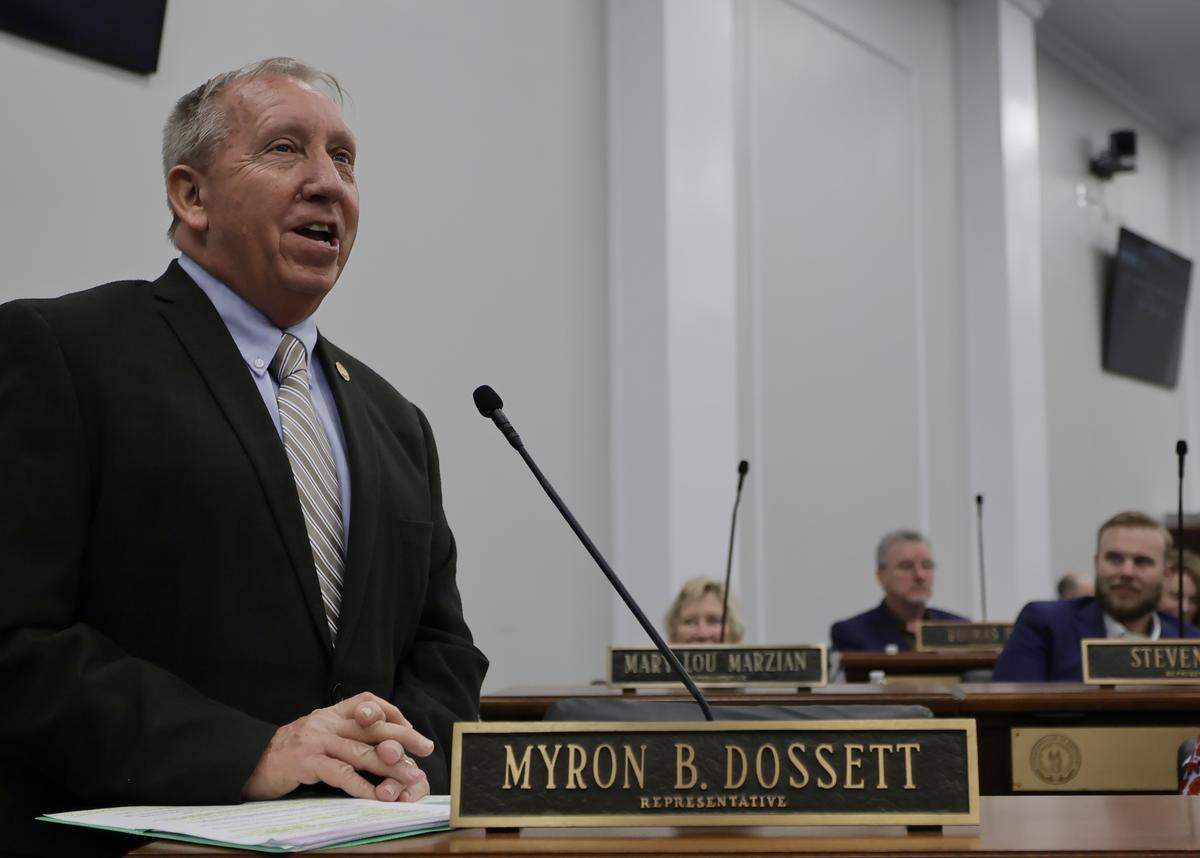
Dossett said he’s heard from Western Kentucky constituents who face too many bureaucratic obstacles trying to save their driver’s licenses after someone files a medical review affidavit against them.
In one case, Dossett recently told the Herald-Leader, a 65-year-old woman had a fender-bender in a Walmart parking lot. A police officer said the woman seemed “confused” at the scene. He filed an affidavit, which she had to rebut with multiple rounds of paperwork filled out by various medical professionals, clearing her to drive.
“In the end, this lady, even with her insurance, she was out of pocket over $2,000 personally,” he said. “Now, she did receive her driver’s license back. But she’s waiting. She knows she’s going to be notified again and have to do this every year. They told her that.”
This state oversight system with a legitimate purpose might need better oversight itself, Dossett says.
“I think everyone appreciates the fact that they are coming back and checking, making sure there are no medical issues with the people who are driving vehicles on our roads,” Dossett said.
“But the problem I saw was that people are having to submit all this paperwork multiple times because for one reason or another it’s not making it where it’s supposed to go in Frankfort. Or else their doctor clears them, says they’re OK to drive, but that answer isn’t accepted, so they’re still being sent to these driver retraining programs,” he said.
“It makes me nervous, being 65 years of age myself,” Dossett said, chuckling.
The legislature’s Interim Joint Committee on Transportation is likely to investigate how the state handles medical review affidavits at a public hearing this summer, Dossett said.
How medical review affidavits work
Smith said he didn’t give a second thought to his brief roadside encounter with Haddix, the Richmond police officer, until he got a letter in the mail a few days later from the Medical Review Office in Frankfort.
The letter informed him the office “has received information concerning a physical or mental condition that may affect your ability to safely operate a motor vehicle.” Paperwork was enclosed to be completed by him and his doctor and optometrist. Failure to obey the instructions would mean the loss of his driver’s license.
Smith had no idea what this was about.
It’s supposed to be about road safety.
Under state law, the transportation secretary appoints a panel of doctors called the Medical Review Board. It’s responsible for identifying drivers with physical or mental impairments that would make them a threat behind the wheel, such as seizures, blackouts, dementia or poor eyesight.
The Medical Review Board learns about suspect drivers that it should examine through affidavits that are filed with the Medical Review Office.
Law enforcement officers and doctors often file medical review affidavits when they encounter impaired drivers, but ordinary citizens can file them, too.
Sometimes the concerns are valid, and sometimes they’re not, said Madisonville attorney Chris Rhoads, who is active with the Kentucky Justice Association, which represents trial attorneys.
“They may be reported by a neighbor or a family member or an officer who doesn’t really have solid grounds, and then all of a sudden, you know, they’ve lost their license,” Rhoads explained.
“The presumption is that driving is a privilege, it’s not a constitutional right,” he said. “So the burden is on you. You have to go and prove your driving ability. The process can be very cumbersome, particularly for people who are older, who don’t know how to negotiate this process.”
‘How many people like me?’
In Smith’s case, Haddix wrote in his affidavit that Smith “was making a left turn from Berea Road onto the Eastern Bypass. While making the left turn, the male stopped in the middle of the intersection, nearly causing the vehicle behind him to collide with his vehicle.”
When Smith finally got his hands on this affidavit, after pressing the Richmond police chief by email for more information about the case against him, he was baffled, he told the Herald-Leader.
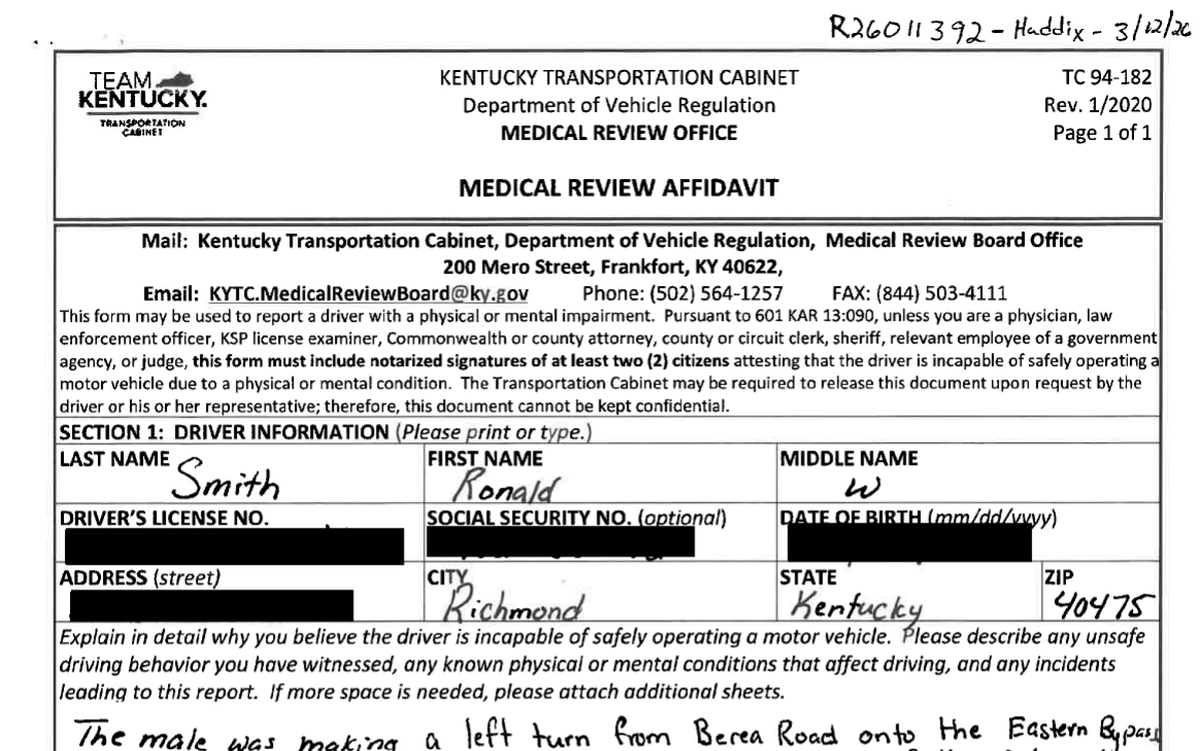
At the scene, the officer told Smith he “hesitated” in the intersection, Smith said. But the officer wrote in the affidavit that Smith “stopped” and nearly caused a rear-end collision.
Smith said he wondered: Why the change to a more muscular — and inaccurate — verb? And who allegedly nearly hit him? It was around 10:15 p.m. The only other vehicle in the vicinity appeared to be Haddix’s own patrol car, Smith said.
Haddix did not respond to the Herald-Leader’s request for comment.
Although it could explain a few things, Smith never got to review the officer’s body camera footage.
In a May 12 internal email chain that was provided to Smith by the police department, Haddix told his chief that he’s “been unable to locate” the footage.
Haddix then added more allegations about the traffic stop, telling his chief that Smith was “in a very confused state,” but “he was not under the influence.”
This was the first Smith heard that he was supposedly “very confused” that night, he said.
“None of this made sense. He didn’t ask me to get out of the car to examine me or to ask me questions,” Smith said. “If he thought that I was ‘very confused’ or suspected that I might be an unsafe driver, why would he just let me drive home?”
The mandatory medical paperwork Smith sent to Frankfort didn’t change anyone’s minds. His doctor and optometrist pronounced him fit to drive a vehicle, according to letters Smith shared with the Herald-Leader.
Asked directly on one of the forms if Smith should be required to complete a driving evaluation given by a certified driving rehabilitation specialist — someone who helps impaired people relearn how to drive safely — Smith’s doctor clearly checked “No.”
In a required follow-up letter to the Medical Review Office on April 15, the doctor wrote: “Mr. Smith has not been diagnosed with any neurological or memory impairment condition, nor shown any signs of such. He has not been taking any medication that would be of concern.”
Nonetheless, on May 1, the Medical Review Office ordered Smith to complete a driving evaluation at one of 11 certified driver rehabilitation specialists listed on an enclosed sheet. The closest programs were in Lexington.
The cost quoted to him when he called one of the programs was $600, which is a lot of money to a retiree, Smith said. Also, he said, the program advised him that once you’ve gone through the rehabilitation exam process, you’ll likely be required to repeat it every year.
“Certified driving evaluation prices vary and are not required annually unless an evaluator and the Medical Review Board recommend repeat testing,” Blair, the cabinet spokesman, told the Herald-Leader.
Since he has a clean driving record and did not get cited for a traffic offense, Smith said he wonders if he was targeted simply because he’s 77 years old.
If being 77 makes him a suspect driver, he asked, then what about drivers who are 70? Or 65? Who gets to decide the age at which Kentucky motorists automatically fall under suspicion?
“Is it an injustice? I don’t know. Maybe,” Smith said. “How many people like me all over Kentucky are being ordered to go to these places by the medical review board because of an affidavit despite no evidence of problems? This office has an awful lot of power.”