Officials’ plan for controversy-free KY data center falls short amid backlash
County officials believed they had found a blueprint for launching a data center in rural northeastern Kentucky without raising the public’s ire.
They were wrong.
Nearly 400 angry residents packed a community center in Boyd County Monday night for what was billed as a town hall meeting over a proposed, 550-plus-acre data center slated for an industrial park west of Ashland.
But the meeting quickly devolved into chaos as at least three local government and economic development officials were shouted at and called names as residents near the proposed center voiced concerns over strained power grids, pollution and secrecy surrounding the project.
Following strong grassroots organizing against artificial intelligence and surveillance data campuses in places like Meade and Oldham counties, the judge-executives around Ashland devised a strategy last year for luring tech firms into town with enough safeguards in place to avoid raising eyebrows.
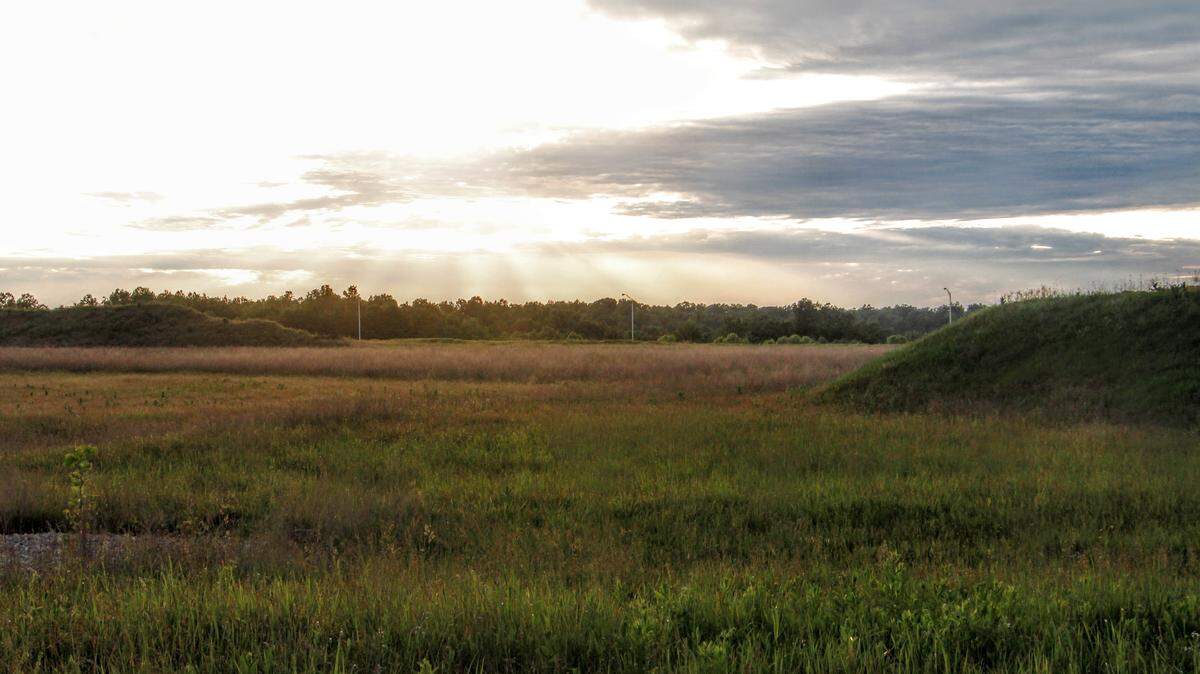
The newly proposed data center that plans to eventually ramp up to about 1 gigawatt in size — enough to power a city the size of San Francisco — will be sited in an industrial park operated by the five Eastern Kentucky counties situated near the banks of the Ohio River near Huntington, West Virginia.
No private-sector farmland would be jeopardized by this project, the officials said, and the computers powering streaming video services or generative AI technologies would be situated far away from any residential properties, across the street from a landfill.
The modern Muskie Data Campus, as data center builder TeraWulf Inc. is calling it, plans to use cutting-edge technologies to reuse water to cool its powerful computers and keep the noise down on the property to no louder than a modern refrigerator, TeraWulf said when it announced the plan.
The industrial park the campus will be built in shares tax revenue among all five of the counties in that area — Boyd, Carter, Elliot, Greenup and Lawrence — meaning the enormous profit from the project could be enjoyed equally in rural regions devastated by coal companies and steelmakers that folded or left town.
Plus, county officials didn’t pledge a single dollar in tax incentives to locate the data center there. TeraWulf wanted to build in an East Coast area where power is still relatively cheap.
Even the messaging around the project was designed with skeptical residents in mind.
Boyd County Judge-Executive Eric Chaney, who quickly emerged as the face for the project, openly calls himself “one of the biggest conspiracy theorists that exists” and says he “hates government with a passion.”
“TeraWulf plans to be different,” Chaney pleaded with residents Monday night.
The county officials’ plans started to go off the rails last week when news of TeraWulf’s purchase of the 200-acre plot of land that has sat vacant for 28 years broke when the company made an unscheduled 8-K report with the U.S. Securities and Exchange Commission.
County leaders such as Chaney had signed nondisclosure agreements with TeraWulf that prevented them from discussing the company’s plan’s publicly, and the sudden filing left them scrambling to come up with a messaging plan that would paint the project as an economic good.

“The window of opportunity for growth is small and something we must act on when it presents itself,” said Greenup County Judge-Executive Bobby Hall.
Hall said the property TeraWulf purchased, once promised as the site of a new aluminum rolling mill in 2017, has witnessed 42 requests for information from prospective industrial clients since the East Park industrial park was founded. For now, he said, it’s had 41 rejections.
But most residents weren’t having any of it.
“It makes you look like liars and that you’re doing something shady,” said David Sparrow of Greenup County. “We can’t trust that. If you had told us about it and at least given us 60 days to digest it and talk about it and learn about things. That’s what everybody’s panicked about.”
Ashland and its surrounding counties host a rare sliver of the industrial Midwest where steel, coal and oil was produced and processed for shipment on the Ohio River. Since the 1960s, the population has steadily declined as steelmakers faced post-war over-capacity and the market was flooded with foreign products.
Residents are tired of the boom-and-bust industries that make promises they can’t keep, said Rachel Wilson, of Boyd County.
“What happens when everyone in this room is gone from this place, when our children are gone from this place?” she said. “All of these technologies we’ve talked about before—all of these industries—they came, they were great for a bit and then they left. And we’re left with trash. We’re left with trash, and we’re expected to shoulder that and raise our children next to these ghosts of industries long past.”
Kentucky Power, which serves 20 of Kentucky’s easternmost counties, charges some of the highest rates of any utility in the state. Experts believe the investor-owned company is struggling to keep up with aging infrastructure left behind by the departure of heavy industry in many Eastern Kentucky counties.
In 2023, the Kentucky Public Service Commission rejected a 250 megawatt Eastern Kentucky cryptocurrency mining facility partly over concerns that the company lacked the necessary energy supply.
“Eastern Kentucky deserves jobs, investment and opportunity, but we also deserve transparency and protections for the people who already live here,” said Pam Lewis, a Carter County resident and Democratic candidate for the Kentucky House of Representatives District 96. “What concerns many people is not simply the possibility of a data center. It’s the speed of the industry’s expansion and the fact that many long-term impacts are still not fully understood.”
Residents said they believed the data center will likely use more water than it claims and that the heavy machinery used to prop up the center could leak organic compounds into the local water supply.
Kentucky Power, TeraWulf and local county and economic development officials will host another town hall pitched as an opportunity to hear and answer more questions about the project on June 17.