Cuts coming to Kentucky Medicaid program, social services and more
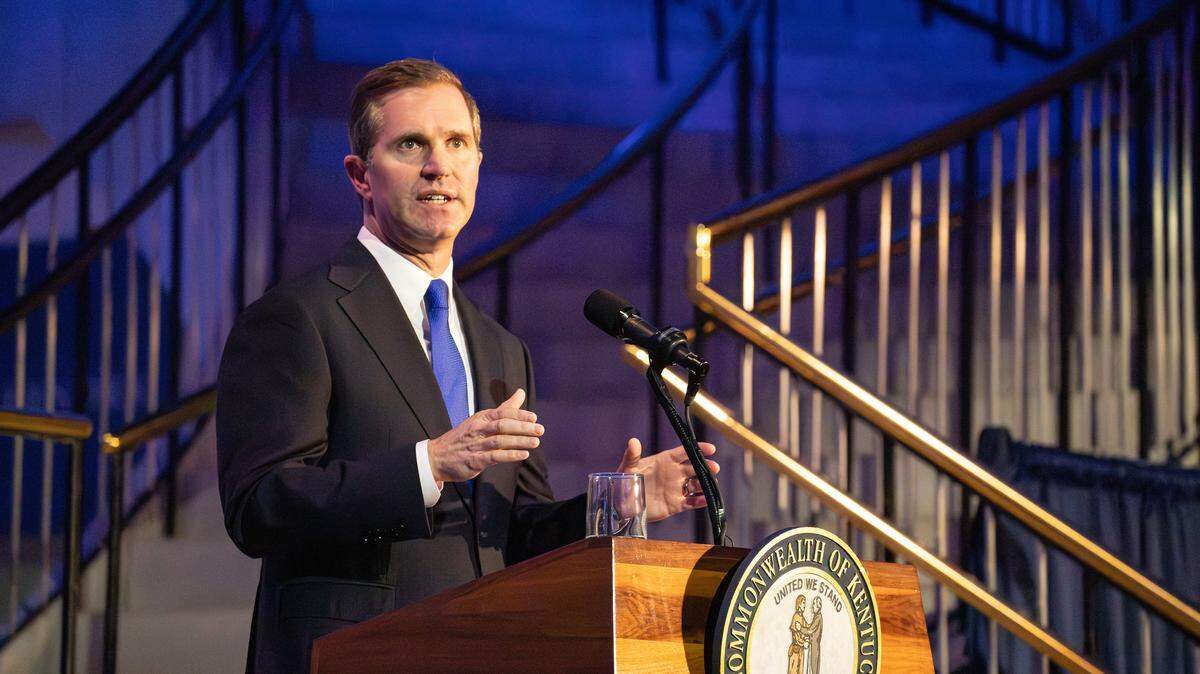
Gov. Andy Beshear announced cuts are coming to departments and programs within the Cabinet for Health and Family Services, including Medicaid, foster care, the Temporary Assistance for Needy Families program and more.
Beshear on Thursday cited funding reductions in the next two-year state budget for the cabinet as the reason for the cuts, adding that he “repeatedly warned” the General Assembly “about the painful impacts that would be felt from their budget cuts or failure to increase funding for services.”
The final version of the state budget falls $691 million short of the agency’s request and puts $290 million into the Budget Reserve Trust Fund for potential use for benefits next year, according to the Kentucky Center for Economic Policy.
“Sadly, action was not taken to correct the most concerning areas,” Beshear said. “Now, the state is forced to bear the outcome of these short-sighted decisions and the chronic defunding from the federal government. Cuts are going to have to be made across multiple services, including those in Team Kentucky’s departments of community-based services, behavioral health, developmental and intellectual disabilities and Medicaid services.”
During the 2026 legislative session, lawmakers’ main priority was passing the next two-year state budget. While Republicans, who have a supermajority in both the House and Senate, said the budget was fiscally responsible and protected essential services, Beshear said cuts to the Medicaid program would hurt Kentucky families.
Cabinet for Health and Family Services Secretary Steven Stack said Thursday that the legislature also failed to increase funding for inflationary growth across programs where costs have increased.
“Anyone who is purchasing gasoline or groceries knows that costs have gone up,” Stack said. “Those same costs have certainly impacted the cost of providing medical care, the cost of providing foster care services, foster parent support, foster home support (and) the cost of providing meals through our nutrition programs. Those costs have gone up, but our funding has gone down, and in some areas, gone down quite significantly.”
Beshear and Stack didn’t touch on specific cuts, but outlined general steps the cabinet is planning to take. Stack said for Medicaid, most providers in the state program will have rate reductions.
While reductions can’t be uniformly applied, Stack said there will be announcements soon on provider payment reductions that begin in the next fiscal year.
Other reductions will take place in the Department for Community Based Services, including social services programs for foster parents, foster children and adults and children who are subject to abuse or neglect.
“Actions will have to be taken regarding the foster care network, regarding the foster homes and the rates that they receive for payments, as well as a number of special programs that are put in place to help support foster children to overcome the adversities they face and to help them have their best opportunity to thrive,” Stack said.
House Speaker David Osborne, R-Prospect, said in a statement Beshear’s announcement is a “cruel and unnecessary blow” and urges him to reconsider his decision.
He added that the legislature gave Beshear and his administration flexibility to use existing state funding to protect priority services for vulnerable Kentuckians.
“We also directed the administration to prioritize state spending and seek savings by addressing outdated and ineffective programs, as well as services already provided by other agencies or the private sector,” Osborne said. “Instead of doing so, he makes abundantly clear what he and his administration choose to prioritize.
“After all, he consistently finds the funding needed to expand state government when he wants to — including a Pre-K for All initiative that failed to receive support because he failed to produce an actual plan.”
Kentucky Temporary Assistance Program, Senior Meals program to experience cuts
The Kentucky Temporary Assistance Program, or KTAP, will experience more cuts after the cabinet announced in October 2025 families drawing temporary assistance would see a drop in the benefits.
The program provides cash, medical and transportation funds to low-income families for a lifetime maximum of five years and receives allotted federal funds from Temporary Assistance for Needy Families.
Another program that Stack said experienced a budget reduction was the senior meals program.
In September 2025, the Beshear administration told the state’s 15 area development districts, which oversee senior feeding programs, it would not have enough money to fully fund the program.
The senior feeding program helps provide meals at sites across Kentucky, including at the Lexington Senior Center. The program was expanded by the Beshear administration during COVID and had used American Rescue Plan Act money, or COVID relief funding, to do so.
But that money had been tapped out at the time, and the state had to use $9.1 million in Medicaid funding to keep the program going. Beshear said at the time that the state has been able to tap other funds in prior years for those senior meal programs. But since those funds were exhausted, it would be a “concern” in the next budget cycle.
“The General Assembly declined to maintain that funding level and did not provide that additional $9.1 million,” Stack said. “So now, as a straight line through to the senior meal program, there will be a reduction of $9.1 million because we were not given the same money that we had dialogued so openly about last fall.”
A Senate Majority Caucus spokesperson said the program’s funding is maintained within the base budget of the Kentucky Department for Aging and Independent Living.
In the previous biennial budget, he said, lawmakers allocated $10 million each fiscal year to support the program, which became part of the agency’s base funding in subsequent budget cycles, and that remains in place for the cabinet to utilize.
The spokesperson added that lawmakers have raised serious concerns about the program’s past management and communication, which include “the administration’s decision to continue operating at expanded levels using temporary funding, the lack of clear and timely communication with providers and the failure to prioritize seniors with the greatest nutritional need from the outset.”
“Ultimately, the success of the program will come down to execution and responsible management of available resources,” the spokesperson said. “We expect the administration to take these concerns seriously, prioritize seniors who depend on these services the most and use the flexibility within its budget to prevent further shortcomings.”