
How changes made by the 2015 General Assembly will affect your life
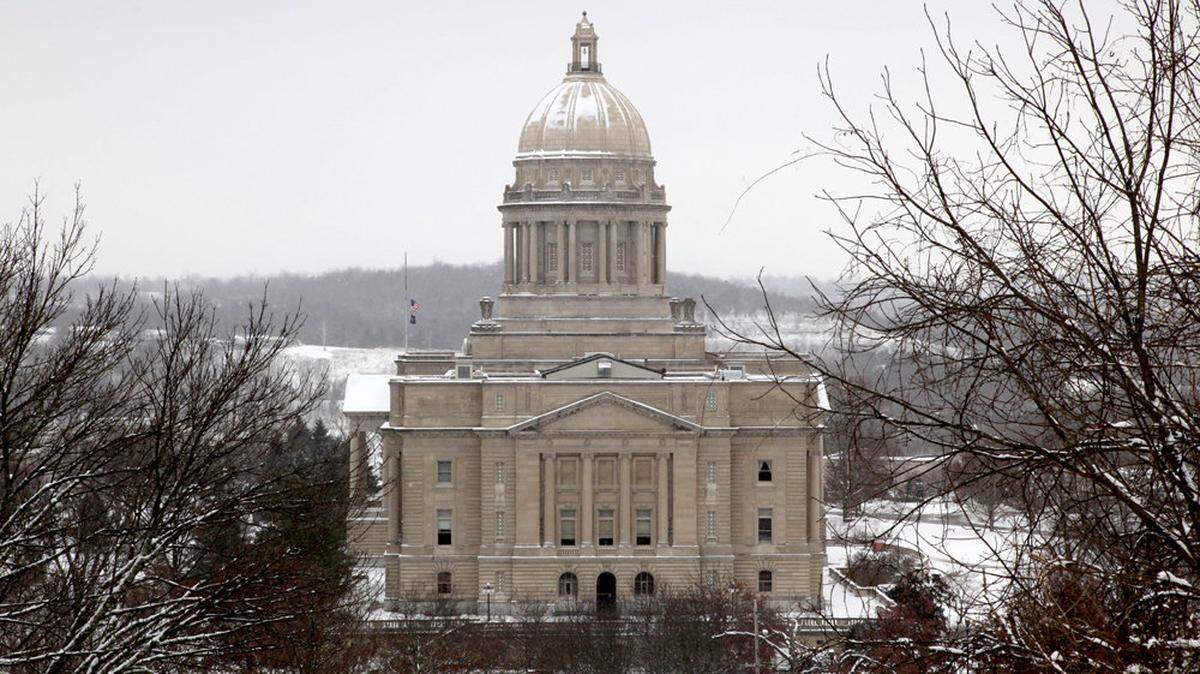
FRANKFORT — The 2015 General Assembly concluded its annual session Wednesday having approved 127 bills and resolutions, many of which will affect the lives of Kentuckians.
Gas prices will be slightly higher after April 1 than they otherwise would have been. People in cities and suburbs might lose access to a traditional land-line telephone. Heroin dealers will face longer prison sentences. Abused dating partners — including young students — will be able to seek court protection. Kids will have to ride in booster seats for longer than they do now.
Here is where bills dealing with two dozen high-profile topics ended up:
Heroin
Most people agree this was the top issue of the 2015 session. Scores of overdose deaths tied to heroin are being reported in every part of the state, in large part because opioid addicts are switching from prescription pain pills, which are now harder to get.
Senate Bill 192 — signed into law by Gov. Steve Beshear on Wednesday — does many things. It toughens penalties for dealers, particularly those who import drugs into Kentucky. It gives emergency workers better access to naloxone, a drug that can reverse the effects of a heroin overdose. It authorizes more state funding and Medicaid support for addiction treatment, although much of that money won't arrive until the next two-year state budget. It includes "Good Samaritan" language to protect drug users from criminal charges if they report an overdose.
Finally, it gives local governments the option to establish needle-exchange programs at county health departments for intravenous drug users. Lexington officials say they're interested in pursuing a needle-exchange program immediately.
Dating violence
House Bill 8, awaiting Beshear's promised signature, expands the right to pursue civil protective orders to dating partners who aren't married, don't live together and don't have children together. It also adds stalking as an offense that can be used to justify a protective order.
Teacher pensions
Nothing happened. The House approved a plan to issue $3.3 billion in bonds to shore up the Kentucky Teachers' Retirement System, which faces a $14 billion unfunded liability. The Senate, calling that much debt too risky, proposed a task force to study the issue. The chambers negotiated House Bill 4 until the final hours of the session and tossed different ideas on the table, but they couldn't reach a deal.
Gas tax
Skittish of being accused of voting for a tax increase, lawmakers put off a vote on the state gas tax until the final hours of the session. But they ultimately decided to prevent a large drop in the state Road Fund, which pays for building, repairing and improving roads. The tax will drop from 27.6 cents a gallon to 26 cents — a fall to 22.5 cents was going to happen otherwise on April 1 — and then make 26 cents the new floor. Also, instead of quarterly adjustments to the tax based on the average wholesale price of gasoline, the adjustments would occur annually, beginning July 2016.
Phone deregulation
After years of intensive lobbying, AT&T won the phone service deregulation it wanted. Beshear signed House Bill 152 into law on March 12. The Kentucky Public Service Commission, which regulates utilities, won't have much power over phone service anymore. The major phone carriers no longer have to provide cheap, basic land-line phone service in urban and suburban areas. In rural areas, they don't have to provide basic service in new developments.
'Right to Work'
Business groups lost their perennial battle to let Kentuckians work for unionized employers and receive salaries and benefits obtained through collective bargaining without joining a union themselves. The Senate approved Senate Bill 1 only to see it die in a House committee. But the so-called "right-to-work" movement has started taking its fight to local governments around the state, with some success.
Minimum wage
The House passed House Bill 2, which would have raised the state's minimum wage to $10.10 an hour by July 2017, and a Senate committee killed it. Similar to the right-to-work effort, supporters of a minimum wage increase have started pushing local governments, including the cities of Lexington and Louisville, to act.
Smoking ban
For the first time in the history of this tobacco state, the House voted on — and passed — a bill to ban indoor smoking statewide in workplaces and other public spaces, such as bars and restaurants. And then the Senate assigned House Bill 145 to its Committee on Veterans, Military Affairs and Public Protection, where it saw no further action.
Abortion
The Senate approved Senate Bill 4 to require that women have a face-to-face consultation with a doctor or a doctor's designee 24 hours before they can have an abortion. At present, many women receive such consultations by telephone to avoid driving twice into Louisville or Lexington, the only places in Kentucky where abortions are available. The House never gave the bill a committee hearing.
UK research center
The University of Kentucky this year expects to start building a six-story medical research center on South Limestone in Lexington with financial support from the state. House Bill 298, signed into law March 9 by Beshear, authorizes bonds to pay for half of the $265 million center. UK says it will raise the other half of the money through donations and research funding.
Drunken driving
One bill to crack down on drunken driving was sent to Beshear for his signature. Senate Bill 133 will require that an ignition interlock device, which checks a driver's breath for alcohol before allowing the vehicle to start, is installed on the vehicles of some DUI offenders who want a hardship license. It will apply to repeat offenders or those who committed one of six aggravating offenses on their first offense, such as driving more than 30 mph over the speed limit or having a blood alcohol concentration of 0.15 or greater.
However, the House without explanation killed a separate proposal, Senate Bill 34, that would have expanded the "look-back window" from five to 10 years for drunken drivers' past convictions. Under state law, drunken drivers face enhanced penalties for second and third DUI convictions within five years, and a fourth within five years is a Class D felony, punishable by one to five years in prison.
Film tax credits
Lawmakers voted to expand the state's film tax credits. House Bill 340, sitting on Beshear's desk, lowers the sum that a movie-production company must spend to get the credits from $500,000 to $250,000 for out-of-state companies and $125,000 for in-state companies. It also raises the tax credit from 20 percent to 30 percent of qualified costs to match that of nearby states.
Public-private partners
Nicknamed "the P-3 bill," for public-private partnership, House Bill 443 would have allowed governments and corporations to team up on massive building projects, such as proposed replacements of Ohio River bridges. It was a top priority for Beshear and business leaders. But it died in a Senate committee after the House approved it.
Local option sales tax
This was another measure eagerly sought by Beshear and business leaders that failed. House Bill 1 was a proposed constitutional amendment that — had it passed, and had voters approved it — would have given local governments the authority to raise their local sales taxes temporarily to pay for specific projects. The House approved it Feb. 12, but it disappeared in the Senate State and Local Government Committee.
Booster seats
The Senate previously opposed expanded use of booster seats to protect children in vehicles, but it relented this year. House Bill 315, awaiting Beshear's signature, raises the requirements for children who must use booster seats in cars from age 7 to 8 and from 40 inches to 57 inches.
Snow days
During a harsh winter that forced the General Assembly repeatedly to shut down, some Kentucky school districts lost up to 30 instructional days because it wasn't safe for students to travel. Senate Bill 119 allows school districts to waive some of their 1,062 mandatory hours this year if they cannot make up the time through other scheduling adjustments by June 5. Beshear signed the bill into law March 19.
Medical malpractice
Hospitals, nursing homes and doctors again lobbied for a bill to establish "medical review panels." The panels would intercede in malpractice, abuse or neglect lawsuits against medical providers to consider the merit of the claims, and their eventual conclusions could be entered into court as evidence. The Senate approved Senate Bill 6 on Feb. 5, after which it went to the House Judiciary Committee, never to be heard from again.
Debt limit
The state spends either 6.68 percent or 8.1 percent of its General Fund on debt service, or paying down what it has borrowed, depending on which obligations one includes in the calculations. Unhappy about this, the Senate passed Senate Bill 94, which would have capped the state's debt payments at 6 percent, effectively eliminating debt-financing in the next state budget or two. The House budget committee took no action on it.
Breeders' Cup
Beshear signed House Bill 134 into law March 17. It will waive the state's excise tax on live parimutuel wagering at Keeneland when the Lexington racetrack hosts the Breeders' Cup on Oct. 30 and 31. The money Keeneland saves will go to boost prize money awarded to horse owners.
Beer bill
The legislature passed, and Beshear signed into law, House Bill 168. It prohibits beer brewers from owning beer distribution networks in the state. That immediately affects one company, beer giant Anheuser-Busch, which owns distributorships in Louisville and Owensboro. Anheuser-Busch has indicated that it will sue to get the law overturned.
Student activism
Unpaid teenage activists helped draft and lobbied for House Bill 236, to let high school students sit on the screening committees that select new superintendents. The bill passed the House by an 88-5 vote on Feb. 26. But Republican senators prepared controversial amendments to the bill on the Senate floor — one on religious expression in schools, the other on which bathrooms transgender students can use — ultimately dooming it.
Tax refund donations
Kentuckians soon will be able to donate some or all of their income tax refunds to pediatric cancer research by checking a box on state tax forms. Senate Bill 82, sitting on Beshear's desk, also will allow refund money to be donated to rape crisis centers and to the Special Olympics.
Legislative staff
The General Assembly enacted no reforms after a report, released in January, cited poor leadership and low morale among its own staff at the Legislative Research Commission. House and Senate leaders also could not agree how to replace Bobby Sherman, who resigned as LRC director in 2013 amid sexual harassment complaints filed by several LRC employees against Rep. John Arnold, D-Sturgis, who also resigned.
This story was originally published March 28, 2015 at 5:26 PM with the headline "How changes made by the 2015 General Assembly will affect your life."