
Kentucky's new genderless marriage licenses might pose problem for genealogists
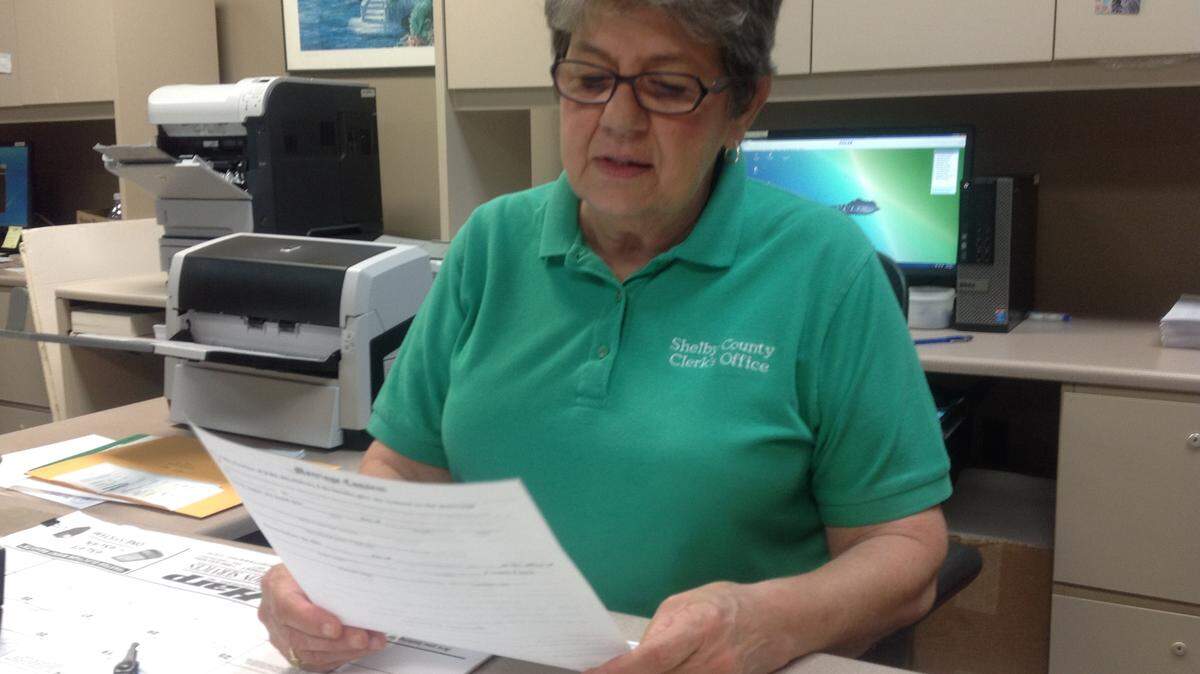
FRANKFORT — When the U.S. Supreme Court legalized same-sex marriage this summer, Kentucky and many other states tweaked their marriage license forms to give no hint of a person's gender.
In Kentucky, the new licenses, issued by county clerks' offices for $35.50, now ask for names of the "first party" and the "second party."
Before the Supreme Court ruling, when same-sex marriage was banned by the Kentucky Constitution, the license asked for the names of the bride and groom.
The slight change on the forms might present a problem for future historians and genealogists.
"That's a very distinct possibility," said Thomas MacEntee, a professional genealogist in Chicago who provides services ranging from market research to consulting for people and businesses tracing the lines of family descent.
MacEntee said the new forms could make it difficult to properly identify someone's gender in doing historical research, especially since some first names such as Alex, Taylor and Jordan are used for males and females.
The genealogist joked that some future researchers might not recognize the gender of Marion Morrison on a marriage license.
He was referring to the late screen actor better known as John Wayne, who epitomized rugged masculinity.
"Of course, there are other ways to find a person's gender, like on birth certificates, but sometimes birth certificates are hard to obtain," said MacEntee.
MacEntee said most states now ask for names of the first and second parties or first and second spouses. Texas removed any reference to gender and now uses "applicant one" and "applicant two."
"As a genealogist, I try to think 100 years ahead," said MacEntee. "Of course, the more information you have on a document, the better off for the researcher in the future."
A simple solution might be to ask the genders of people applying for marriage licenses.
But Kentucky law prohibits that, said Cathy Lindsey, a spokeswoman for the state Education and Workforce Development Cabinet. The cabinet oversees the state Department for Libraries and Archives, which designs and distributes marriage license forms to county clerks.
Lindsey pointed to a state law — KRS 402.100 1(b) — that specifies information to be included on marriage licenses. Gender is not included.
Lindsey noted that the old forms did not specifically ask for applicants' genders.
The state has not received any complaints or concerns from historians or genealogists about gender not being included on the form, Lindsey said
She also said the libraries and archives department looked at what other states were doing but designed the form according to Kentucky law.
Any change in the marriage license forms to specifically include gender would require action by the state legislature, she said.
Johnna Waldon of Lexington, president of the Kentucky Genealogical Society, said she was not sure whether the new marriage license forms would do that much harm to the work of genealogists and other researchers.
"There are so many other sources of information, especially in this social media age," she said. "But I would not disagree with more information being added to them."
Ancestry.com Inc., based in Provo, Utah, is the largest for-profit genealogy company in the world. As of the end of 2013, it provided access to 12.7 billion records and had 2.14 million paying subscribers.
Michelle Ercanbrack, the company's family historian, said of Kentucky's new marriage license forms, "When it comes to family history research, the more information a record contains the easier it is to identify individuals and piece a family together.
"For genealogists, marriage records are key resources for information."
She said she would prefer that respondents have the option to provide supplemental information like gender.
Chris Hartman, director of the Fairness Campaign in Louisville, said he had not heard any concern about the state's marriage license form.
"It's the new world we live in, I guess," he said, before asking what should be done for "intersex" persons seeking marriage licenses.
Intersex is a term used for a variety of conditions in which a person is born with a reproductive or sexual anatomy that doesn't seem to fit the typical definition of female or male.
It is used today as the nondiscriminatory alternative to "hermaphrodite."
This story was originally published August 16, 2015 at 8:26 PM with the headline "Kentucky's new genderless marriage licenses might pose problem for genealogists."