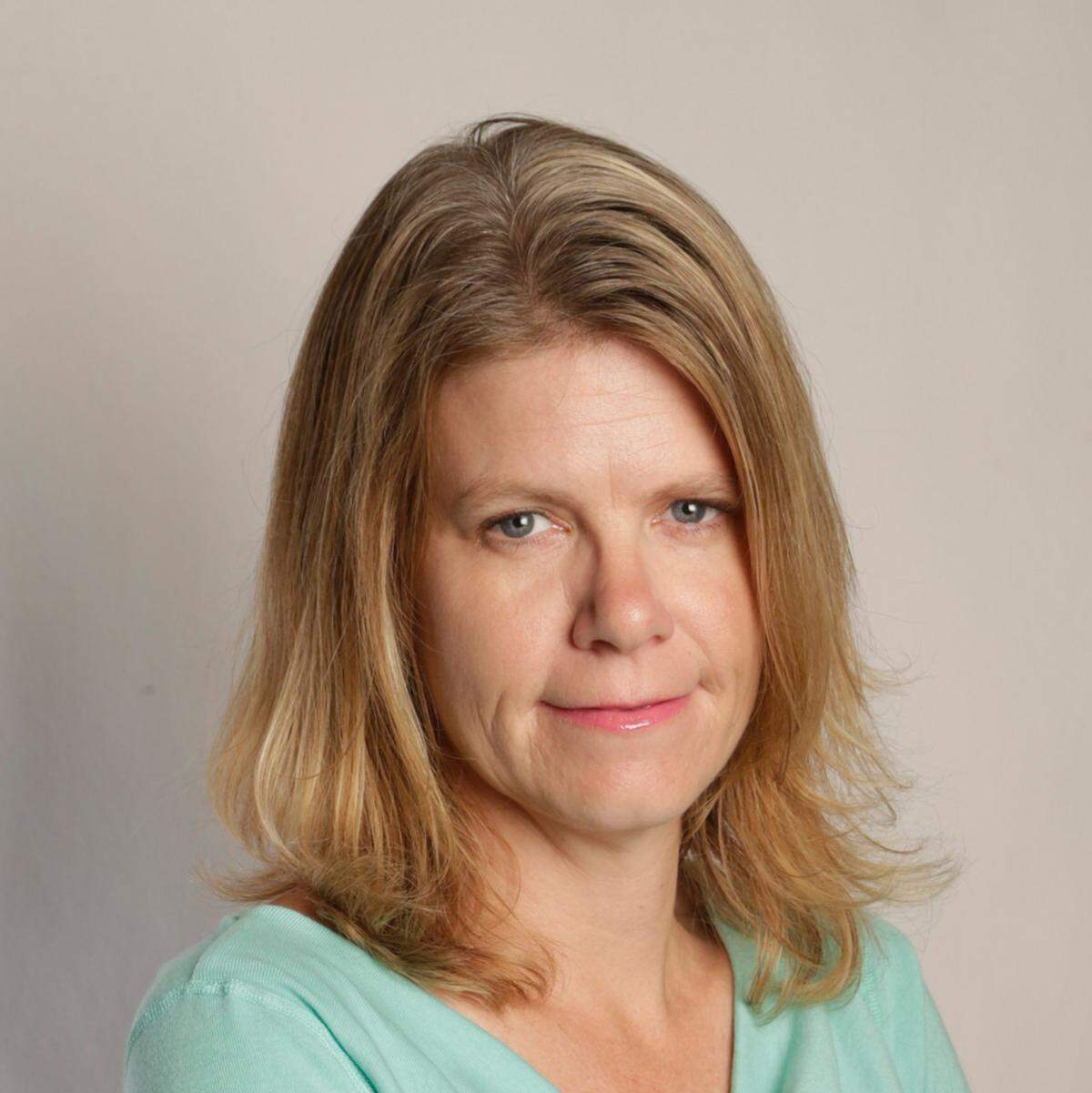
2026 election: Meet the candidates running in Lexington’s 5th District Council race
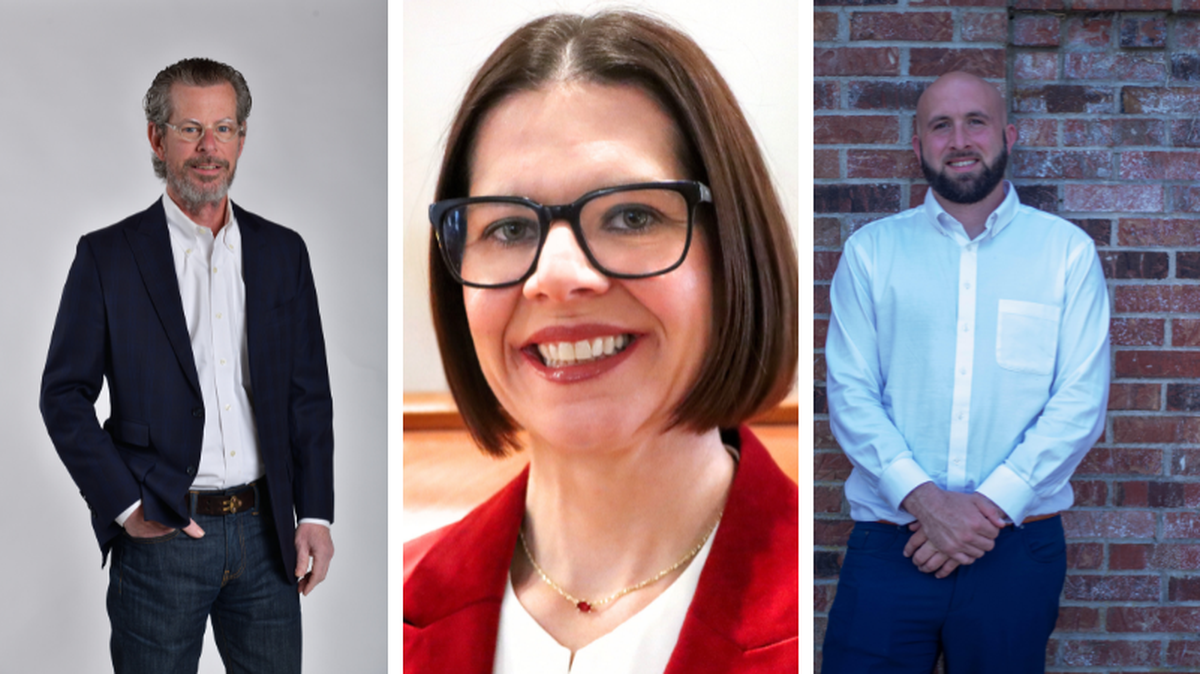
Three people vying to represent the Lexington council’s 5th District agree on one thing: Lexington and the downtown district they want to represent is a great place to live.
But Stephenie Hoelscher, Michael McLaughlin and Nick Wolter have different ideas about how to address traffic, pedestrian safety and improve the city’s snow response.
The top two vote getters in Lexington’s only contested council primary will move on to the November general election. The race is nonpartisan. Council members make just shy of $40,000 a year.
The Lexington-Fayette Urban County Council 5th Council District includes neighborhoods such as Chevy Chase, Idle Hour and Fairway. The seat is open after incumbent Councilwoman Liz Sheehan announced in 2025 she was not running for reelection. Sheehan, a University of Kentucky faculty member, has held the seat since 2020.
Kentucky Registry of Election Finance reports show Hoelscher, a former newspaper reporter and policy consultant, raised $26,429 as of April 20. That figure also includes $2,910 in loans Hoelscher made to her campaign. She had $18,558 left to spend. McLaughlin raised $19,250 during that same time period. The information technology professional had $14,196 left as of April 20. Wolter, who owns a remodeling and construction business, has raised the least but spent the most, campaign finance reports show. He raised $14,189 but only had $2,811 left to spend in late April.
Although the race is nonpartisan, Hoelscher donors include many Democrats, including former State Auditor Adam Edelen. Hoelscher previously worked for Edelen in the state auditor’s office. Wolter has received financial backing of some Republicans, including longtime Fayette County Republican Party fixture Warren Rogers. McLaughlin has received donations from former 5th District Councilman Bill Farmer Jr., campaign finance records show.
How can city improve snow removal?
Hoelscher, who has a bachelor’s degree from the University of Ohio and a master’s degree from the University of Kentucky, said the city has to look at other options and other cities to attack ice removal and get the city’s roads cleared faster.
Winter Storm Fern dumped several inches of ice and snow on Lexington on Jan. 24 and Jan. 25, prompting Fayette County Public Schools to call off school for more two weeks due to treacherous road conditions.
Not every street in Lexington is on the city’s snow and ice removal plan, which is now being reworked after complaints about the city’s response. The city may need to reconsider and add more streets to that plan, Hoelscher, 44, said.
“This is what people want,” Hoelscher said. However, there is a cost to pre-treat and plow every road, she said.
“This is a basic service and people are demanding it, and they don’t care how much it costs,” said the mother of two. Not clearing streets is also costly, she said. People miss work. Childcare costs can soar for those who must work when their children are out of school. Insurance costs can rise due to so many traffic accidents, she said.
Wolter, 36, said city staff need to travel to other cities to determine best practices, particularly ice removal. Wolter said the city also needs to better communicate with residents when snow plows are coming to their streets. Hiring more local contractors who can augment city services will also help. The city also needs to look at areas that need pre-treating before a storm, such as hilly areas in the 5th District, he said.
McLaughlin, 56, said the city doesn’t have to go far to look at best practices: the University of Kentucky’s campus was cleared of ice and snow not long after the storm stopped. Talking to UK about its snow and ice removal plan is a start, he said.
McLaughlin, a life-long Lexington resident who attended Tates Creek High School and Transylvania University, said the city has struggled since the 1990s to have an effective strategy for extreme snow and ice events. It needs a detailed and thorough plan, he said. That plan also must be followed, he said.
“We also need to ask if we have the right equipment,” McLaughlin said.
Pedestrian and street safety
Many areas in the 5th District, which also includes part of the Winchester Road corridor, feature heavy pedestrian and cycling traffic. Pedestrian safety and traffic are perennial issues in the area.
McLaughlin said the Lexington Police Department used to have more targeted enforcement of speeding and other traffic violations. The department needs to reprioritize traffic enforcement, he said.
“I can’t tell you when the last time (was) I saw someone pulled over for a traffic violation,” McLaughlin said.
McLaughlin said the city also needs to invest in more technology, similar to what is used in construction work zones, to monitor speeds throughout the city. That will help the city identify areas that may need more police enforcement.
Wolter said he would like to see stepped up enforcement of traffic laws, and believes another 25 officers dedicated to speeding and traffic violations would curb many problems across the city. He also would like to see a signalized pedestrian crosswalk on Richmond Road between Chinoe Road and Ashland Avenue. Currently, people trying to cross at Bassett Avenue to get to the Henry Clay estate have to walk all the way down to Ashland to cross. Many try to make the crossing, despite no crosswalks in the area.
A new pedestrian crossing would also slow traffic on Richmond Road, he said.
Hoelscher said there are a lot of approaches to traffic safety that aren’t as effective as hoped. Research has shown education campaigns around street safety are not always effective. Increased enforcement is also pricey and labor-intensive, and Lexington police are short-staffed, Hoelscher said.
Red-light cameras, an automated ticket-issuing system using pictures of red-light scofflaws, is illegal in Kentucky. Other camera monitoring systems, including license-plate readers, raise questions about uneven enforcement and racial justice issues, she said. She believes changing the way streets are designed would help.
“Engineering is the one area we haven’t tapped into enough,” Hoelscher said. That means changing Lexington streets to slow traffic and make pedestrian crossings safer.
“Instead of trying to change drivers, it’s changing our streets to make drivers not feel like they can drive 45 miles an hour,” she said.
Piloting those projects is not only cost-effective but can point to potential problems before the city makes permanent changes to city streets, Hoelscher said.
Hoelscher said she is also a proponent of Vision Zero, a nationwide effort to bring traffic fatalities to zero. That effort also uses engineering and physical changes to streets to decrease traffic and pedestrian deaths. Each year, more people die from traffic-related accidents than homicides in Fayette County, she said.
Controversy over Duke Road mental health clinic
One of the more controversial issues in the 5th District was a proposal to allow Roaring Brook to establish a mental health treatment center on Duke Road.
McLaughlin, a single father of a teenager, spoke against a proposal to allow the mental health inpatient treatment center to get a conditional use permit to operate during a contentious April 13 Board of Adjustment meeting. The board ultimately voted 4-2 to approve Roaring Brook’s conditional use permit. More than 40 people spoke in opposition to Roaring Brook’s proposal, arguing the mental health treatment center could put people in the neighborhood in danger.
McLaughlin said he stood with opponents because he thinks a council member should represent and listen to constituents.
“It was like 50 to 1,” McLaughlin said of the number of people against the proposal versus those who supported it.
Wolter said he also sided with neighbors of the project. However, Wolter said now that the Board of Adjustment has made its decision, people need to accept it.
“We need to do everything we can to make sure Roaring Brook succeeds,” he said.
Hoelscher said she looked at data and research about mental health treatment centers and what is already operating in the area — including Alcoholic Anonymous groups that use nearby churches for meetings. Roaring Brook has said the Duke Road facilities will treat people with mental illness. Neighbors fear Roaring Brook would also house people with substance abuse disorders. “I have seen no evidence at this point to suggest this is going to affect negatively quality of life in the community,” Hoelscher said. “There are AA and NA meetings in Christ the King Church basement. I had one individual suggest to me people struggling with substance abuse usually have police records. But that’s actually not true. I worked on criminal justice reform at the state and federal level. That’s not actually based on facts.”
What is true is mental illness and substance abuse disorders affect every demographic and zip code, she said.
Housing affordability and affordable housing
All three candidates agree the mix of housing found in the 5th District, which can include single-family homes, smaller apartment complexes, fourplexes and duplexes in the same block, is a model that should be replicated as Lexington tries to increase its housing inventory.
Wolter recently completed two affordable housing projects in Lexington, and said he learned a lot and hopes to do more.
Wolter, who is married with two children, said the city needs to tap into more state and federal programs to bring more money into the city’s affordable housing fund.
Infill and redevelopment needs to be prioritized, he said. Using underutilized parking lots, for example, is a way to get more housing and retail into the city’s major corridors. Housing, particularly starter housing, may look different in coming years. Duplexes and fourplexes may be someone’s first home rather than a single-family home, he said.
McLaughlin said the city also needs to explore how it can use land it owns to promote more affordable housing, not just senior affordable housing. He agrees with Wolter that more needs to be done to incentivize infill and redevelopment.
“We need to get serious about promoting infill and redevelopment,” McLaughlin said.
At the same time, those infill and redevelopment projects need to fit the neighborhoods where they are proposed, he said. He fears the character of neighborhoods can be destroyed in an effort to get more bedrooms into smaller pieces of property.
Hoelscher said people like Wolter, builders who are willing to try affordable housing projects, are also key to expanding the city’s affordable housing inventory. But housing policy is complex, and much of it is not controlled by local policy.
“There is no one silver bullet to fix this problem,” she said.
Hoelscher said a critical first step is the city right-sizing its planning and development processes so developers who want to build duplexes don’t have to go through the same processes as someone building a 400-unit, multi-story apartment complex. Other cities have also tried streamlining and making their planning processes easier by setting aside a day a month for developers to come in without an appointment and talk to planning staff about their proposals.
That way builders can troubleshoot before paying money in application and other fees, she said.
Why voters should pick them come May 19
Hoelscher, a Pennsylvania native who was the first in her family to graduate college, said she wants to give back to a community she has called home for more than 20 years. She was fortunate to have extended family, friends and mentors help her succeed. She wants to make sure others like her have the same opportunities.
Several years ago, she and her family went on a cross-country road trip, exploring various cities and towns across the country. The trip showed her how fortunate she is to call Lexington home.
“Lexington is just an incredible city,” Hoelscher said. “We have such an amazing quality of life here, but there’s always room for improvement.”
Wolter said as a builder who has started multiple other businesses as an adult, he brings building and construction experience to the council at a time when affordable housing is one of the biggest issues facing Fayette County.
“I bring a blue-collar work ethic with a white-collar mindset,” Wolter said. “I understand the difference between policy and practicality. What sounds like good policy may not work in practicality.”
McLaughlin said as a lifelong Fayette County resident who has lived in multiple places in the 5th District, he understands 5th District residents and the issues in each neighborhood.
“I believe our city deserves a moderate voice with experience and independent leadership that delivers on behalf of the residents,” McLaughlin said.
This story was originally published May 5, 2026 at 10:51 AM.