
Stevenson vs. Grossl: Education & economy lead discussion in tight House District 88 race
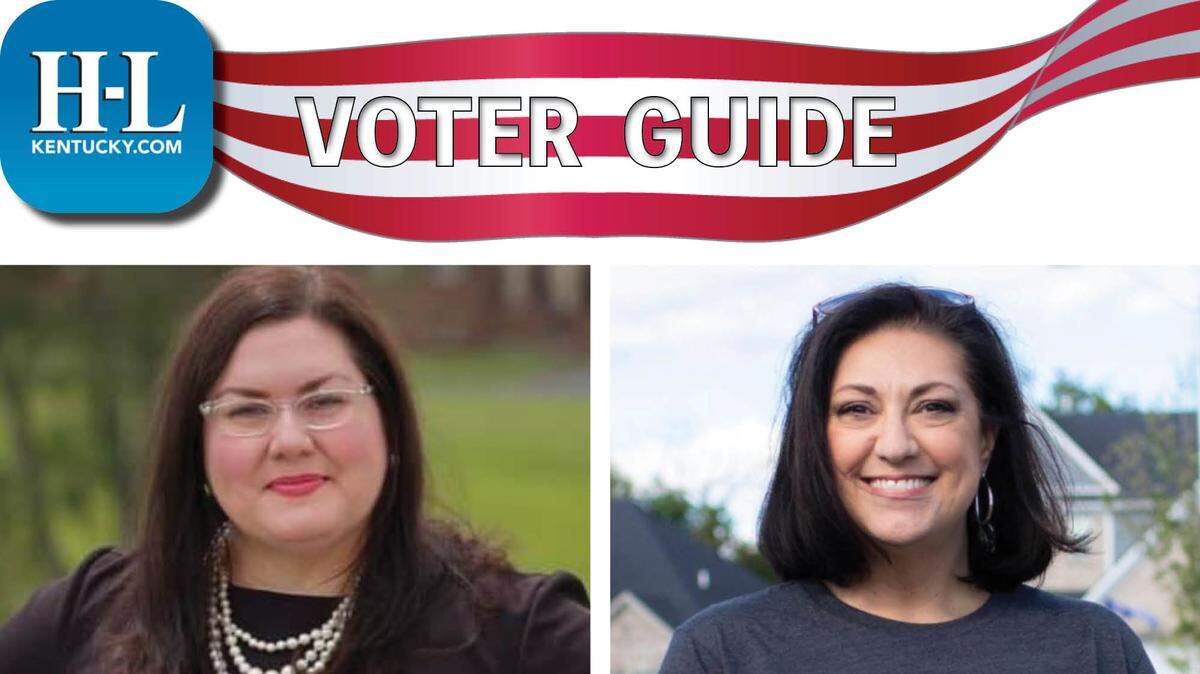
House Democratic Caucus Chair Cherlynn Stevenson knows what it takes to win tight races.
After all, she’s won three of them.
Her three general election wins have been by 0.2%, 3% and 0.2%, respectively, going back to 2018. Two have been decided by less than 40 votes, a razor’s edge margin for the 45,000-person House District 88.
Republican candidate Vanessa Grossl hopes to write a different story this year.
Grossl, a small business owner who used to teach in Fayette County Public Schools, is a recently converted Republican who has focused in on economic issues in her run to represent the district, which covers parts of suburban and rural Fayette County as well as a swath of southern Scott County.
Stevenson has built her political brand on defending public education, in particular against what she sees as the harmful effects of Constitutional Amendment 2, a ballot question that if approved would allow the legislature to direct taxpayers funds toward private and charter K-12 education.
The incumbent Democrat is also leveraging the strong support of Gov. Andy Beshear, who won the district by a 25-point margin last year. A new ad airing on Lexington television stations shows Beshear lavishing praise on Stevenson as “a warrior in the House of Representatives for so many important causes.”
Grossl, who has no public position on the amendment, says that education is an important issue but not the only one that will decide the race.
She and her allies also point to other politicians’ margins in the politically “purple” House district. While Stevenson has Beshear’s support over broadcast, former president Donald Trump being on the ticket lends Grossl’s camp some confidence.
Trump, who’s on the ballot again this fall as the GOP nominee against Vice President Kamala Harris, won House District 88 by an estimated five percentage points. Sixth District Congressman Andy Barr also won the district in 2022, as did three of the down-ballot Republican constitutional officers running in the 2023 election alongside Beshear.
“Cherlynn, is a seasoned candidate, but we feel they feel good about the structure of the district and our candidate is working hard,” House Majority Whip Jason Nemes, R-Middletown, said.
Policy platforms
Stevenson, an Eastern Kentucky native who lives in suburban Lexington, is a rising star within the Kentucky Democratic party. Some of that has been tied to her political activism around education.
At Fancy Farm, the state’s premier political speaking event, Stevenson was the designated speaker on behalf of the “no” campaign against Amendment 2.
“While I’m fighting for myself, I’m also fighting to defeat Amendment 2. Overwhelmingly, I think the people of my district want strong public schools, and we cannot undermine their funding,” Stevenson said.
Public school advocates like Stevenson — who is joined by virtually all elected Democrats as well as a handful of rural Republicans in resistance to Amendment 2 — argue that the passage of Amendment 2 will lead to spending on nonpublic programs in lieu of public education funding.
It is the most animating single factor of Stevenson’s campaign, alongside other issues like abortion rights, public safety, agriculture, affordable healthcare and the economy.
Grossl is talking about all of these things, too.
But on education, she is taking a very different approach: not sharing a position of her own.
“I haven’t really come out with a clear stance on it, simply because I value democracy and I value the voters. I think they’re smart enough to make the decision on their own,” Grossl said.
The Georgetown businesswoman pointed out that Stevenson does not serve on the House Education Committee and argued that her opponent is “trying to get me to come out and support Amendment 2.”
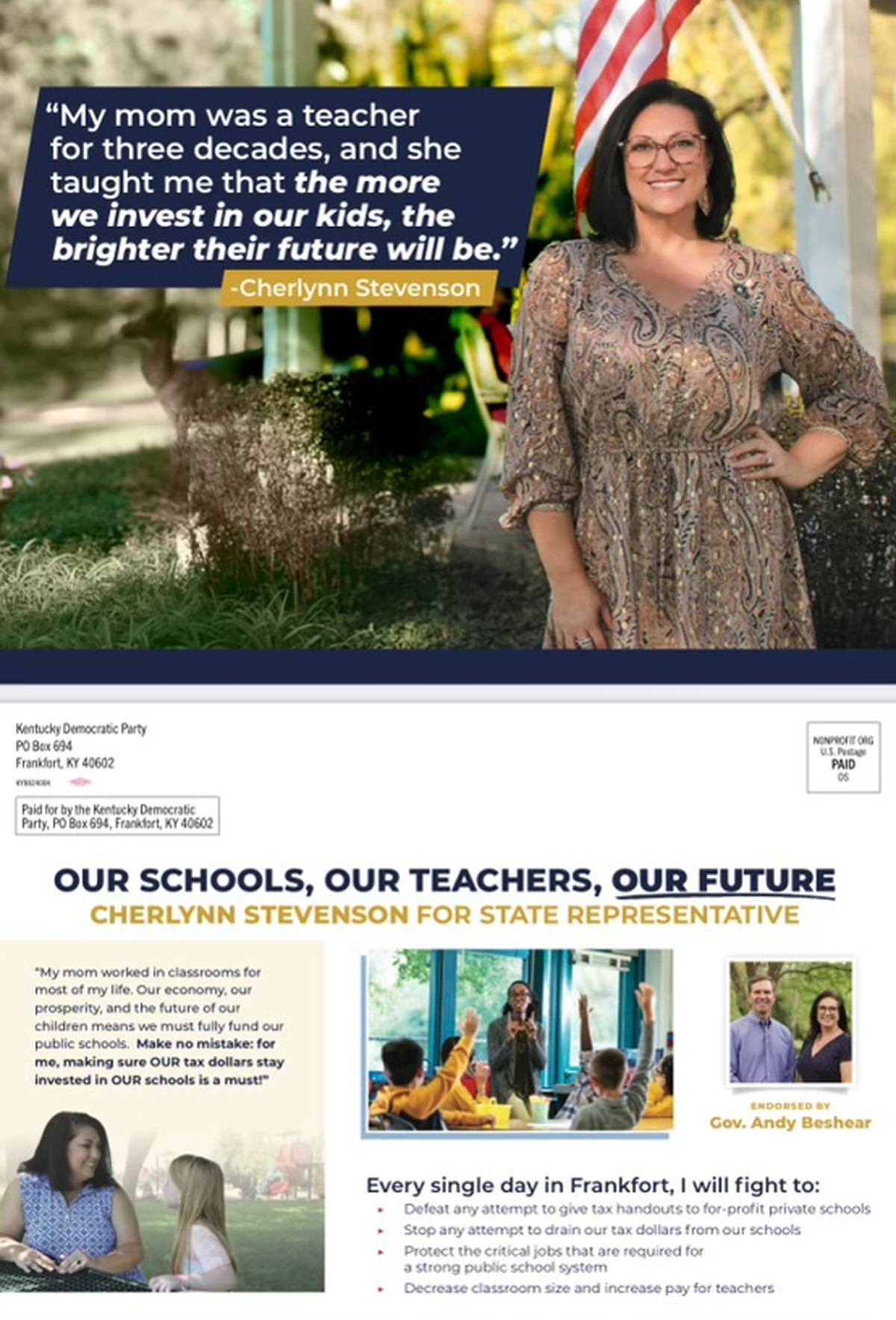
One of the policy debates between Grossl and Stevenson is embedded in the political reality of the state legislature: both chambers are four-fifths Republican, and Democrats have little sway over the the flow of legislation.
But Stevenson, who says she plans to vie for the highest Democratic leadership post in the House, makes the argument that voters would rather have a seasoned and powerful Democrat than a brand new Republican finding her voice in the 80-member GOP caucus.
“This is just one of those jobs where you don’t know what you don’t know, and you come in and it’s like drinking from a fire hose — you learn, and you learn, and you learn and you learn. Finally, I feel like I know what I’m doing, but I’m six years in,” Stevenson said.
With that experience under her belt, she says she’s had some success influencing significant legislation — ensuring some of the money raised from sports betting goes toward funds that address problem gaming and pensions and changes to the medical marijuana legalization bill.
On the topic of abortion, a top issue for many voters in a state where a near-total ban lacks exceptions for incest and rape, there is some daylight between Grossl and Stevenson.
Grossl, unlike many of her Republican peers, is for exceptions to the ban in cases of rape and incest. That issue was a major point of attack for Beshear in his successful race against former attorney general Daniel Cameron.
Stevenson said she’d like to see the reinstatement of the standard set under the U.S. Supreme Court case Roe v. Wade, when abortions were allowed in Kentucky up until fetal viability.
Grossl is framing herself as the more “pro-life” candidate, but is also wary of the fact that 2022’s anti-abortion constitutional amendment lost in the district. She told the Herald-Leader she would support adding exceptions to the current law and would be open to increasing access to abortion, but has a hard stop at 15 weeks into pregnancy.
The most consistent line of attack in the race thus far has been Grossl and allies taking on Stevenson’s economic policy stance.
Citing Stevenson’s vote against recent personal income tax cuts, an ad from Grossl’s campaign claims that the Democrat “voted for millions in higher taxes,” and asks “haven’t we paid enough? Liberal Cherlynn Stevenson doesn’t think so.”
Mail pieces and web advertisements from GOPAC, a powerful state-level Republican political organization, strike a similar chord.
The state’s personal income tax has been decreasing gradually since Republicans took control of both state legislative chambers. Currently, it’s set to decrease another half-point to 3.5% in January 2026.
Stevenson says that her opposition to the state continuing to cut the personal income tax rate has to do with concerns over fairness of the tax code and state revenue available for core services.
“I would very much like for us to not cut it anymore. I want fair taxes and I believe everyone should be paying their share. I don’t believe a corporate CEO’s secretary should be paying a larger share of her wealth than their boss is,” Stevenson said.
Grossl, on the other hand, is open to more tax cuts but didn’t offer an exact prescription on where the state should go — it’s an ongoing discussion among members of the GOP, as some powerful legislators acknowledge the rate can’t drop below 3% without serious compromises on sales taxes or key government expenses.
“I love the idea of thinking smartly about this and planning it incrementally. I think the legislature has been thoughtful in bringing it down, but not too fast,” she said.
One local issue on which the candidates seem to agree: housing and Lexington’s Urban Service Boundary, the city’s growth boundary that has been in place for decades to protect rural farmland in the county.
Both didn’t commit one way or the other to approval or disapproval of certain expansion plans, but emphasized protection of land that’s currently off-limits for large development projects.
Horse farms, which are a major constituent in terms of land mass and political money, have been generally opposed to expanding the urban service boundary and many proprietors frequently support local candidates who share that vision.
Stevenson and Grossl both acknowledged the need to build more homes to address the need for more housing in the growing Central Kentucky district.
Politically diverse district
House District 88 is a large and diverse district. It circumscribes much of urban Lexington, looping from Bracktown on the Western outskirts of the city’s core through rural northern Fayette County and Hamburg and all the way down to Andover Hills and other densely populated suburbs on the Southeast side of town towards Richmond.
It is more racially and ethnically diverse than the state as a whole. This district is 74% white, according to elections analysis website Dave’s Redistricting. The district is 11% Black, 7% Hispanic and 6% Asian.
It contains voters red and blue. It backed Beshear last year, Trump in 2020 and in a composite of electoral results from 2016 to 2020 it’s listed as a +2.5-point Republican district.
But there is an element of identity that Rep. Chad Aull, a Democrat who represents an adjacent district in Lexington, thinks plays well for Stevenson’s campaign: public schools.
“That district has a lot of very well liked high performing public schools. I think the undertow of this election is going to be how the voters perceive these candidates and their parties on promoting and protecting our public schools in Kentucky,” Aull said.
Meanwhile, area Republicans think that Grossl has what it takes to take advantage of the political landscape of the district with Trump and Barr on the ballot.
It’s also personal for some Republicans.
Outgoing Senate GOP Floor Leader Damon Thayer, R-Georgetown, still feels the sting of the Stevenson campaign’s late-game mailer to Republican voters in 2022, which prominently featured a cutout of now-presidential candidate Kamala Harris “thanking” GOP candidate Jim Coleman for a small donation he made to her campaign. Harris had helped Coleman during a student government race at Howard University decades ago.
Thayer and Nemes are hopeful that Stevenson’s recent co-purchase of a condo with a lobbyist, though recently cleared by the Legislative Ethics Commission, will sway some voters toward Grossl.
Though some outside groups are supporting Grossl, she and her allies may not have the same financial oomph to get their messages, positive and negative, across.
So far, Stevenson has far out-raised Grossl. As of early October, the Democrat had raised $168,000, which includes about $78,000 in carry-over from previous cycles, to Grossl’s $38,000. That allowed Stevenson to get television ads up well before Grossl.
But Thayer is confident that Grossl’s work and the demographics of the district will make this race “the race of (Stevenson’s) life.”
“I think Grossl is working very hard and she’s got a good profile for that district. And with a higher turnout this time, I think that gives Grossl an advantage,” Thayer said.
“I think Rep. Stevenson is in the race of her life, and the Democrats better not sleep on that race if they want to keep her.”