
Why this crayfish might bring stricter regulation of KY coal and logging industries
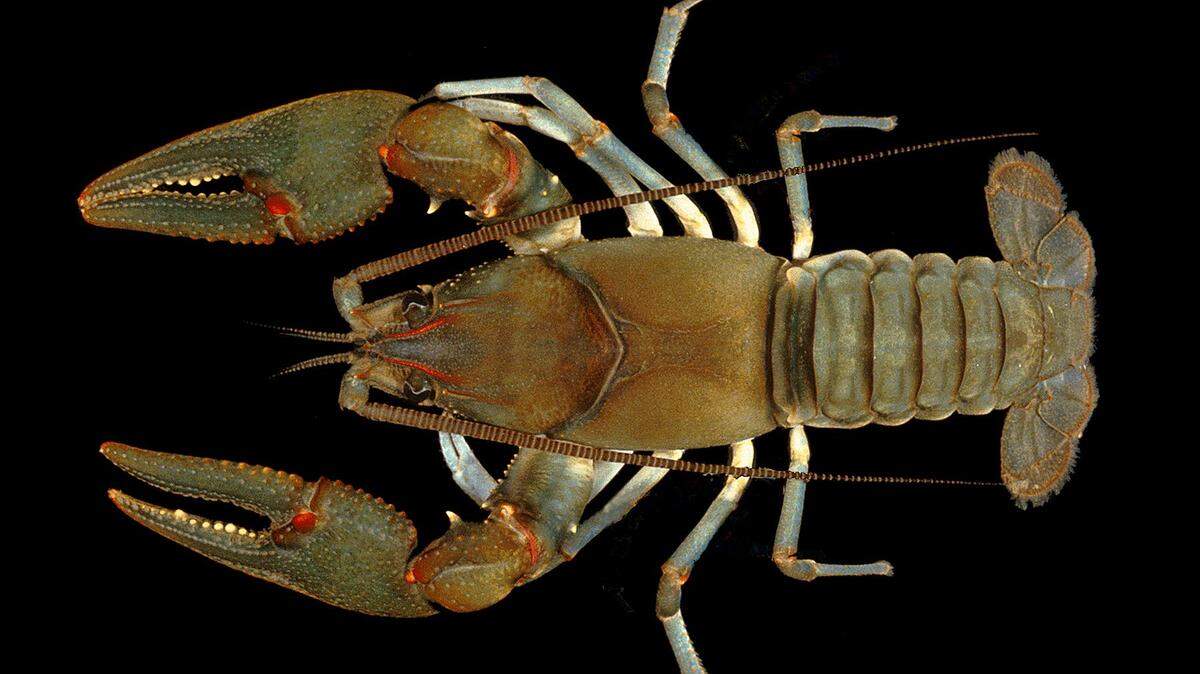
A threatened species of crayfish could receive new protections under a proposal submitted Tuesday by the U.S. Fish and Wildlife Service that might lead to new regulations on coal mining, logging and other development in Eastern Kentucky.
The proposal would designate 362 miles of streams and rivers in Eastern Kentucky, Virginia and West Virginia as “critical habitat” for the Big Sandy Crayfish, a species that is already listed as “threatened” under the Endangered Species Act.
The critical habitat designation could lead to more stringent environmental rules for industrial sites, mines and road developments near streams and rivers in Pike and Martin counties, including areas along the Russell, Levisa and Tug Fork rivers.
Big Sandy Crayfish are one of the largest species of Kentucky crayfish, topping out at more than 7 inches for full-grown adults. They’re also one of the most colorful, with shades of green and blues that are most vibrant after the crayfish molt their exoskeleton.
According to the U.S. Fish and Wildlife’s proposal, the species’ greatest threats include coal mining, timber harvesting and natural gas drilling. The Big Sandy Crayfish was first listed as “threatened “ under the Endangered Species Act in 2016.
Another species, which is included in Tuesday’s proposal, is the Guyandotte River Crayfish, which is listed as “endangered” and is native to the Guyandotte River in southern West Virginia.
Tyler White, spokesman for the Kentucky Coal Association, said his organization is still reviewing the proposal, but will submit a formal comment in the case.
A spokesman for the U.S. Fish and Wildlife Service said the agency has already been working with coal companies to address the conservation of both species.
The public can submit official comments through March 30.
Perrin de Jong, a staff attorney for the Center for Biological Diversity, said the case’s timeline will depend on how many stakeholders submit comments, and whether the Fish and Wildlife Service grants a public hearing in the case.
The Center for Biological Diversity sued the U.S. Fish and Wildlife in June 2018, alleging the agency failed to designate critical habitat within the required timeline under the Endangered Species Act, according to Tuesday’s proposal.
A court later granted a motion by the service to stay litigation until the end of 2019.
The Center for Biological Diversity is a left-leaning activist organization that often files suits against the federal government over proposed changes to the Endangered Species Act, and over the de-listing of certain species.
“It is our hope that these protections will disrupt future plans to mine their habitats,” Perrin said. “The only way to stop these species from going extinct is to stop mining their habitat.”
Critical habitat designations are given to areas that are “essential to the conservation” of threatened or endangered species and “which may require special management considerations or protections,” according to Tuesday’s proposal.
Big Sandy Crayfish live under large boulders, the size of a desk or bigger, said Zack Couch, the at-risk species biologist for the Kentucky Department of Fish and Wildlife.
Couch said data on the species is somewhat limited, but that certain areas of habitat have seen a build-up of silt and other fine debris underneath the boulders. Too much silt can make it impossible for a Big Sandy Crayfish to live under those rocks or boulders, and force it to compete with other species.
That silt is often a direct result of human development, he said.
“Any impact on the landscape, regardless of whether it turns out to be a Walmart or a coal mine, it’s gonna have a detriment,” Couch said.
The critical habitat designation would force any project that receives federal funding or requires federal permits to consult with the U.S. Fish and Wildlife Service if the project could impact the species’ habitat. That could include transportation projects, which use federal funding, or coal mines that require federal permitting, he said.
“It will not prevent development from occurring, you just have to address how these things … will impact the species and make sure what you’re doing will not jeopardize its continued existence,” Couch said.
Kentucky is home to 65 species of crayfish, and the Big Sandy variety behaves similar to those elsewhere in the state. They’re opportunistic eaters, feasting on everything from plant debris that washes downstream to unlucky minnows who swim too close.
“They’ll eat anything they can get their hands on — or get their claws on, in this case,” Couch said.
Crayfish and other non-game species are managed by the Kentucky Department of Fish and Wildlife, but Couch said limited funding has made it difficult to collect sufficient data for every species.
The department is making efforts to increase that funding in several ways, including selling the naming rights to Kentucky’s newest species of crayfish, which Couch recently discovered near Louisville. The proceeds will go to Kentucky Wild, a program to help fund the department’s management of non-game species, such as the Big Sandy Crayfish.
This story was originally published January 28, 2020 at 1:54 PM.