
‘One of nature’s ephemeral things.’ Comet NEOWISE delights stargazers in KY and beyond
The last time Comet NEOWISE was visible from Earth, the wheel had not been invented.
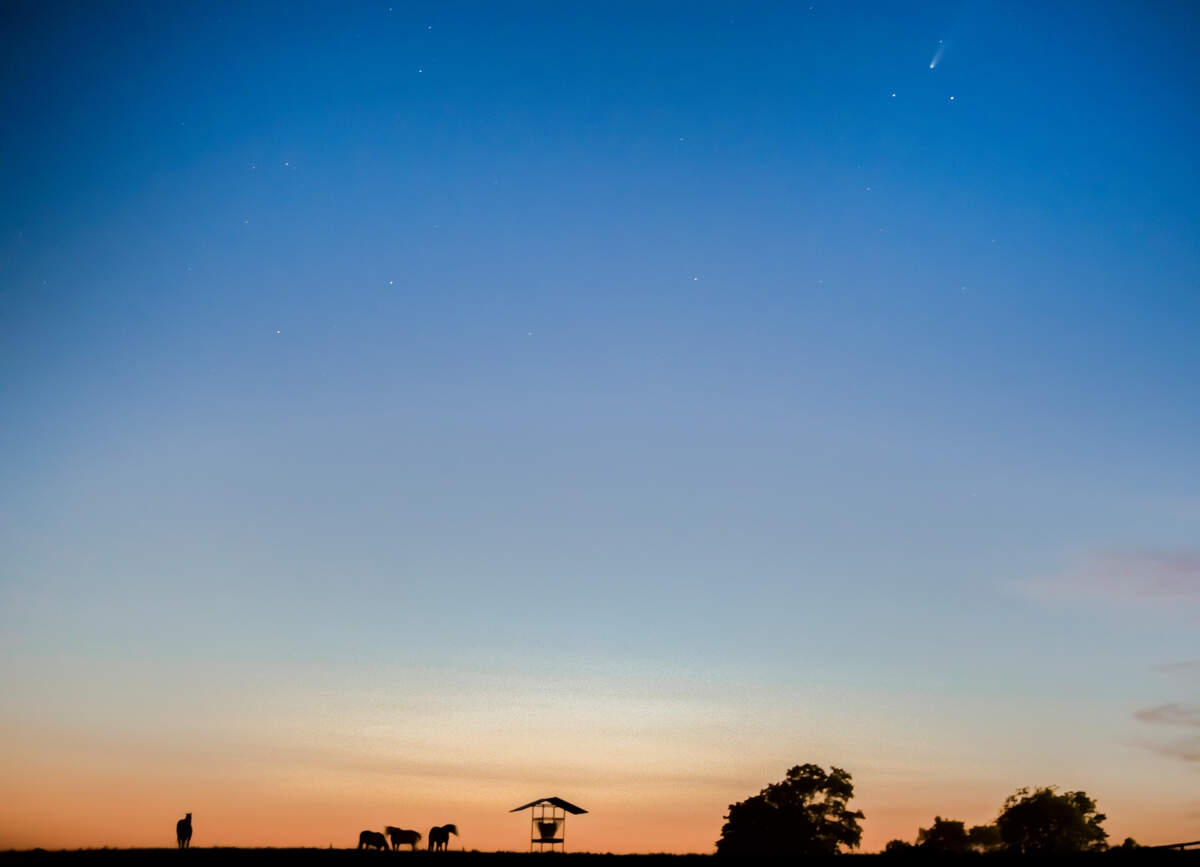
NEOWISE, which is passing through the inner Solar System on its 6,800 year orbit around the Sun, is currently visible in the Northwestern sky just after sunset.
Thomas Pannuti, a professor of astrophysics and space science at Morehead State University, said comets are fragments of material that are left over from the formation of the solar system, and are studied to learn about the solar system’s origins.
Most comets originate from a region of the outer solar system known as the Oort Cloud, Pannuti said.
“Once in a while with a little gravitational tug or such they could start to fall toward the sun,” Pannuti said. “When they make their close approach we do a chemical analysis of them and we can figure out what compounds they possess.”
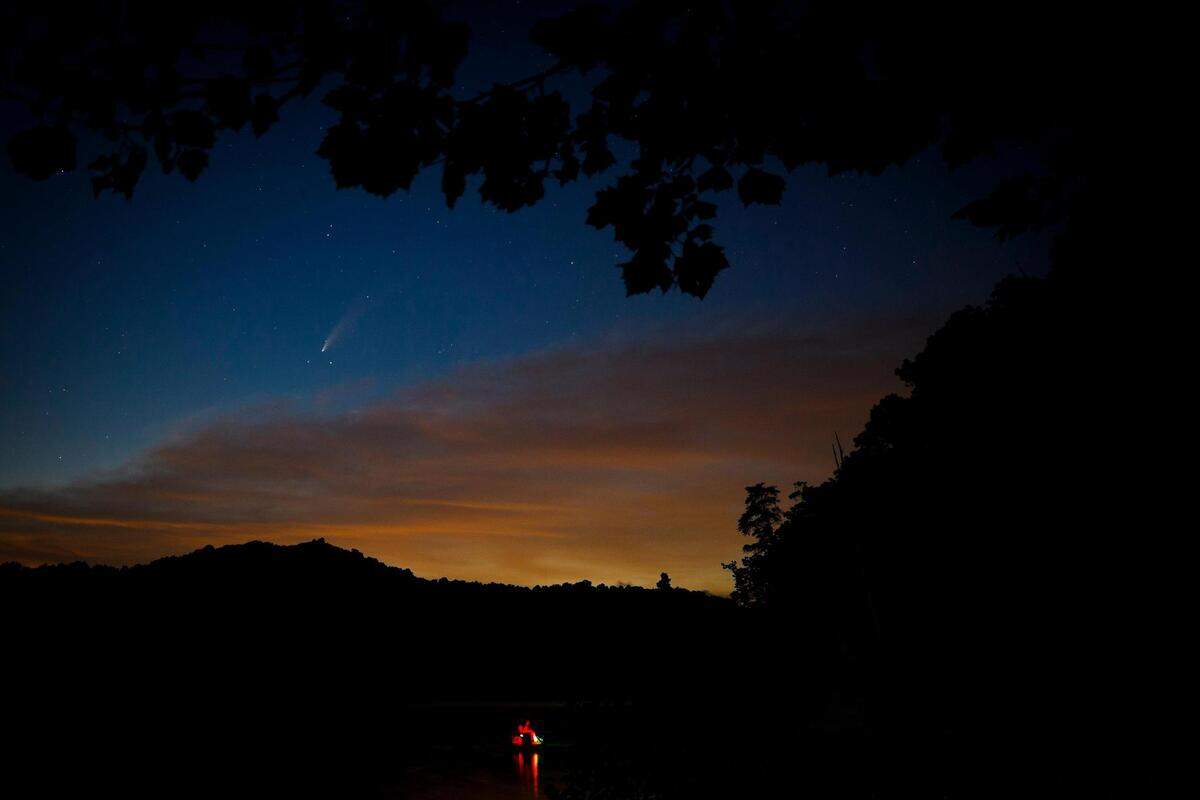
NEOWISE’s orbit around a sun, known as a period, takes around 6,800 years. This makes NEOWISE a long-period comet, which is any comet that has an orbital period of more than 200 years.
Tim Knauer, director of the MacAdam Observatory at the University of Kentucky, said NEOWISE is just one of the many hundreds of comet fragments discovered every year. However, most are only visible once they get close to the sun.
“Since they’re frozen balls of ice and dust, they have to get close to the sun to evaporate, and then sunlight illuminates it,” Knauer said.
Knauer also said a comet’s path into the inner solar system is very unpredictable, since the comet has to be nudged by gravity to leave the Oort Cloud and then nudged again to make it into the inner solar system. Even then, there is a chance the comet could break up into smaller fragments.
“Comets are very ill behaved,” Knauer said. “They do whatever they want to do.”
Knauer said NEOWISE will be visible to the naked eye for around another week, and encouraged stargazers to see it. Once it goes further away, Knauer said, it will be best seen with binoculars, a telescope or with a long exposure camera.
“It’s one of nature’s ephemeral things that comes past and then it’s gone,” Knauer said. “We should take advantage of this and enjoy it.”
This story was originally published July 23, 2020 at 10:07 AM.