‘My heart still aches.’ Families mark 50th anniversary of deadly Ky. coal disaster.
It was a cold afternoon with heavy snow on the way when a neighbor yelled to Ramona Crawford, whose telephone was out, that there had been an explosion at the underground coal mine where her father worked in Leslie County.
Crawford, 23 that day in December 1970, jumped in a pickup truck and raced to the mine.
State troopers trying to keep the narrow road to the mine open told her she couldn’t go in, but she wouldn’t be denied.
“I just more or less come apart on’m,” Crawford said. “There’s no SOB keeping me out of here ‘til I see my daddy.”
Crawford was elated to find her father, A.T. Collins, alive, but he was the only one. The blast on Dec. 30, 1970 among the steep hills overlooking Hurricane Creek killed the other 38 miners who had been in the Finley Coal Company mines 15 and 16.
There has not been a deadlier coal-mine disaster in the U.S. in the ensuing 50 years.
The 38 men who didn’t make it home that day left behind 34 widows and 103 children, according to a federal report.
Thirty of the miners were from Clay County and the rest were from Leslie. In a rural area with large extended families where many people knew each other, the explosion spread a pall of grief.
“It was literally staggering how many people were affected,” said Danny Finley, a former coroner in Clay County whose father worked at the mine.
A number of violations
Coal production had bottomed out in Eastern Kentucky in 1960 but rose considerably in 1970, and Holt Finley and his sons, Charles and Stanley, who had operated other mines in the area, began developing a new mine in Leslie County that would be designated the No. 15.
They started pushing in the adjacent No. 16 mine shortly after and ultimately connected the two.
The production method at the mines was to use a machine to cut a horizontal slice under a wall of coal, then blast the coal loose and load it onto a conveyor to the surface.
Coal regulators and operators were adjusting to the toughest mine-safety law in U.S history, approved by Congress in 1969 in response to a November 1968 explosion at a Consolidation Coal mine in Farmington, W.Va. that killed 78 miners.
President Richard Nixon signed the law on Dec. 30, 1969, exactly a year before the Finley disaster.
The provisions included four annual inspections at underground mines, stronger safety rules, mandatory fines for violations of health and safety standards, criminal penalties for willful violations and benefits for miners with black lung, a crippling disease caused by breathing coal dust.
Inspectors also found unsafe handling of explosives after an accident, and issued violations for inadequate rock-dusting in both mines in August and October, according to a federal report.
Fine coal dust, churned up by blasting and machinery in underground mines, is explosive. Workers coat the interior of mines with pulverized stone, called rock dust, to cut down the combustibility of the coal dust.
A federal inspector had planned to go to the No. 15 Finley mine early Dec. 30, but got diverted to investigate a fatality at another mine, according to a federal report on the disaster.
The report said that even if the inspector had gone to the Finley Coal Co., he wouldn’t have gone into the area of the No. 16 mine where the massive explosion originated.
But Tony Oppegard, a Lexington attorney who has represented miners in safety cases for 40 years, said that doesn’t necessarily mean the inspector wouldn’t have spotted violations that led to the blast if he’d gone to Hurricane Creek that day.
“If he had gone to the mine, a miner might have said ‘Hey, you need to look at this,’ “ Oppegard said.
‘Going to blow up’
There were indications some miners were uneasy.
Timmy Harris, now 57, remembers having breakfast with his father, Lester Harris, the morning of the explosion. As he walked out the door the last time, Lester Harris kissed his son and told his wife he loved her, which he didn’t normally do before going to work, Timmy Harris’ mother, Edith, told him later.
His mother also told him that his father had talked of potential problems at the mine, including impermissible use of dynamite underground, Timmy Harris said.
“Mom said Daddy had told her time and again that there was some stuff over there that if they didn’t fix it, it was going to blow up,” Harris said.
Before the disaster, there were rumors something unusual was on tap at the mine that day, according to “The Hurricane Creek Massacre,” a book written about the explosion by Thomas N. Bethell.
“Widows remembered their husbands worrying about getting killed — something to do with a bigger-than-average blasting job,” wrote Bethell, who first covered the disaster for The Mountain Eagle newspaper in Whitesburg.
Collins later testified that a supervisor indicated to him the morning of the disaster the blasting that day “would be something unusual.”
A ‘horrible scene’
In the hours before the fatal explosion, Walter Hibbard and Walter Bentley were deep inside No. 16 working to blast a “boom hole” in the roof of the mine to allow for construction of a conveyor belt to move coal out of the mine, according to Bethell’s book.
Bentley had years of experience using explosives, but federal regulators would later determine there were egregious safety violations in the blasting that day.
Federal investigators concluded there’d been 100 to 200 charges of dynamite placed in holes bored into the roof of the mine, which wasn’t legal, and the shots had been strung together with a product called Primacord, which also wasn’t allowed, according to Bethell’s book.
Investigators also said there were excessive accumulations of coal dust in the mines and that there hadn’t been enough rock dust spread. The initial blast at the boom hole a little after noon touched off the combustible coal dust, creating a massive explosion.
Some felt regulators should have taken action on Finley Coal earlier.
“It was a sad education for me because it was my first experience in learning that enforcement agencies, at least then, don’t always do what they’re supposed to do,” said attorney John Rosenberg of Prestonsburg, who had come to Eastern Kentucky not long before to help set up the Appalachian Research and Defense Fund and helped look into the blast.
Collins, whose job was to tend the conveyor belt, was near the opening of the No. 15 mine when the explosion blew him into a sediment pond, said Steve Cawood, an attorney from Pineville who represented Collins after the disaster.
A mine-supply salesman pulled the unconscious Collins out of the pond and cleaned the dirt from his mouth and nose so he could breathe, Cawood said.
News of the blast spread quickly by telephone and word of mouth, and a scene unfolded that had become sadly familiar in the coalfields of Eastern Kentucky and Appalachia, with fearful family members, police and ambulance crews, mine-rescue teams, miners wanting to help and reporters converging at the site.
Cawood went to the mine at the direction of then-U.S. Rep. Carl D. Perkins, a Democrat from Knott County who had championed the 1969 mine-safety act, who called and told him to get to the site and keep Perkins up to speed on what was happening.
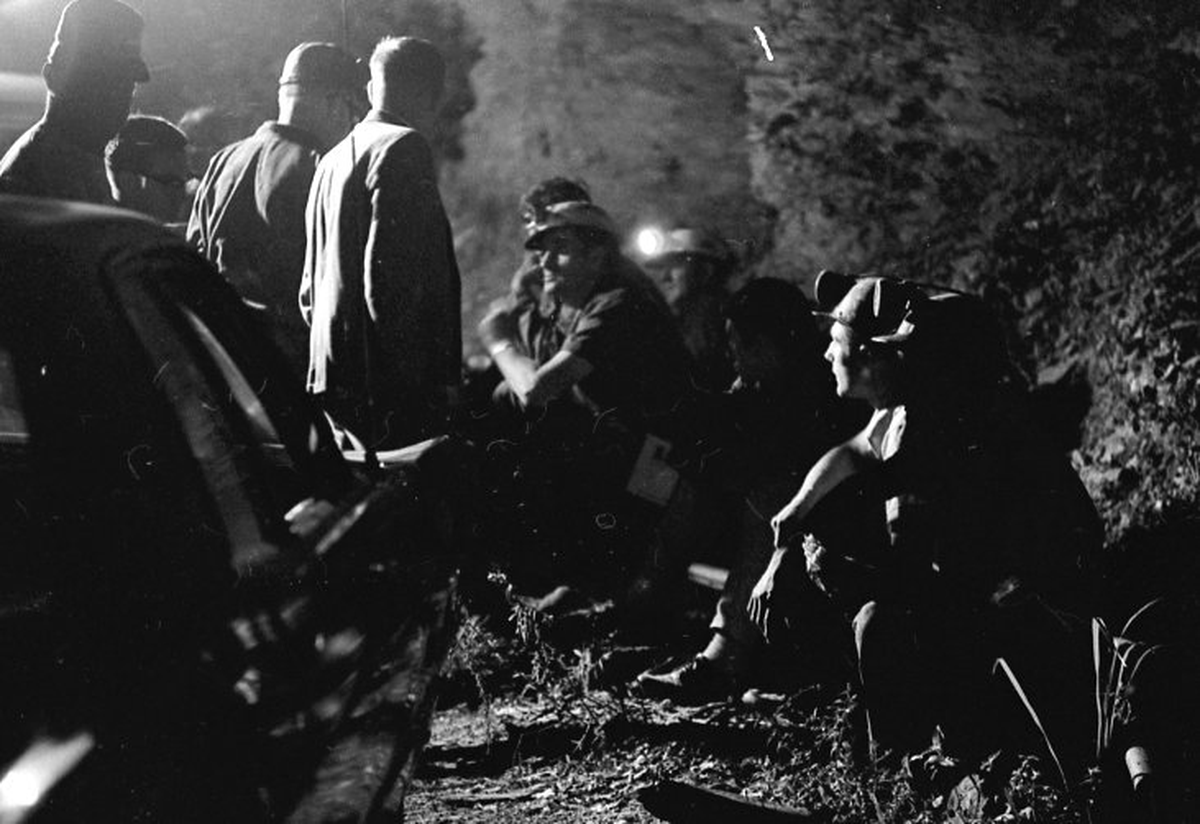
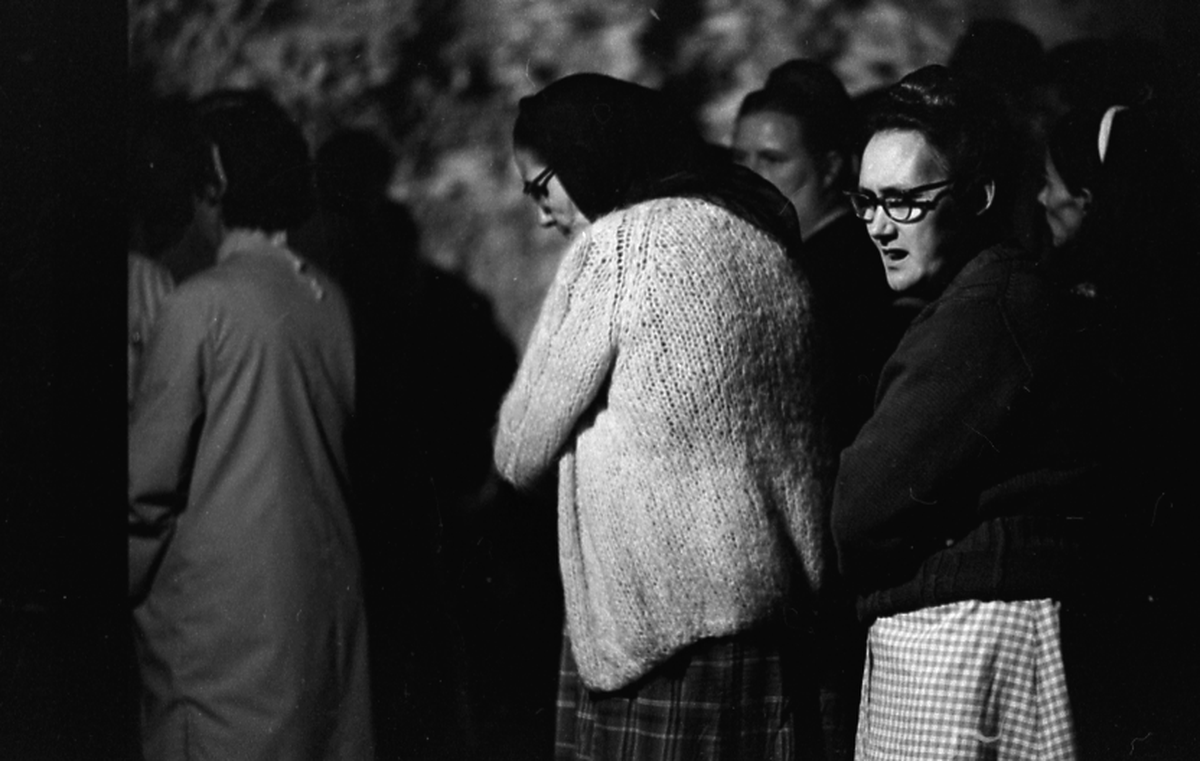
Tearful family members had gathered at the mine by the time he arrived late that afternoon, some standing around a bonfire in the cold as they waited to find out whether their husbands and fathers had died.
“It was just a horrible scene,” said Cawood.
Collins, the only survivor, was in shock and kept wanting to go back into the mine, his daughter said.
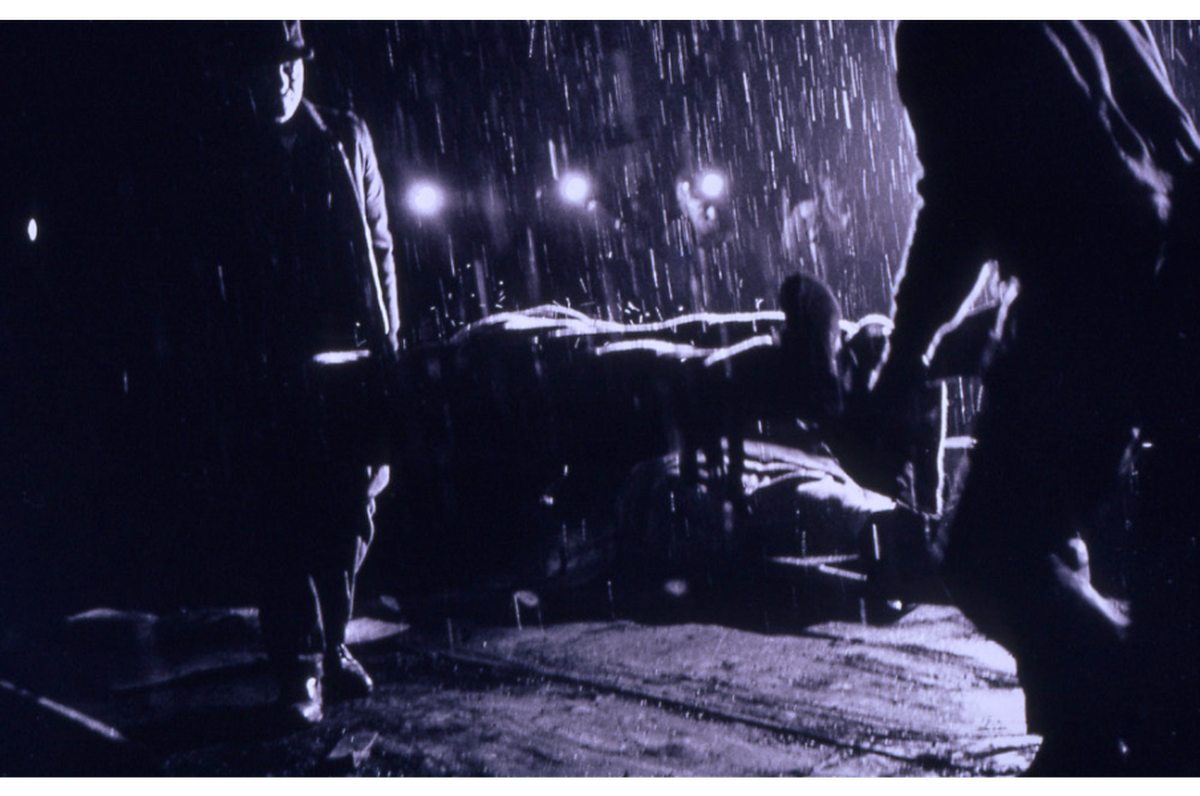
Family members and friends held out hope of finding other miners alive as crews headed underground to look for them, fixing the ventilation system as they went, but the rescuers found only bodies, many of them clumped together.
The crews didn’t get the last man out until 10 a.m. Dec. 31.
A morgue in a school
Dwayne Walker, the coroner in Leslie County at the time, set up a make-shift morgue in the gym at Hyden Elementary School in the hours after the explosion and enlisted his son Greg, a high-school freshman, to help in the sad job of identifying the bodies.
Some of the men could be recognized by their facial features, but others had to be identified by their belongings after the force of the blast.
“People — it was just hard for them,” Greg Walker said.
One of the miners who was killed, Theo Griffin, was identified by his belt buckle and an appendectomy scar, said his niece, Debbie Edwards. Griffin’s brother drove from Louisville to make the identification.
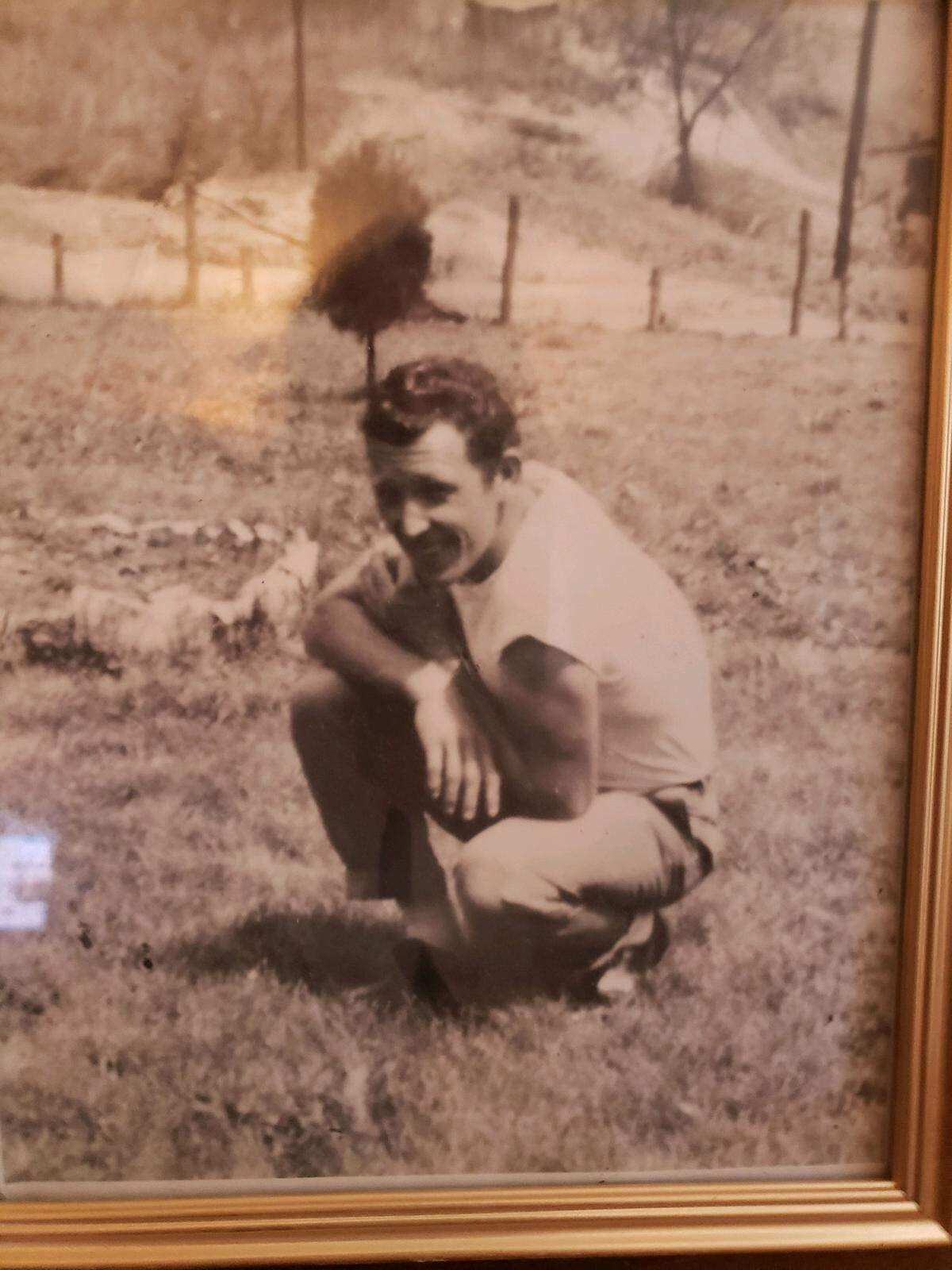
Timmy Harris was 7 when his father, 35-year-old Lester Harris, was killed in the explosion. He said he remembers going into a funeral home afterward and seeing a man under a sheet. He could see the man’s mining boots, and the bottoms had been melted, he said.
Before Timmy Harris’ mother died a few years ago, she told him that as she was picking out a casket for her husband, she commented that the liner would look nice with her husband’s wavy, black hair. A man at the funeral home responded that her husband didn’t have hair anymore, and walked away.
As with several of the miners, the casket was closed at Lester Harris’s funeral. When Timmy Harris was about 45, he asked his uncle, who’d identified his father’s body, what he’d looked like after the explosion.
Investigators would later conclude that 33 of the miners died instantly in the explosion, but that five of the men may have moved a short distance before dying as a a result of asphyxiation or carbon-monoxide poisoning.
According to Bethell, Dr. William B. R. Beasley, then the medical director of the Frontier Nursing Service, noted that the body of one miner was soaking wet and that water came out of the man’s mouth and nose when his chest was pressed.
Beasley speculated that the man may have survived the blast and jumped into a pool of water to escape the heat, only to come up for air and breath in carbon monoxide before going back under water and drowning, according to Bethell’s book.
Armond Wagers was one of the last miners found during the recovery effort. There was evidence that he survived the initial blast – scuff marks on his boots, indicating he had crawled some distance, said Wanda Bowling, one of Wagers’ daughters.
‘My heart still aches’
Bowling was 12 when her father, who had gone to work in the mines when he was just 14 and had 11 children, was killed in the explosion at age 40. His brother Arnold Wagers, 35, and his son-in-law, Elmer White, 23, died with him.
Wagers liked to do mechanic work on his car when he was off work, and Bowling, “very much a Daddy’s girl,” hung around and handed him tools.
Bowling said she felt lost and angry after her father died, and had trouble accepting that he was gone. She dreamed he was alive and in Washington, D.C., and vowed that when she grew up she would go find him.
“I guess I would say I really struggled,” Bowling said. “My heart still aches for him.”
Bowling said her mother, Elva, was a woman of great religious faith, but her father didn’t attend church. Bowling, also a Christian, worried for years about his soul, but had a vision of him standing beside her during a church service in 1985, clapping his hands during the singing.
She took it as a sign from God that he is in Heaven.
“After that I worried no more,” she said.
Timmy Harris still remembers the day his father left the house for the last time to go to his shift at the mine. Lester Harris had overslept and was going to be late for his shift, so his wife woke him up. Later, she wished she’d let him sleep.
Timmy Harris has held on to his dad’s truck, billfold and a collection of newspaper clippings about the explosion. Timmy Harris said he still remembers his father, and holds on to his lessons of being respectful.
“He loved us dearly, but he raised us as ‘you do what your mommy tells you, she better not have to tell you twice.’”
Joan Gray was 15 when her father, Jeff Spurlock, 41, and her uncle, Theo Griffin, 28, died in the explosion.
Griffin had lived in Louisville for years but had wanted to come home and raise his daughter in Clay County, and mining was one of the few jobs available. He’d been a miner four months when he was killed.
Jeff Spurlock loved working in the mine, including the camaraderie among the miners, who played pranks on each other, Gray said.
“We were on his heels anytime he went anywhere,” Gray said.
Her father liked to fish and hunt, and was a devout Christian who taught Sunday School and sang religious songs when the family went driving after church in their station wagon, Gray said.
“He said, ‘When it’s my time to go, God’s gonna come and get me,’ “ Gray said.
The lone survivor of the blast, Collins, struggled with survivor’s guilt in the years afterward, said Crawford, one of his four children.
There were times when Collins refused to talk about the disaster, but in the times when he did, he talked about how unfair it was that he survived.
“He just questioned as to why he lived and so many died,” she said.
Tougher laws
It has often taken a disaster to get lawmakers to enact tougher mine-safety laws, Rosenberg said.
“Seems like these tragedies are unfortunately the kinds of things legislatures respond to. It takes a terrible situation like that to wake people up,” he said.
Federal lawmakers approved tougher rules after the 1968 Farmington disaster and the 1976 Scotia Coal disaster in Letcher County that killed 23 miners and three federal inspectors, and the five U.S. coal-mining fatalities this year — two of them in Kentucky — are a far cry from the 260 nationwide in 1970.
But the Finley disaster didn’t result in any significant federal legislation aimed at improving mine safety, said Oppegard, perhaps because it was so soon after the 1969 law.
A grand jury issued criminal charges against Charles Finley individually and the company, in which his father and brother were partners. The brothers pleaded no-contest on several mine-safety charges, none of them related to the Dec. 30 explosion, according to a 1975 story in The (Louisville) Courier-Journal.
A judge fined Charles Finley and the company a total of $122,500.
Oppegard said it was wrong that no one was held criminally liable in relation to the 38 deaths.
“You kill 38 people in a mine explosion — nothing,” said Oppegard, who formerly worked at the federal and state mine-safety agencies. “You don’t have a mine blow up unless it’s a shoddy operation.”
‘It was hard times’
Joan Gray’s mother, Barbara, got a medical card and food stamps for awhile after they lost her father’s income, but hated taking welfare and didn’t do it for long, working in restaurants or the school cafeteria to support herself and her daughters.
“She held everything together,” Gray said. “It was hard times. We didn’t have what we wanted but we had what we needed.”
Timmy Harris’ mother was one of the few women widowed by the explosion who had a job even before the blast, but she was raising three boys and lost a significant portion of the family’s income when her husband died.
Monthly checks provided to every child under 18 helped, but the family still struggled. Harris said his mother, Edith, was “tough as nails” and pulled her family through despite never truly getting over the loss of her first husband.
Before his death, Lester Harris had said he didn’t want his sons ever working in a coal mine. Timmy Harris said that after his father’s death, he never wants there to be dirt over his head.
“I won’t even go to Mammoth Cave,” he said.
At some level, the hurt never went away. Family members still get emotional recalling the men who died.
“I still think what a tragedy it was,” said Bowling. “You don’t get over something like that, really.”
On Wednesday, the 50th anniversary of the disaster, family members of several of the miners spent part of the day at a memorial established in 2011 at a spot near the mine. It’s a stately, quiet place with a statue of a miner and plaques with information about each of the 38 who died.
Mary Bowling brought framed photos of her husband, forever in his early 20s. Her son David, just four months old when his father died and later a miner himself, hung a wreath on the post with his father’s name.
Gray said she had been to the memorial several times. She feels closer to her father at the spot, which she sees as fitting tribute to men who died providing for their families.
“Their legacy should go on, and what they did for their families,” she said.
This story was originally published December 31, 2020 at 2:09 PM.