
Timothy M. Kelly, who led Pulitzer-winning work at Herald-Leader, other newspapers, dies at 73.
Timothy M. Kelly, an Ashland native who oversaw Pulitzer Prize-winning work at several newspapers, including the Lexington Herald-Leader, and was honored for his commitment to diversity and public-service journalism, died Monday.
Kelly, 73, had been diagnosed with cancer.
“He was a really terrific, committed newspaper guy,” said Alan Stein, who lined up investors in the late 1990s to build a baseball stadium in Lexington and bring in the Lexington Legends. “He was committed to excellence.”
Kelly was hired at the Herald-Leader in 1989 as managing editor after working at newspapers across the country.
The Herald-Leader had improved significantly during the 1980s under the leadership of editor John Carroll, winning its first Pulitzer Prize in 1986 for an investigation of payoffs in the University of Kentucky men’s basketball program.
Kelly continued the focus on tough accountability journalism in news and commentary after succeeding Carroll as editor in 1991.
The newspaper won a second Pulitzer Prize the next year, for a series of editorials that led to significant reforms in how Kentucky police and courts handled domestic-violence cases, and then another Pulitzer in 2000 for editorial cartooning while Kelly was publisher.
Kelly became publisher of the newspaper in 1996 and held that job until he retired in June 2011 after a 46-year career in journalism.
“The Herald-Leader, that was his pride and joy,” Kelly’s son, Kevin, said Monday. “He never lost his love for the paper and the people who worked there.”
Jim Gray, a Lexington businessman who was mayor from 2011 to 2019 and is now state Transportation Cabinet secretary, said Kelly had a passion for helping Lexington and the state, and both benefited from his leadership of the paper.
“He was gifted in every dimension,” Gray said. “He knew that a vigorous and robust press, an aggressive press, was good for the city.”
Kelly served in leadership positions with about two dozen local and state boards and committees, according to his family, including the organization now known as Commerce Lexington, the YMCA of Central Kentucky, the Kentucky Blood Center and the Lexington Area Sports Authority, as well as the national boards of the YMCA and AARP.
Jo Ann Jenkins, CEO of AARP, said that Kelly dedicated his life to serving others through journalism, philanthropy and volunteerism.
“His work on the national stage was inseparable from his work in his community. The nation and Lexington are measurably better off because of his work, passion, and vision,” Jenkins said.
Kelly chaired campaigns to raise money that resulted in the construction of the Beaumont and North Lexington YMCA facilities, the Kentucky Blood Center and to save Calumet Farm trophies.
He won a number of honors for his service work, including awards as volunteer of the year for the YMCA and the Lewis Owens Award for Community Service from the Kentucky Press Association.
“Tim did everything he could to help Lexington move forward,” said businessman Jim Host, a close friend.
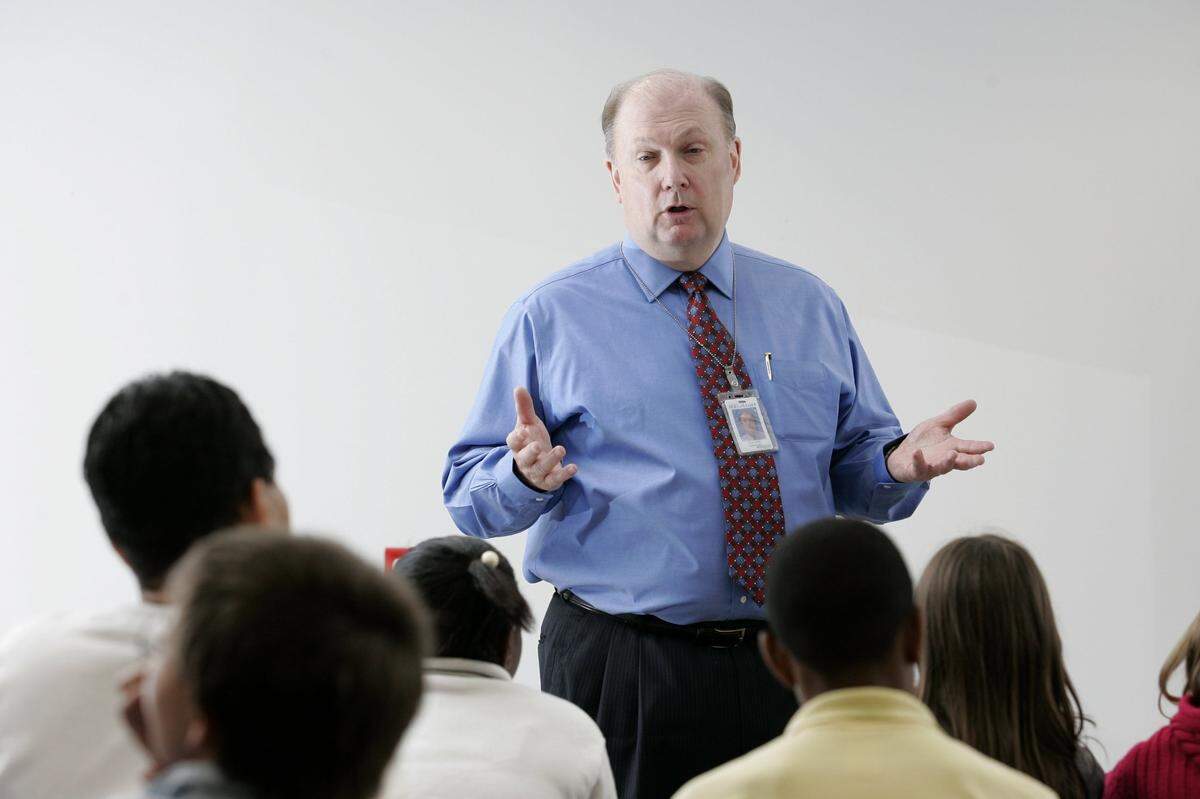
When he announced his retirement, Kelly, who loved fishing, said people would have to look on a lake to find him, but not long after he agreed to Gray’s request to head an effort to deal with a gaping unfunded liability in the city’s pension fund for police and firefighters that threatened funding for other city services.
Working long hours at times, members of the task force negotiated changes in which both sides gave some ground, with more city funding for the pension plan but also increased payments from employees and limits on cost-of-living adjustments.
Kelly was persistent and determined in that effort, which was lauded as the most effective pension reform in the nation, Gray said.
Gray said Kelly kept in touch with him after working on the pension task force and often sent him emails with ideas or comments.
“You could always count on it being something thoughtful,” Gray said.
Former Herald-Leader reporter Lee Mueller said he met Kelly in the early 1960s when Mueller was assistant sports editor at the Ashland newspaper and Kelly was an enthusiastic teenager who brought in sports stories from his high school, Holy Family Catholic.
“He sort of radiated intelligence,” Mueller said.
Mueller said when he worked for Kelly at the Herald-Leader years later, Kelly was a fair-minded and thoughtful boss.
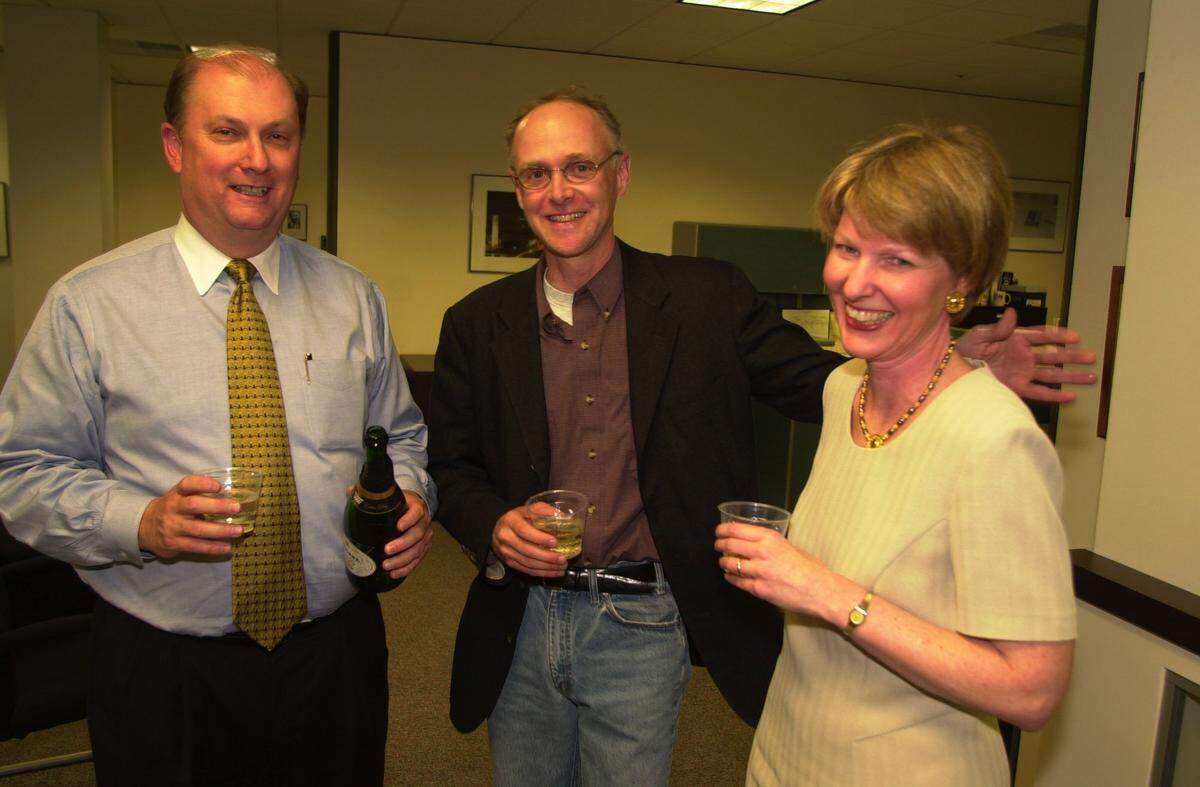
Kelly started his newspaper career at age 17, as a part-time sportswriter at the Ashland Daily Independent before moving to jobs as a sportswriter or copy editor for newspapers in Huntington, W.Va., Miami and Louisville.
Kelly worked his way through Ashland Community College, Marshall University and the University of Miami while working at newspapers, graduating with honors from Miami in 1970.
After being promoted to executive sports editor of the Philadelphia Inquirer at age 25, becoming one of the youngest sports editors of a major metropolitan newspaper, Kelly later moved to news and held editing positions at The Dallas Times Herald, The Denver Post, the Daily News in Los Angeles and the Orange County Register in Southern California.
The Denver and Orange County papers won Pulitzer Prizes while Kelly was there.
Maria Henson had started writing a series of investigative editorials on battered women before Kelly took over as editor of the Herald-Leader, but he helped read the columns and fully supported the effort that led to the 1992 Pulitzer Prize, she said.
Henson said Kelly was “old school” in the best way, someone who loved news and sports and relished the pursuit of stories.
“It’s being a public watchdog, being fearless, thinking about what your responsibility is to the community you serve,” said Henson, now an associate vice-president and editor-at-large at Wake Forest University. “He had high standards.”
Amanda Bennett, whom Kelly hired as editor of the Herald-Leader in 2001, said Kelly was a “delight” to work with as publisher, leaving editors and reporters alone to do what was needed.
“He was completely committed to the journalism,” Bennett said.
Bennett said Kelly backed the paper going to court while she was editor in two cases to get access to Lexington council meetings and to records on an alleged abusive priest.
“He cared about transparency. He cared about journalism,” she said.
Kelly received the excellence award for community service in 1995 from Knight-Ridder, the company that owned the Herald-Leader at the time, for public-service journalism projects on his watch that included investigations of questionable spending in county governments and on scant oversight of agencies such as water districts that had received little attention.
He received another company excellence award for identifying and developing future leaders, and received the Ida B. Wells Award in 1999 for diversity achievements.
The award recognized that the Herald-Leader under Kelly had been “outstanding” in recruiting and retaining “a high-quality multiracial and gender-inclusive staff,” according to a release from the journalism school at the University of Kansas, a sponsor of the award with the National Conference of Editorial Writers and the National Association of Black Journalists.
The release quoted a university official who said that the paper’s minority staff had increased from less than 5 percent to 12.7 percent under Kelly’s leadership.
Rufus Friday said that after he succeeded Kelly as publisher in 2011, it felt like Joe B. Hall following legendary UK Coach Adolph Rupp.
Kelly was a great mentor and friend, always available with wise counsel when Friday called.
Friday said Kelly lobbied for him to get the job, and was thrilled to see a Black man get the opportunity to run the paper.
“He had a tremendously big heart for fairness and racial equality,” Friday said.
Current Herald-Leader Editor Peter Baniak was elevated to that job by Kelly in 2009. He said he would make it a point to visit Kelly at the end of each day to talk about the biggest news of the day.
“Tim was never happier than talking about the news,” Baniak said. “Even after he retired, he would email or call or text with news tips, sometimes multiple times a day, or thoughts on the latest news in Lexington or Kentucky. It was his passion, as was seeking ways to help the city and state prosper and improve.
“He was an incredible journalist with amazing instincts for news. He was a great mentor, a great friend, and I will miss him dearly.”
Kelly, who was inducted into the Kentucky Journalism Hall of Fame in 2000, also was purposeful about putting women in leadership positions, hiring several women as top editor at the paper during the 1990s and 2000s and others as section editors.
A lot of people give lip service to the idea of making opportunities for women, but Kelly was serious about it, said Bennett, who was editor of the paper from September 2001 until mid-2003.
“He walked the walk,” she said.
Kelly’s family said he had a consistent goal to advance diversity and the careers of employees.
He named the first female editors, managing editor and editorial page editor at the Herald-Leader, and minority employees became part of the paper’s executive committee as vice-presidents for advertising and circulation and editorial page editor.
Host, who served in Republican administrations in state government, said he and Kelly differed politically, but were both sports fans and shared a love of their hometown, Ashland, and became close friends.
Kelly was “scrupulously fair,” Host said.
“Totally full of integrity,” Host said. “Never took his eye off the ball in terms of what was fair.”
Former Gov. Paul Patton also said Kelly was fair.
Patton said that in the early 1990s, when he was serving as state economic-development secretary and his views on development differed from those of the paper’s columnist, Bill Bishop, the paper gave Patton a full page to defend his position.
“You don’t give a politician a full page very often,” Patton said.
Host said Kelly had a great sense of humor.
Kelly had his wife, Carol, text Host to tell him Kelly “looked like Rex Chapman” after having his head shaved in preparation for surgery in January. Chapman, a former UK basketball great, is bald.
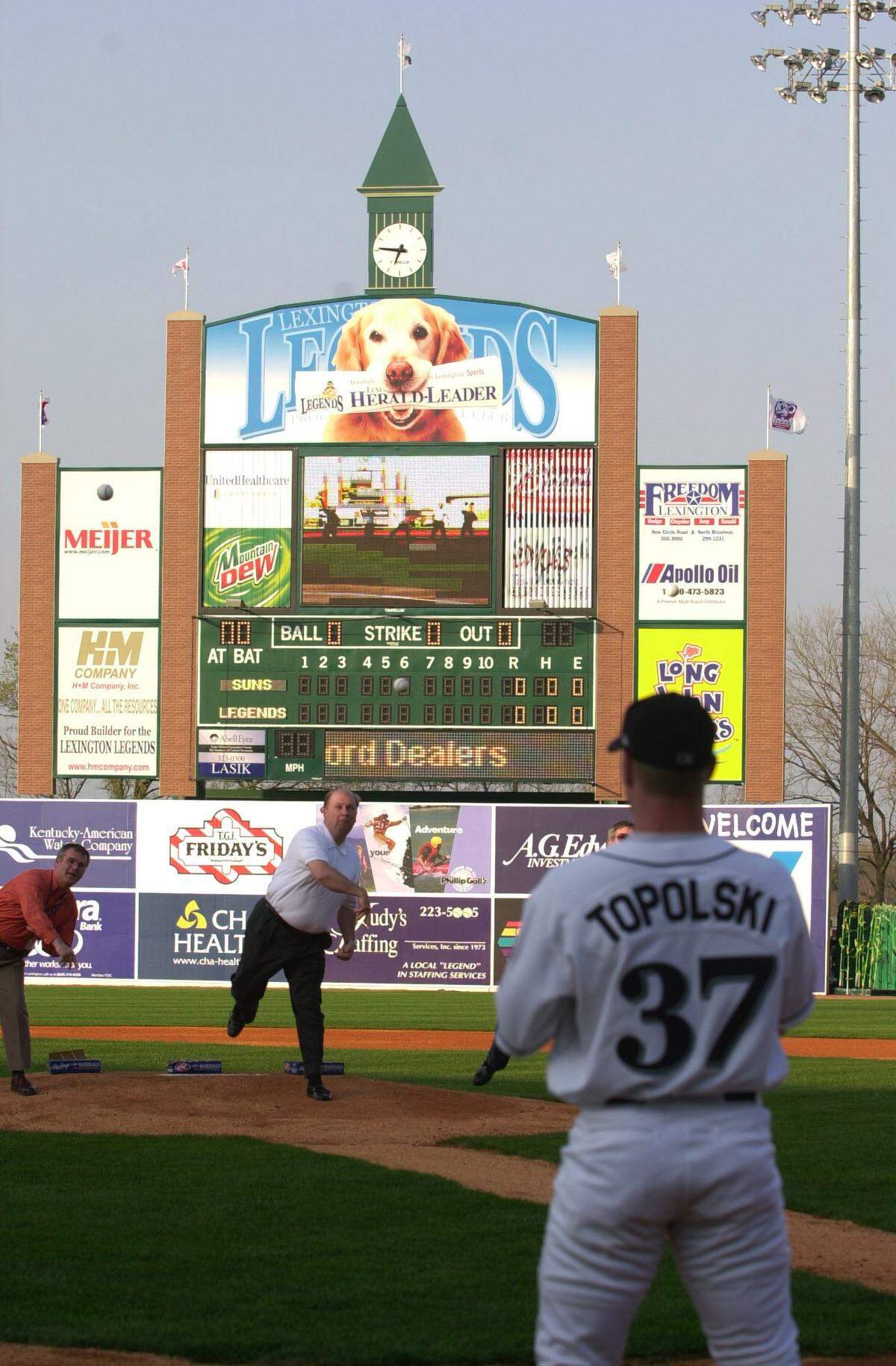
Stein said Kelly helped in his quest to bring professional baseball to Lexington, writing an opinion piece backing the idea of public funding for the stadium and, when that didn’t pan out, making the paper the first business to commit to a sponsorship.
Friends said Kelly was opinionated, direct and could be stubborn, but also a great listener and a man who was unfailingly loyal to family and friends.
“He wasn’t afraid to tell you when you were wrong, and he wasn’t afraid to tell other people when he thought you were right,” Stein said. “He was loyal and steadfast. If he was your friend, he was your friend.”
Jan Brucato, who was chief executive officer of the YMCA in Lexington when Kelly chaired the board of the organization in the early 2000s, said Kelly insisted the YMCA not open a new facility in the fast-growing, affluent Beaumont area before it built a facility in North Lexington, a less affluent area with a higher minority population.
To Kelly, it was a matter of fairness, Brucato said.
Kelly was good about keeping in touch with people years after they had worked with him at the paper or on a community board, Brucato said.
After she left for a job in another state, for instance, Kelly sent her articles or reminded her of the upcoming birthday of Ted Bassett, the longtime Keeneland president who also was active with the YMCA and other community organizations.
Brucato said Kelly was fun-loving, generous and big-hearted. She was aware of instances in which people were reluctant to join the YMCA board with him because of a perception that he was formal, or even a bit brusque.
People quickly learned otherwise when they got to know him.
“They saw his compassion,” she said. “No one was too little for Tim. Tim really cared for everybody.”
Kelly is survived by his wife, Carol Kelly; daughter Kimberly Kelly; son Kevin Kelly and his wife, Brenna; and three grandchildren, Patrick, Carson and Parker.
Visitation will be from 5 p.m. to 8 p.m. on May 10 at Milward — Man O’War at 1509 Trent Boulevard in Lexington. Plans are not yet final for a memorial Mass at the Catholic Newman Center/Holy Spirit Parish in Lexington.
There will be a private burial in Ashland.
In lieu of flowers, the family suggested making donations to the YMCA of Central Kentucky or supporting your local newspaper.
This story was originally published May 3, 2021 at 3:23 PM.