
Kentucky needs $1 billion to clean up old coal mines, report finds
Reclaiming all of the coal mines in Kentucky and six other Appalachian states could cost an estimated $7.5 billion to $9.8 billion, according to a new report.
The report by Appalachian Voices, an environmental conservation group, found significant clean-up is needed at coal mines and the problem will intensify and become more costly. Authors estimated these states have approximately $3.8 billion available from bonds to reclaim the 633,000 acres of coal mine land.
Kentucky has 54,000 acres that are completely unreclaimed and 139,000 acres that are partially unreclaimed.
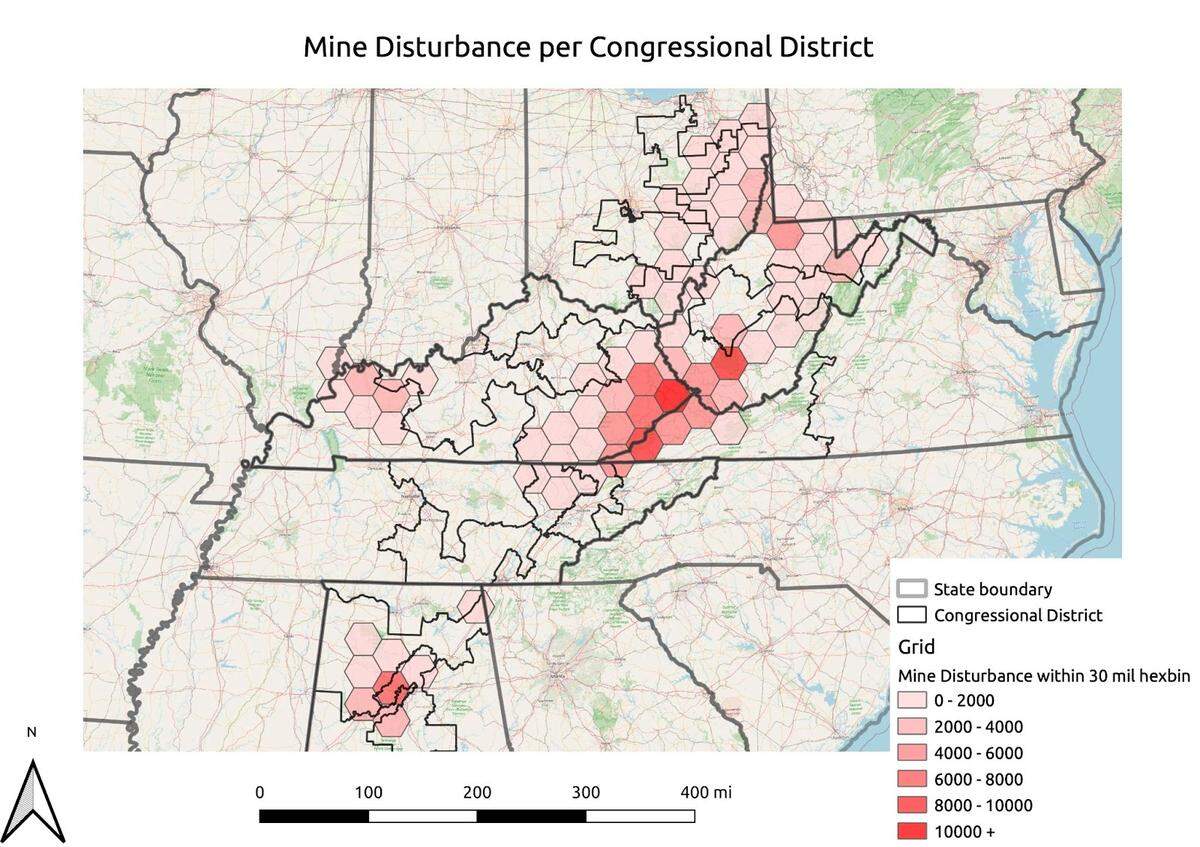
The report, titled Repairing the Damage: The cost of delaying reclamation at modern-era mines, studied coal mines in Kentucky, West Virginia, Virginia, Tennessee, Pennsylvania, Ohio and Alabama to determine the cost of outstanding reclamation in the region. It is the first report of its kind.
The report estimated Kentucky has $1.9 billion to $2.3 billion in reclamation liability, but only $887 million in bonds to cover that cost.
Representatives of the Kentucky Energy and Environmental Cabinet and the Kentucky Coal Association did not immediately respond to requests for comment.
Erin Savage, the main report author and senior program manager for Appalachian Voices, and Rebecca Shelton, the director of policy and organizing at the Appalachian Citizens’ Law Center, presented the report Wednesday to policy leaders and residents of coal communities.
Lack of reclamation can be a burden and hazard to coal communities, Savage said. They pointed to Blackjewel, a bankrupt coal company that was once the nation’s sixth-largest coal producer.
In March, a bankruptcy judge approved Blackjewel’s plan to abandon or transfer its mining permits, but the majority of their Kentucky permits have either not been transferred to other coal companies or have no interested buyer and are likely to be abandoned.
“We are really worried that this bankruptcy is a harbinger of what’s to come if no action is taken to ensure that bonding is sufficient to cover reclamation cost in all currently permitted mine sites,” Shelton said.
Reclamation of the 33 permits likely to be abandoned will fall to the state. The Kentucky Energy and Environment Cabinet predicts it will cost $28 million, but the Kentucky Reclamation Guaranty Fund, the state’s pool bond, has only about $50 million available, which will cover reclamation obligations for all mines left unreclaimed.
Savage said state agencies have not taken the issue of bond shortfalls as seriously as she hoped. But the failure of Blackjewel in Kentucky “can be a bit of a warning to the other states,” especially as the coal industry continues to decline, causing more companies to declare bankruptcy.
Savage said the bankruptcy process provides little accountability for coal companies to reclaim land unless there is an imminent danger.
“We need to say it as much as we can: this is not just environmental, this is a public safety problem,” Savage said. “This is really unsafe for the people who live near these sites and downstream of these sites.”
In Harlan County, a Blackjewel mine has contributed to repeated flooding, damaging the road, washing out the waterline and making it inaccessible for emergency vehicles. The permit has been cited for environmental violations and the bankruptcy court last year ordered Blackjewel to abate the violations. Still, problems persist.
Bonding practices need to change
Savage said state agencies need to improve their bonding practices, but time is running out.
Some of the companies buying mine permits from Blackjewel are having difficulties because they are unable to get new bonds. In some cases, bond backers are requiring 100% collateral for reclamation bonds, which new, smaller companies can’t cover, Savage said.
Some states, such as Pennsylvania, acted years ago to help prevent bonding problems. Pennsylvania is now using full-cost bonding to cover the full estimated cost of reclamation. As a result, Pennsylvania’s bonding amount is much closer to their estimated liability, at about 60%, compared to about 42% in Kentucky, Savage said. Other states have not set up systems that are able to stand up to widespread bankruptcies and forfeitures, Savage said.
The cost to reclaim will only become more expensive as the mine permits age. A stagnant mine can cause erosion, landslides, flooding, dust problems and water pollution. During bankruptcy proceedings, state agencies often are unable to conduct enforcement because there is no company to call or give citations to and there are no employees to do the reclamation work.
“That’s one reason this reclamation needs to get going right now, before we end up with more companies like Blackjewel,” Savage said.
The proposed future of reclamation
The report suggests that coal companies unable to complete reclamation should forfeit their bonds so state regulatory agencies can complete reclamation. The report estimated 5,800 to 11,700 Kentucky jobs could be created by completing reclamation.
The report also concludes that the U.S. Office of Surface Mining Reclamation and Enforcement should require state regulatory agencies to evaluate mines for outstanding reclamation needs and costs.
The agencies should require updated mine reclamation and closure plans to address the lag in reclamation efforts, the report stated.
The report also argues that Congress should provide funding to make up for bonding shortfalls.
“If these shortfalls are not addressed by the federal government, the repercussions of another round of abandoned mines will fall to local communities,” the report stated. “Already, we are seeing state agencies struggle with bond forfeited mining permits, delaying reclamation or attempting to lower reclamation standards.”
Reclamation is required by law, and communities should not have to worry about the cost of reclamation when it is harming them, Shelton said.
This story was originally published July 13, 2021 at 3:16 PM.