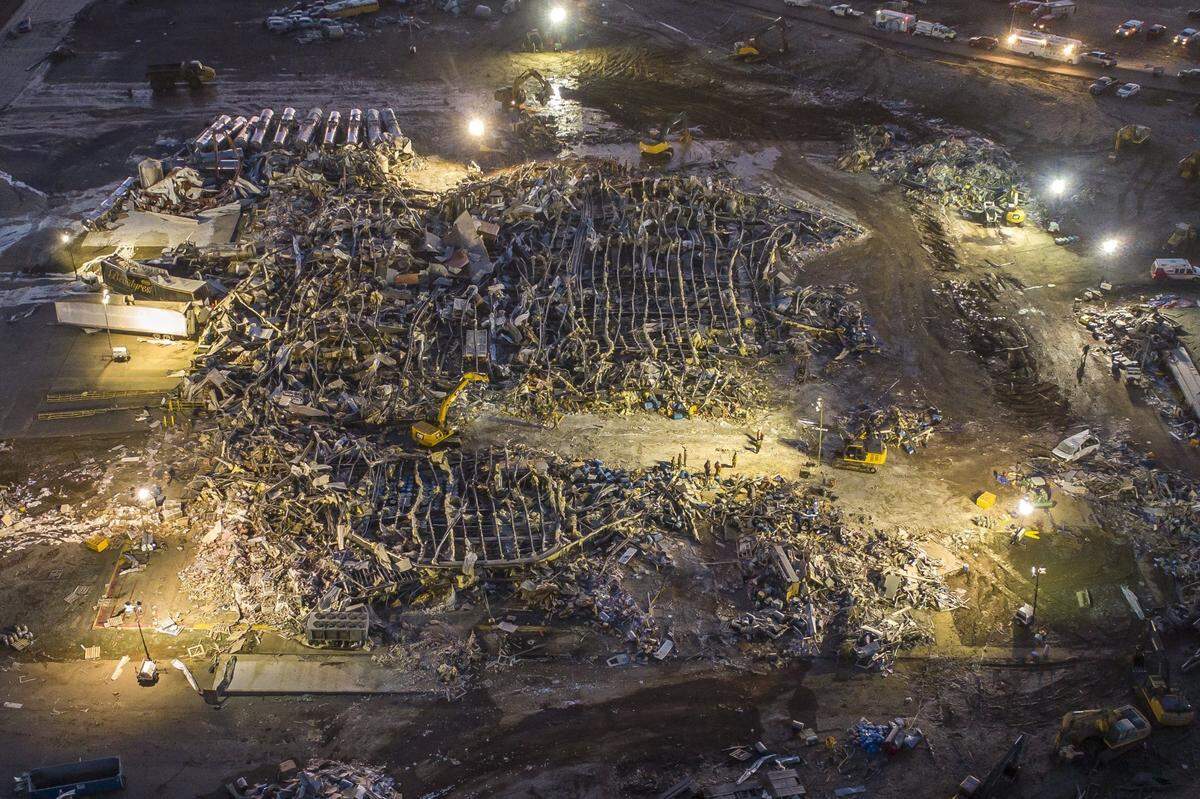
‘God got us.’ Workers describe horror, heroism inside doomed Mayfield candle factory.
After the tornado hit, Mary Smith remembers lying underneath piles of rubble under a man who was kicking her. She heard what she now knows was his last choking breath.
For seven hours in the darkness, Angelita Turner cradled an injured coworker between her legs as a cinder-block and plywood wall pressed down on them.
Before the roof of the factory came down, Rebecca Marsala told the Graves County Office of Emergency Management that it felt like everything was flying around her. Like the “inside was the outside.”
Moments later, she said she found herself under a pile of three people, including her boyfriend Dave, and five feet of rubble.
At the bottom of the pile, Marsala said that in the confusion someone was spitting in her face. Her boyfriend’s arm was painfully pinned to a concrete block. Any time he tried to move it, she said, the block pushed into the back of her skull.
“We were literally so compact that we had no room,” Marsala said. “I can’t even wiggle my toes, and if I did try to wiggle my toes the guys above me was screaming in pain because it was hurting them. That’s how tight we were.”
Hundreds of people were employed at the Mayfield Consumer Products candle factory smashed by a tornado on Dec. 10, killing eight and leaving 17 more hospitalized nearly a week later.
In the chaotic days that followed, many gave differing accounts on whether it was a good place to work, or if they were free to leave the factory without punishment in the hours ahead of the powerful storm.
However, people who were inside the more than 100,000-square-foot concrete-and-steel building when it collapsed or who rushed to the site afterward to help all told the Herald-Leader similar tales of horror and heroism.
‘Just the screaming. I will never forget that’
Mary Smith, 24, worked on the pack out line, where candles and other fragrance products were readied for shipping to retailers around the country.
After the tornado hit at 9:25 p.m., Smith said she was suddenly trapped in the rubble for six hours between a man’s leg and a large pipe that she said was “crushing” her kidneys.
She was underneath a man who was kicking her as he tried to breathe.
“I didn’t know he was dying,” Smith said. “They pulled the dead body out behind me, and then I pulled myself out. It’s traumatic.”
Turner, a 40-year-old quality assurance worker, said she held the hand of a frightened co-worker named Jill as the pair spent seven hours lying in darkness with a cinder-block and plywood wall on top of them. Turner said she believes that woman was Jill Monroe.
Monroe, 52, eventually died from her injuries when the building collapsed. Her son and his fiancee, Chris Chism and Paige Tingle, drove from their home in Oldham County to Mayfield the morning after to frantically search for Monroe. The last communication Chism shared with his mom was in a text: she was sheltering in the bathroom at work, and she was scared. For a full day, they didn’t know if she was dead or alive.
Turner believes she was with Monroe in her final moments.
“Her head was between my legs like a little girl getting her hair combed by her mother,” Turner said from the hospital bed where she was recovering from chemical burns and several broken bones.
“I don’t think there was really a safe place to go in that building to evacuate,” Turner added.
“Just the screaming,” she said. “I will never forget that. It was like a horror movie. It’s something I would never wish on my worst enemies.”
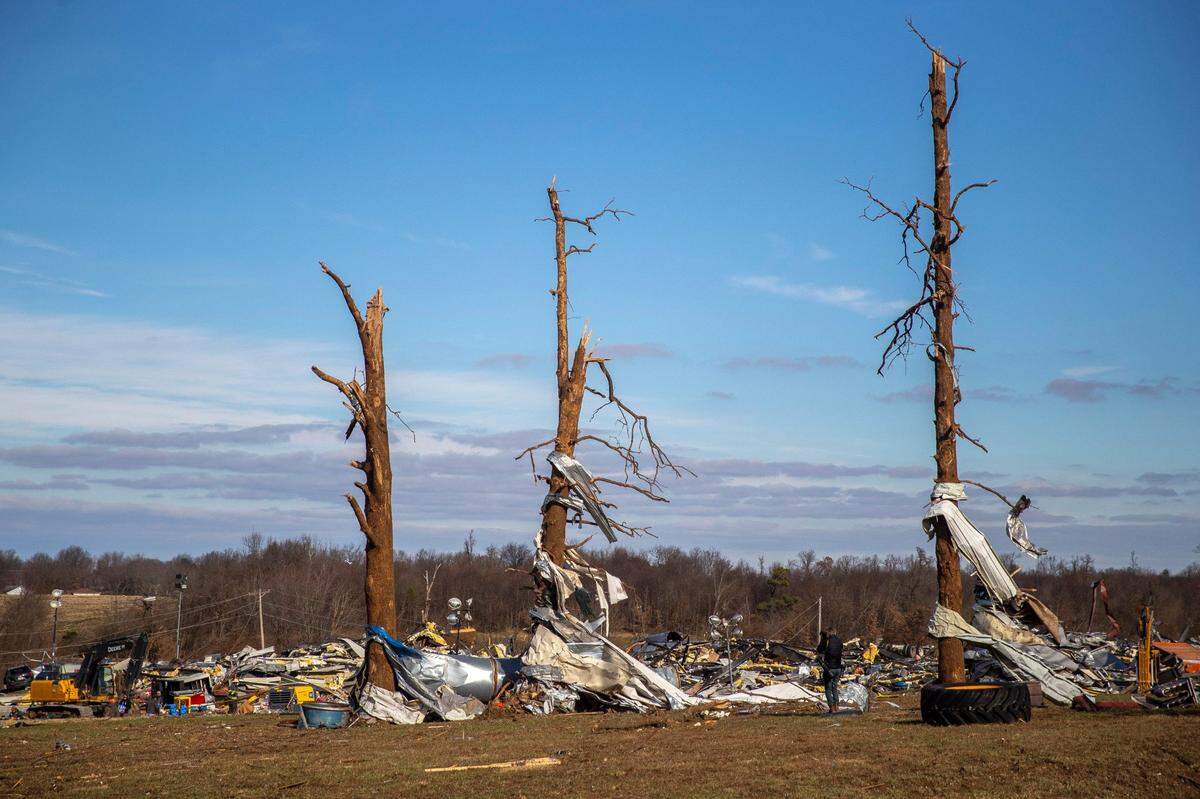
Factory full of people
There were 110 people working inside the candle factory when the tornado struck Mayfield, making it the focus of a massive search-and-rescue effort in subsequent days.
Mayfield Consumer Products, owned by the Propes family for about 20 years, said it employed 550 people at the factory last week. That was during the height of the Christmas production rush. On average, the plant employed 332 people in 2020, according to federal data.
MCP has struggled for years to find enough workers to meet demand for its products, company officials said. It advertised entry-level jobs for $8 an hour and mandatory overtime.
But workers said that with a little experience, they typically made $10 to $12 an hour, and they added to that with hundreds of dollars a week in incentive pay that rewarded them for good job performance, such as arriving on time and staying until the end of their shifts.
“I don’t want to learn nothing else,” said 33-year-old James Dabney. “That’s why I just got a job and stayed. I don’t want to learn a new job. I’m too old for that.”
The factory’s workforce was composed of working-class local residents; Hispanic immigrants, including some the company flew in from Puerto Rico; and state inmates on work-release from the Graves and Calloway county jails.
“One of the advantages to them recruiting from Puerto Rico is economic, because the labor there is so much cheaper. People are willing to come here and work for something like $10 an hour,” said John Caudill, a Bowling Green lawyer.
Caudill represented Armando Rivera Hernandez, a Puerto Rican laborer who filed a civil-rights lawsuit against the company claiming discrimination. Hernandez said he was fired after the chief financial officer allegedly sent a text message stating: “We are working diligently to clean up the epileptic, obese, pregnant, and special needs issues[.]”
The suit was dismissed because Hernandez signed a labor agreement with the company assigning such grievances to an employment service office rather than Kentucky courts.
“My client didn’t get his day in court because of the way his contract was written,” Caudill said.
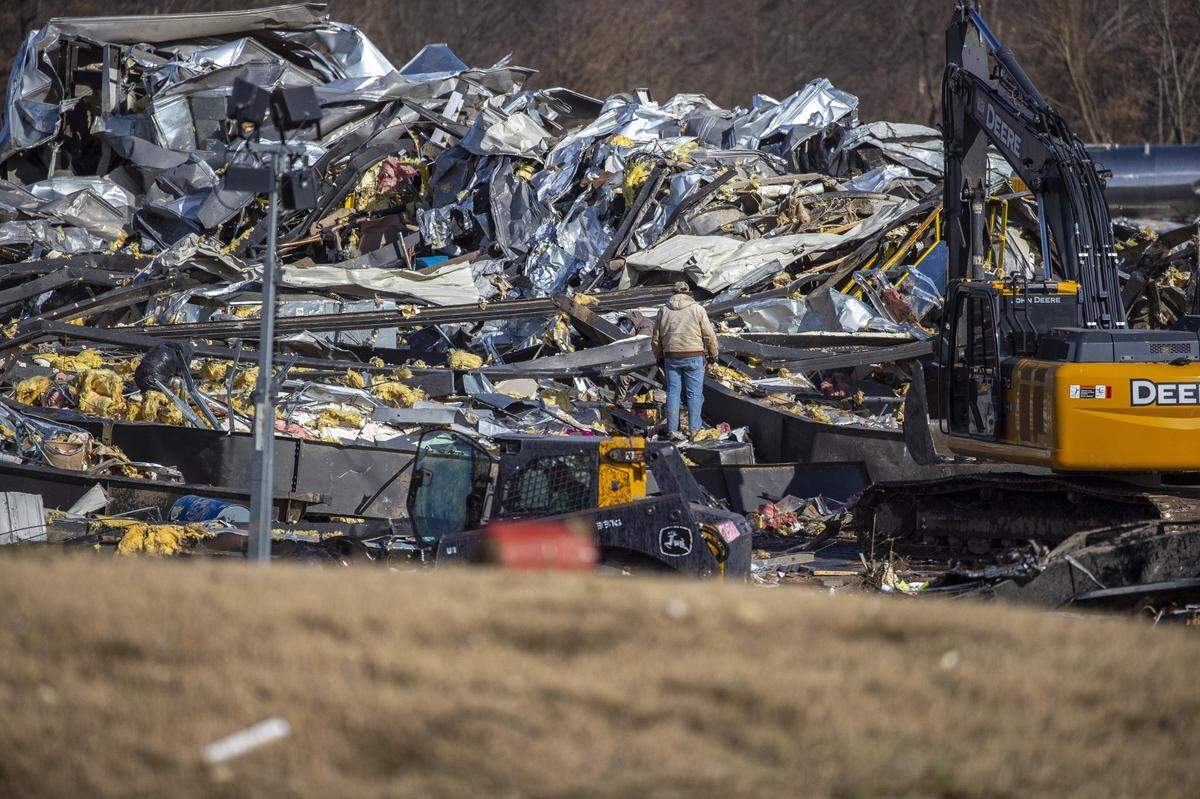
On the production line
Among the factory workers interviewed last week, most agreed it paid about as well as — maybe even a little better than — most of the other options available to them in the small town of Mayfield, including the Pilgrim’s Pride Corp. chicken plant and fast food restaurants. And the candle factory was usually hiring.
Workers offered differing opinions about how much they enjoyed the place. Some said they became an extended family, especially those who stayed for a while and got to know each other.
“You walk in and you get a hundred ‘good morning’s from everybody. It’s just beautiful,” said Jamie Wallace, a daytime shift leader who clocked out ahead of the storm on Dec. 10.
Others said it was just a paycheck.
.jpg "IMG_1548 (1).jpg")
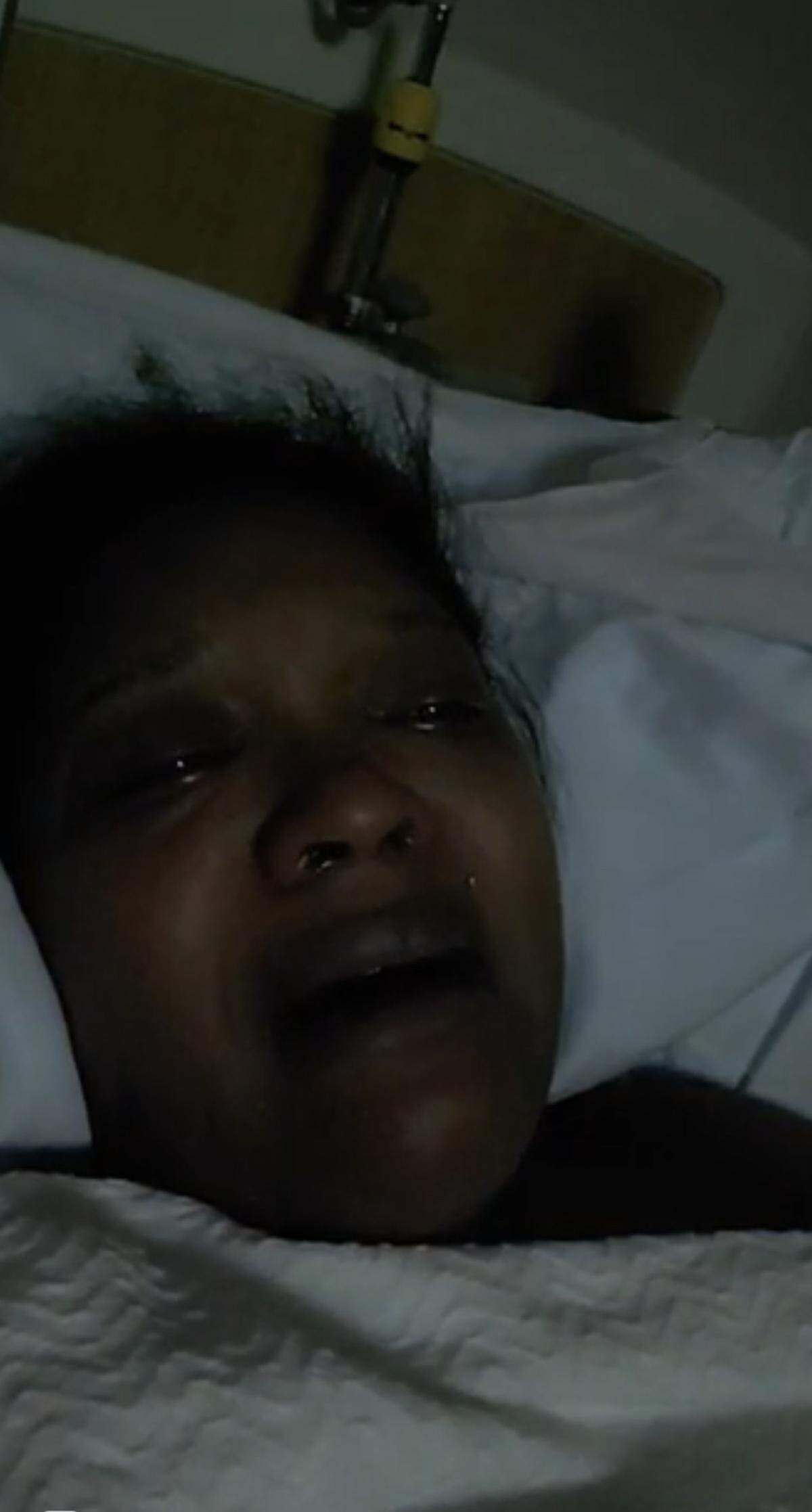
“These factories care about getting your volume out. They don’t care about us,” said one worker, Kyanna Parsons-Perez, who gained national attention in the hours after the tornado by posting a mostly blacked out Facebook Live video of herself while she was pinned under a water fountain and part of a wall.
Parsons-Perez said that while she thought money was valued over the wellbeing of workers, the conditions there weren’t any better or worse than several other factories where she had worked.
Mayfield native Joseph Turner has worked on and off for eight years, since leaving a parent’s house in his teens.
“It was crap working conditions all around,” said Turner.
Turner said he would have been at the plant when the tornado hit. However, he was suffering ill effects from the strong scent of the company’s eucalyptus mint candle mix, so he skipped his shift and told his supervisor he would come in later that night to make up his hours once they finished with it.
“It just bothers ... my throat and it makes it hard to breathe,” Turner said. “I stand about three feet away from the re-melter, where I had to poke holes in (the candles) to make sure they don’t bubble up.”
Instead of going into work late, Turner said, at 7 p.m., he noticed the severe storm warnings posted across Western Kentucky and surrounding states. By 7:23 p.m., the first tornado struck a nursing home in Monette, Ark., headed east toward Kentucky.
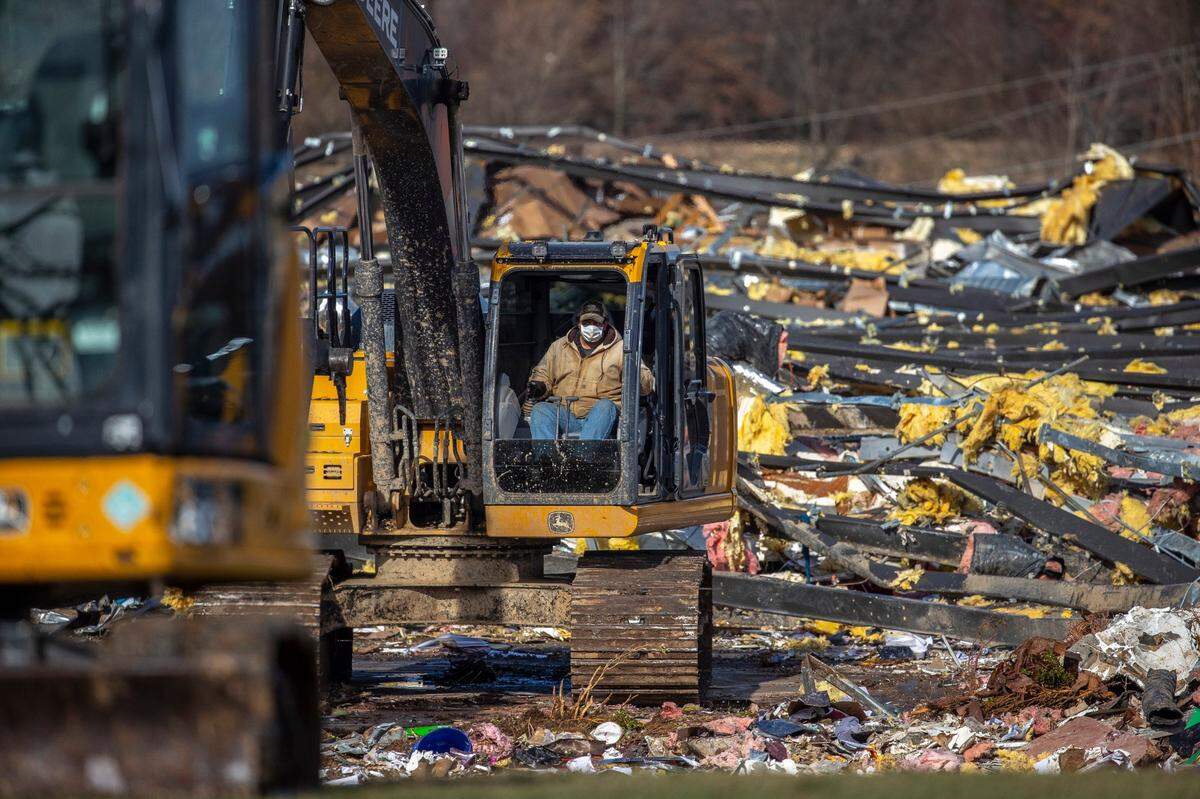
Turner decided to stay put. Later, he would be pulling his co-workers from the factory’s tangled remains.
Free to leave?
In multiple interviews in recent days and in a lawsuit, some of the factory workers said they asked to go home in the hours ahead of the tornado but were told by their managers that doing so could mean the loss of their jobs. In Mayfield, the first round of storm warning sirens blared in the afternoon, well before the tornado hit that night.
Company officials have denied that. MCP spokesman Bob Ferguson told the Herald-Leader that employees who wanted to leave their shifts early were allowed to, and not just during storms, because the company hoped such schedule flexibility would let it keep the workers it needed in “a tight job market.”
Mary Smith, the employee who worked in pack out, told the Herald-Leader that her boyfriend, Matt Barber, asked a supervisor if he could leave the candle factory at around 7 p.m. on Dec. 10 as the weather worsened. Barber was told he would be fired for ending his shift early, Smith said. Barber has recounted the same story in television interviews.
Joseph Turner, who was not inside the factory when the tornado hit, said he previously had witnessed workers being told they couldn’t leave the building after a storm-related shelter-in-place was ordered. The factory had no basement, but it used an interior space without windows as a shelter during storms.
Apart from the fear of being fired, a worker who got in trouble with management might lose hundreds in incentive pay for the week, Turner said.
“If you get written up for damn near anything, you lose those incentives,” Turner said.
Other factory workers said they could have left if they wanted.
Jennifer Sanchez-Flores, 23, was on the factory’s quality team. She started her shift at 5 p.m. on Dec. 10. One of her co-workers went home a short while later, after the first severe storm warning, Sanchez-Flores said, and so she was asked to fill in.
“That factory will never stop anybody from leaving,” Sanchez-Flores said. “They will never, ever stop anybody from leaving. Only thing they will ever tell them was ‘All right, well, just know that you will lose your incentive.’”
James Dabney said he knows for a fact that workers were free to leave that day because he did exactly that.
Dabney said his shift ended that afternoon but he agreed to work into the evening to help with production and earn overtime. That’s when the first round of severe storm sirens started wailing.
“At 5:30, they were like, ‘We’re going to the hallway,’ and I was like, ‘Well, I’m going home,’” Dabney said. “So it was just, ‘All right, see you later.’”
“People don’t get terminated for their attendance,” he added. “They get second, third, fourth, fifth chances.”
Wallace called reports claiming that workers couldn’t leave the factory if they wanted “bogus,” adding that she knew the night shift supervisor and that he wasn’t the type of person to tell a worker they couldn’t leave if they insisted.
Eric Oxx, a 31-year-old supervisor who has worked off and on there for 13 years, agreed with Wallace.
Brandi Moss, another supervisor on an earlier shift, also said that workers were free to leave if they chose.
“A lot of people are taking these stories and twisting them around,” Moss said. “People (saying) they tried to leave and couldn’t leave – that’s bulls--t.”
‘God got us, baby’
Long, dark and claustrophobic hours awaited the people who survived the factory’s collapse.
“We were working, and the sirens started going off,” said Angelita Turner.
“They told us to evacuate right in front of the bathroom and the wax area,” she said. “Then they took roll call. Two seconds later, it just sounded like a train coming through. Debris started flying, and next thing I know, I have a wall on top of me.”
Turner wasn’t freed from the wreckage until 4:30 a.m. on Dec. 11 — seven hours later.
She tried to call 911. Phone lines were busy.
The wall pressing down on her was close enough to kiss. Chemicals from the production process burned her back.
And she wasn’t alone.
“I had a lady trapped between my legs and I don’t know if she made it,” Turner said. “Her name was Jill, but I don’t know what her last name was.”
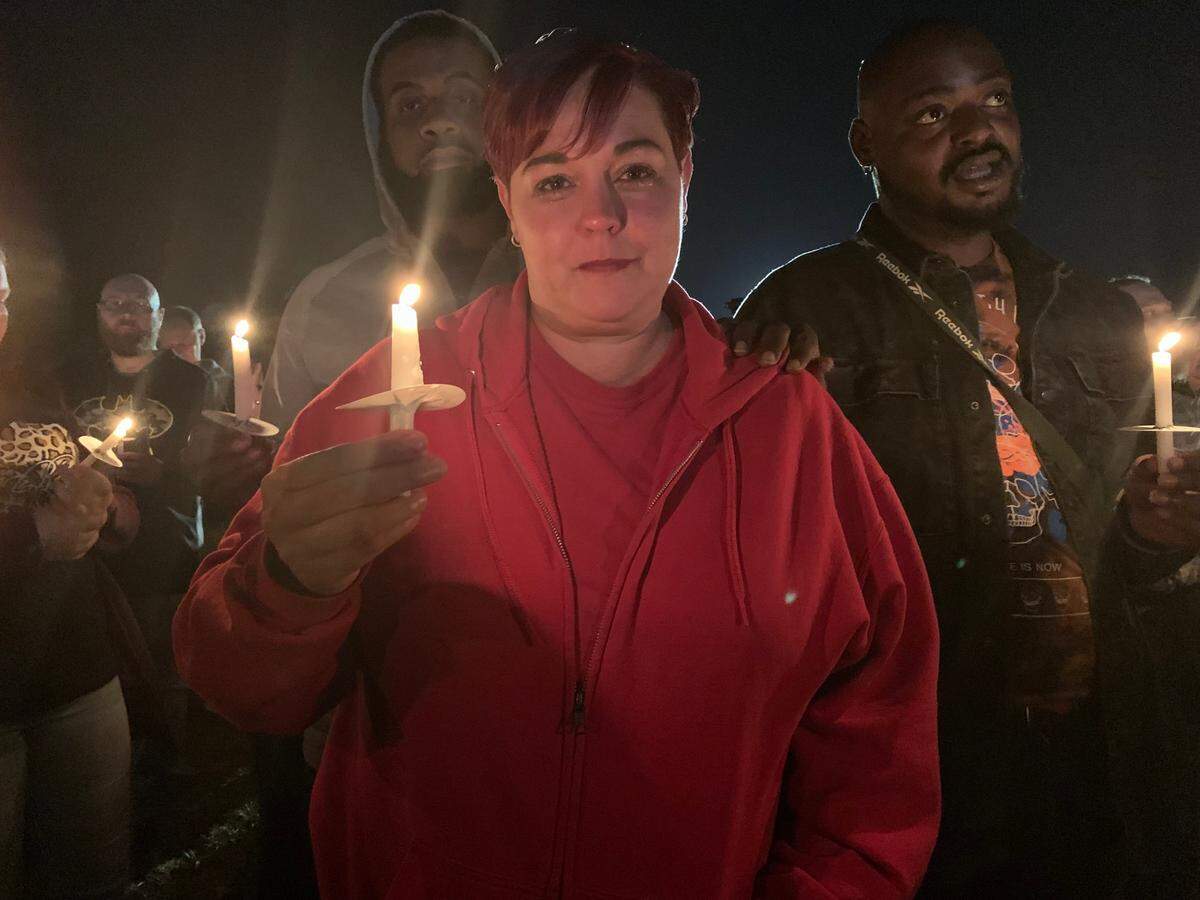
“She was between my legs the whole time,” she said, sobbing. “I knew she was breathing quick. As time went by, she couldn’t talk and her breathing got so peculiar. I kept trying to talk to her. She told me, she said, ‘I’m so scared.’ I told her, ‘God got us. God got us, baby, we gonna be okay.’”
About two hours into the ordeal, the other woman began making “gasping sounds,” Turner said. Then she stopped moving.
When rescuers finally pulled Turner to freedom, “I was, like, ‘Lord, I think that lady passed away,’ and they told me not to worry about her. They were, like, ‘You just come on and we’ll take care of her.’”
Joseph Turner, who was planning to come in late that night to avoid the eucalyptus mint scent, hurried to the factory to offer assistance. He stumbled across a hundred yards of smashed candles, large steel girders, spilled chemicals and tossed cars.
Turner helped carry out Matt Barber, Mary Smith’s boyfriend, on a makeshift stretcher — a piece of wood with nails poking out of its underside. Barber had a burn on his eye, Turner said.
“I had no idea it was him until he just looked up with his good eye and said ‘Is that Joseph?’” Turner said.
Elsewhere, Dabney — who had taken the precaution to go home early — was back on site to look for survivors. A cousin who was trapped, Isaiah Holt, had called Dabney asking for help. It was a dangerous, unstable situation, Dabney said. The factory had been reduced to shattered pieces stacked on top of each other and on top of people. Extracting anyone was like working a high-stakes puzzle.
“They was basically all pinned some kind of way,” Dabney said. “Isaiah, if he was to move and free himself from being pinned” then other people would have been hurt. “He had to stay there so everybody that could get out, got out.”
“We ran across one of my kinfolks’ parents,” he added. “He was actually looking for (a family member). He couldn’t climb over to the other side, he was slipping.”
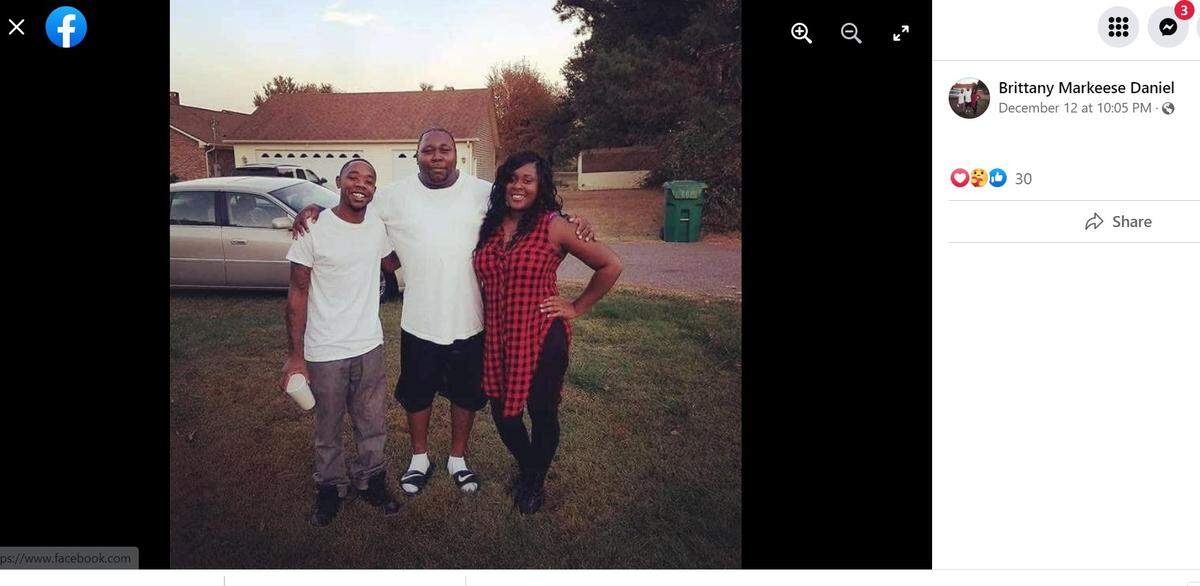
When they finally reached the other side, they discovered the body of Graves County Deputy Jailer Robert Daniel.
Daniel, 47, was at the factory that night to guard seven inmates who were participating in a work-release program. Witnesses credit him with acting heroically to shepherd the inmates and others into the factory’s shelter space, but at the cost of his own life.
Pack out line worker Kendrick Lee, 25, left work at 5 p.m. on Dec. 10, choosing to not stay late for overtime. His daughter’s mother had alerted him to the deteriorating weather. His supervisor let him sign out, he said.
“I don’t even think people were even aware of the storm,” Lee said. “Everything started moving real fast when I got outside. As soon as I left, outside was, like, cars everywhere. Mayfield and Murray, it was just traffic.”
“I just felt, like, you know, somebody should have been warned about the tornado,” he said.
Now that Lee’s workplace has been destroyed, he wonders how secure he’ll feel in the future.
“If I go in any warehouse, it’s gonna leave me questioning, like, ‘Am I going to be safe?’” he asked.
Herald-Leader Reporter Alex Acquisto contributed to this article.