
KY couple wanted to do more than ‘write a check’ for Ukraine. So, they went to Poland
When Georgetown, Ky., attorney Robert Cornett and his wife Linda, a retired teacher, arrived in Krakow, Poland earlier this week to help refugees from the Russian invasion, they first headed to the train station.
Called Krakow Main, and attached to an upscale shopping mall, the station has become both a shelter and an essential transfer point for refugees as they flee to other cities in Europe.
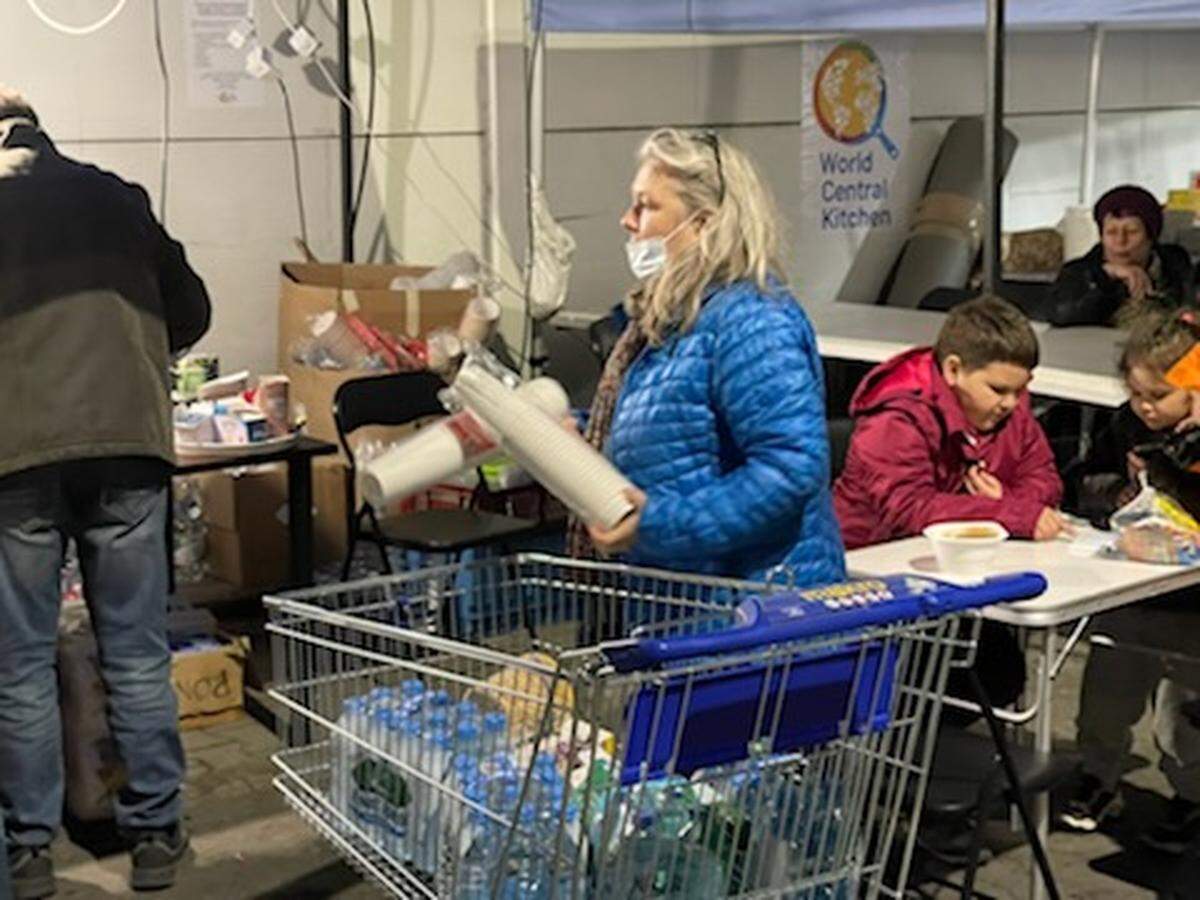
“There are shelters there, a lot of exhausted faces. We asked several workers, what they needed...we uniformly got a fairly frantic ‘everything’ answer,“ Robert Cornett told the Herald-Leader in an interview from Poland, “so we went to a local supermarket, a lot like a Kroger, and filled three carts with water, juice, fruit, shampoo, hand soap, wet wipes, deodorant, candy, Oreos, spending about $500 of the monies we have collected, and then wheeled the carts to the shelter/distribution point in the train station.”
”...I got my money’s worth when a small refugee boy noticed as I was walking by and pointed to my cart...he had seen the boxes of Oreos...you don’t get that kind of smile everyday,” Cornett continued.
The couple had some previous experience with Poland. Linda Cornett did a six week stint in Poland as a graduate student in 1978. The Cornetts have traveled there twice since as tourists.
As the couple watched news of the invasion in the last few weeks, Robert Cornett said they found the story of the Ukrainians fleeing to Poland, and the country’s response, “amazing.”
“They opened their border to a million strangers because they think its the right thing to do,” he said. “We wanted to do something more than just write a check.”
Arriving in Poland
The couple, who have four adult children, arranged a ten day trip to Poland so they could hand out food and supplies at the border and offer refugees rides to Krakow, Poland’s second largest city. They bought plane tickets, got a hotel and reserved a van on their own. Family and friends donated money for supplies.
On the planes that took them from the United States to Poland, and again at the border, they found a fair number of Americans with a similar mission.
They said they are meeting a lot of volunteers — English, Italian, German, Sikhs, a North Carolina man in his 30s. Most, like the Cornetts, made their own arrangements to get to Poland. They met a Massachusetts woman whose mother fought in the Warsaw uprising of 1944 during World II “and many many other Americans from many many states, all pitching in to help,” Robert Cornett said.
Neither of the Cornetts speak Polish, but said they’ve found people everywhere who speak some level of English.
In Poland, they are accompanied by a Ukranian-born translator and guide, a woman named Sasza Iafynska.
Iafynska has lived in Poland nine years and her 15-year-old sister joined her there just prior to the invasion, but their parents refuse to leave Ukraine. Iafynska’s father has joined a home guard unit.
Border crossings
Every day in Poland, the Cornetts check a website that specifies what refugees at the border need. They aren’t buying toothpaste and toothbrushes when they purchase supplies, for example, because those items are plentiful in shelters.
On Wednesday, they picked up a seven passenger rental van, loaded it and parked it near the train station so they could head Thursday morning to the border at Medyka, 150 miles due east of Krakow.
“We went to the border where a huge tent city of volunteers was set up,” Linda Cornett said Thursday.
“We watched dozens and dozens of people, mostly women and children, walk the last 150 yards...between war torn Ukraine, and the relative safety of Poland,” said Robert Cornett.
Small children were holding hands, and many looked frightened. There was an elderly woman, with a large walking stick in one hand and a plastic garbage bag full of her belongings in the other, walking slowly but resolutely. She was walking alone, but just after she crossed into Poland a man in his 20’s raced up and embraced her.
One woman in her 40’s was sobbing as she entered Poland. Linda Cornett offered a small packet of tissues. The woman took one and offered to give the rest back.
There was a woman in her 80’s in a wheelchair with two small dogs inside her coat. Other people carried cats.
“Nobody wants to leave their pets behind,” Linda Cornett said.
‘I am proud to be here’
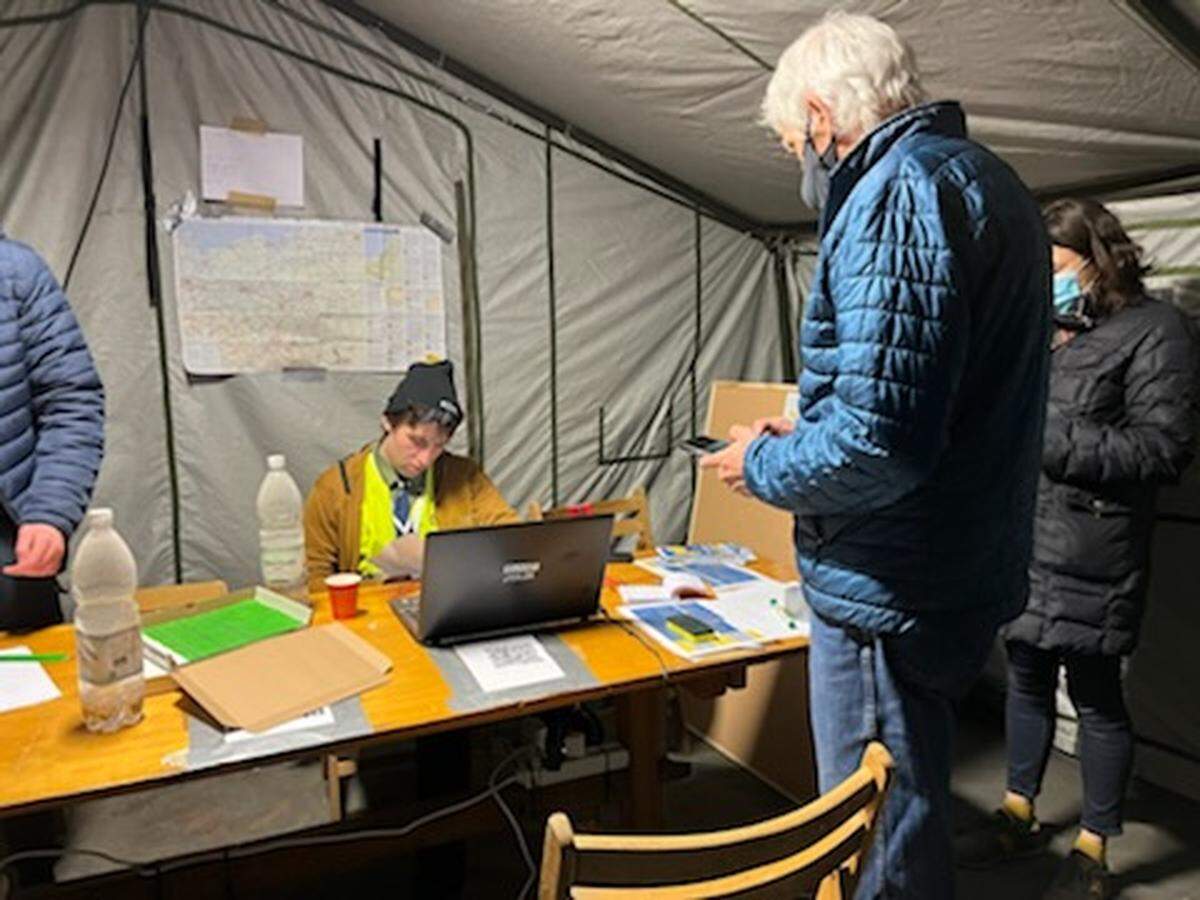
Volunteers were giving the refugees food, water and items ranging from tissues to stuffed animals. In the tent city, refugees received medical care, hot soup and advice on next steps to get them settled. The refugees worked their way through a 100 yard line then loaded into vans and buses for the five mile trip to the overnight shelter in Przemysl.
Linda Cornett volunteered in a tent for women and their babies at the border crossing. Robert Cornett got the van registered so he could transport refugees back to Krakow, a two-and-a-half hour ride.
On Friday, he transported two family groups of three, including a mother, a child and a grandmother. One group has been on the road since March 5, moving from village to village.
Half of the people he is transporting are going on a bus that will move them toward Italy. The other group has to return to the border crossing to spend a night or two.
Some of his passengers, Cornett said, “seem utterly defeated by this turn of events.”
“We both feel useful,” Linda Cornett said Thursday, as the couple made plans to divide their remaining time in Poland between the border and refugee shelters.
“The world is standing shoulder to shoulder in a common cause,” Robert Cornett said, “I am proud to be here.”
This story was originally published March 28, 2022 at 6:00 AM.