
‘Emancipation days:’ What is Juneteenth and a brief history of slavery’s end in Kentucky
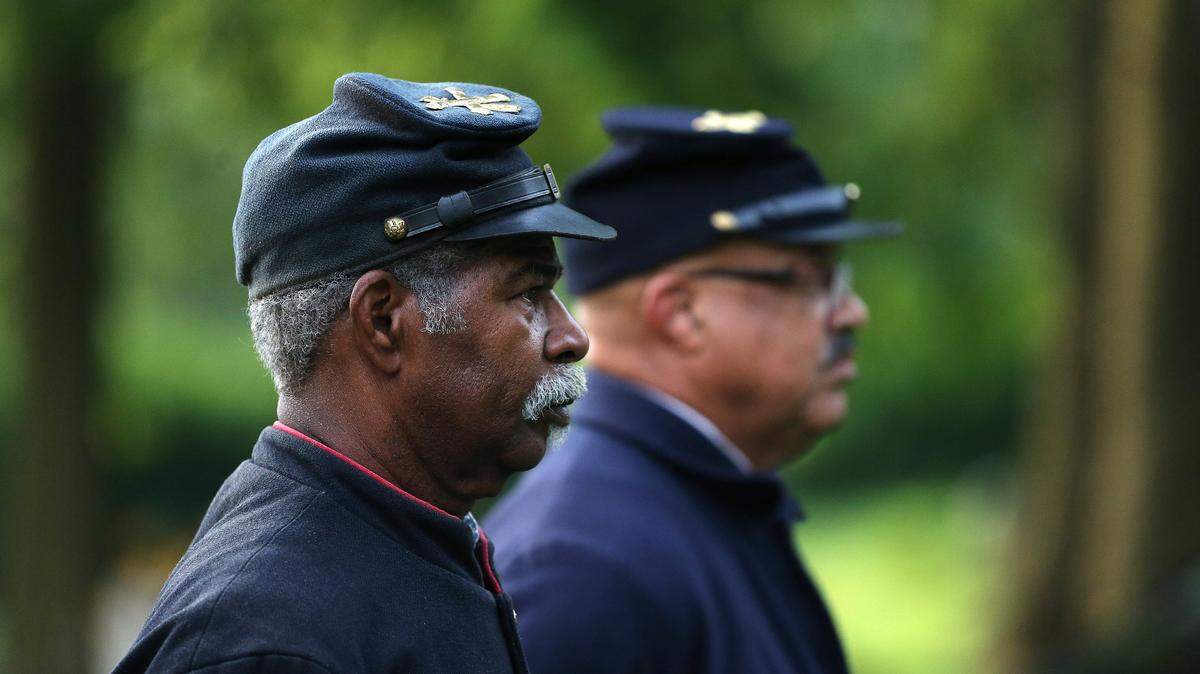
Juneteenth, or Emancipation Day, will occur June 19 and be celebrated across the U.S. to mark the end of slavery, but Kentucky’s history with emancipation may be more complicated.
Juneteenth, a contraction referring to the events of June 19, 1865, celebrates the end of slavery in the U.S. after the Union won the American Civil War and began enforcing a stop to the practice in Confederate states.
While enslaved people were officially granted freedom with President Abraham Lincoln’s Emancipation Proclamation in 1863, it wasn’t until June 19, 1865, when the proclamation was enforced fully and enslaved laborers were deemed legally free.
“Juneteenth’s commemoration is on the anniversary date of June 19, 1865, when Maj. Gen. Gordon Granger led a force of soldiers to Galveston, Texas to deliver General Order No. 3,” according to the Lexington-Fayette Urban County Government’s website. “This message stated that the war was over, the Union had won, and it had the manpower to enforce the end of slavery.”
What did the announcement mean for Kentucky?
President Joe Biden established Juneteenth as a federally recognized holiday in 2021, honoring the events of June 19, 1865, but did you know even after this date, enslaved people still weren’t free in Kentucky?
Vanessa M. Holden, Ph.D. and an associate professor of history and African American and Africana Studies at the University of Kentucky, said even after the Civil War ended in April 1865 and Texans learned of the war’s end and that enslaved people were free in June 1865, Kentucky slaveholders continued the practice unabated.
Holden said Kentucky was a border state during the Civil War that did not secede from the Union.
While she said important wartime activity occurred in the Bluegrass State, including in the western part of the state, where a significant amount of people sided with the Confederacy, “the commonwealth itself was unaffected by the Union winning in 1865.”
“Abraham Lincoln’s Emancipation Proclamation only promised to free individuals held as slaves in states that were currently in rebellion,” she said. “So, enslavers in Kentucky were operating on the assumption that no matter what happened during the war, they would get to continue buying and selling human beings as property.”
Holden said at this point, the 13th Amendment, which made slavery illegal in the U.S., had passed Congress and states were ratifying the amendment, which led to it being included in the Constitution Dec. 6, 1865.
“While states rejoining the Union were being forced to ratify the 13th Amendment as a condition of coming back to the Union, and while other more heavily abolitionist states were voluntarily ratifying the amendment, Kentucky stood firm and did not ratify the 13th Amendment,” Holden said.
In fact, she said it wasn’t until the 1976 that the amendment was “symbolically” ratified in the Bluegrass State.
Slavery ends in Kentucky
Slavery did not end in Kentucky until December 1865, Holden said.
Emancipation or manumission, the release from slavery, “happened pretty haphazardly and in lots of different ways,” she noted.
There were states that entered the Union that never allowed slavery, some that entered and were moving toward manumission in 1789 and others that freed enslaved people in the early 19th century.
“So, really, it’s not that the United States has one Emancipation Day. It has emancipation days,” Holden said. “Even in Kentucky itself by region, there are very different ideas of what emancipation, you know, when it should be celebrated.”
She said in some parts of the country, African Americans traditionally celebrate emancipation on the Fourth of July, while others celebrate on New Year’s Eve to remember waiting for the Emancipation Proclamation to take effect Jan. 1, 1863.
“I do think it’s important to note that while now a lot of people are saying, ‘Okay, maybe we can adopt June 19th to celebrate, you know, all of these complicated, very different emancipation dates,’ but even within each state, there are very different histories of when emancipation happened,” Holden said.
How do Black Lexingtonians celebrate?
Holden said some churches hold watch-night services for New Year’s Eve in addition to the annual Juneteenth ceremony at African Cemetery No. 2, where local African Americans remember Black Union soldiers and commemorate the sacrifices made for freedom.
“I do think, you know, (emancipation celebrations) can be very specific by community, but, now I see more folks sort of gravitating towards Juneteenth as a time to celebrate,” Holden said.
In Lexington, people gather at various events to celebrate the country’s newest holiday, including the Juneteenth Festival, Black Restaurant Week and SoulTeenth Fest.
Holden said she thinks emancipation can be a “very misunderstood process” in the U.S. and that the efforts are sometimes reduced to a few days.
She said as soon as the Civil War began, even before official laws were passed, Black people were freeing themselves by fighting for the Union, whether or not anyone officially made the war about slavery.
“(Juneteenth) is also a day for me to remember the ways that Black people strove for freedom before any official law was passed,” she said.
Holden said she is “so glad” the establishment of Juneteenth as a national holiday “has meant more engagement in the history of African Americans” in addition to being “a true celebration and recognition of freedom.”
“I’m actually really happy to see that this holiday has inspired people outside of the Black community to ask questions and to think about this period of U.S. history and to begin to also recognize how important this moment is in U.S. history, that defeating slavery is a monumental moment,” Holden said.
Significance of Emancipation
“Emancipation means you’re free, free from whatever. In our case, it was free from enslavement, and how can you not want that?” Yvonne Giles, a historian with ties to African Cemetery No. 2, said when asked about the significance of emancipation in Black communities today.
“I don’t think there’s any culture, any country, any people who would not want to be free,” Giles continued. “No one wants to be enslaved and constantly watched over and abused. Nobody wants that, so emancipation is vital to all of our existence.”
Giles said it’s important to remember and celebrate Juneteenth because for African Americans, “someone has said it’s our Fourth of July; it’s our Freedom Day.”
Just like those living in the 13 colonies celebrated their freedom from the British, Black Americans celebrate the end of enslavement on Juneteenth, Giles said.
Black men who were free prior to emancipation took part in fighting for the end of slavery in the Civil War in addition to those who were enslaved.
Giles said African Ceremony No. 2 holds an annual Juneteenth event “honoring those African American men who just took it upon themselves to secure freedom for everybody.”
“There are some people who just don’t understand it (Juneteenth),” she noted, and may question why there has to be two freedom celebrations in the country instead of one.
“The reason we have two is because this is all about African Americans who couldn’t get free any other way; they had to fight,” Giles said. “Just as the European colonists had to fight the British to gain their freedom, African Americans had to fight their white owners to become free. It is the same concept.”
Do you have a question about history in Kentucky for our service journalism team? We’d like to hear from you. Fill out our Know Your Kentucky Form or email ask@herald-leader.com.
This story was originally published June 17, 2022 at 11:56 AM.