
Many snakes in Kentucky aren’t venomous, but these are. Here’s how to tell them apart
If you grew up fishing or swimming in Kentucky’s many creeks, you’ve likely spotted one — a cottonmouth! Or is it a copperhead?
Dr. Steven Price, a herpetologist and associate professor at the University of Kentucky, said people often get them confused. So how can you tell the difference, and how afraid of snakes should you be in general?
According to Price, there’s not much to fear in Kentucky.
“Most of the snakes people encounter are going to be non-venomous,” he said, adding that if you see a snake slithering toward you, you’re most likely just blocking the hole it’s trying to crawl into after spotting you. “They definitely don’t see us as potential prey.”
Here’s what to know about Kentucky’s snake species, which though often maligned, help control disease-spreading rats and mice and are beautiful creatures in their own right.
Which Kentucky snakes are poisonous?
You probably mean venomous, not poisonous.
Venomous animals inject their venom through a bite or sting. Very few snakes can truly be called poisonous, which means the animal releases toxins once eaten.
In Kentucky, we have four venomous snakes: the timber rattlesnake, pygmy rattlesnake (mainly found in the Land Between the Lakes area), the cottonmouth (also called the water moccasin) and the copperhead. Cottonmouths and copperheads are often confused with each other, but they are different species.
All of Kentucky’s venomous snakes are pit vipers, a group named for the heat-sensing glands, or pits, located on either side of their triangle-shaped heads.
In Kentucky, hikers are most likely to meet the copperhead, which can be found statewide.
You can generally identify a venomous snake by looking at its head shape. Kentucky’s four varieties of venomous snakes have thick, spade-shaped heads, while most of the harmless snakes have more slender heads.
If you’re out on a hiking trail, train yourself to listen for the sound of a rattlesnake.
Timber rattlers will have pretty robust rattles, whereas a pygmy rattler will sound like an insect buzzing.
What does a copperhead snake look like?
A copperhead is the most-commonly encountered venomous snake in Kentucky.
You’ll want to look out for the following features, according to a publication from the University of Kentucky’s Department of Forestry:
Dull gray to orange in color
Hourglass or “Hershey’s kisses” pattern along the snake’s body
Adults are 2 to 3 feet in length
Young snakes are brightly colored with a lime-green or yellow tail tip (according to Price, this is meant to mimic a juicy caterpillar to lure prey)
How to identify other venomous snakes in Kentucky
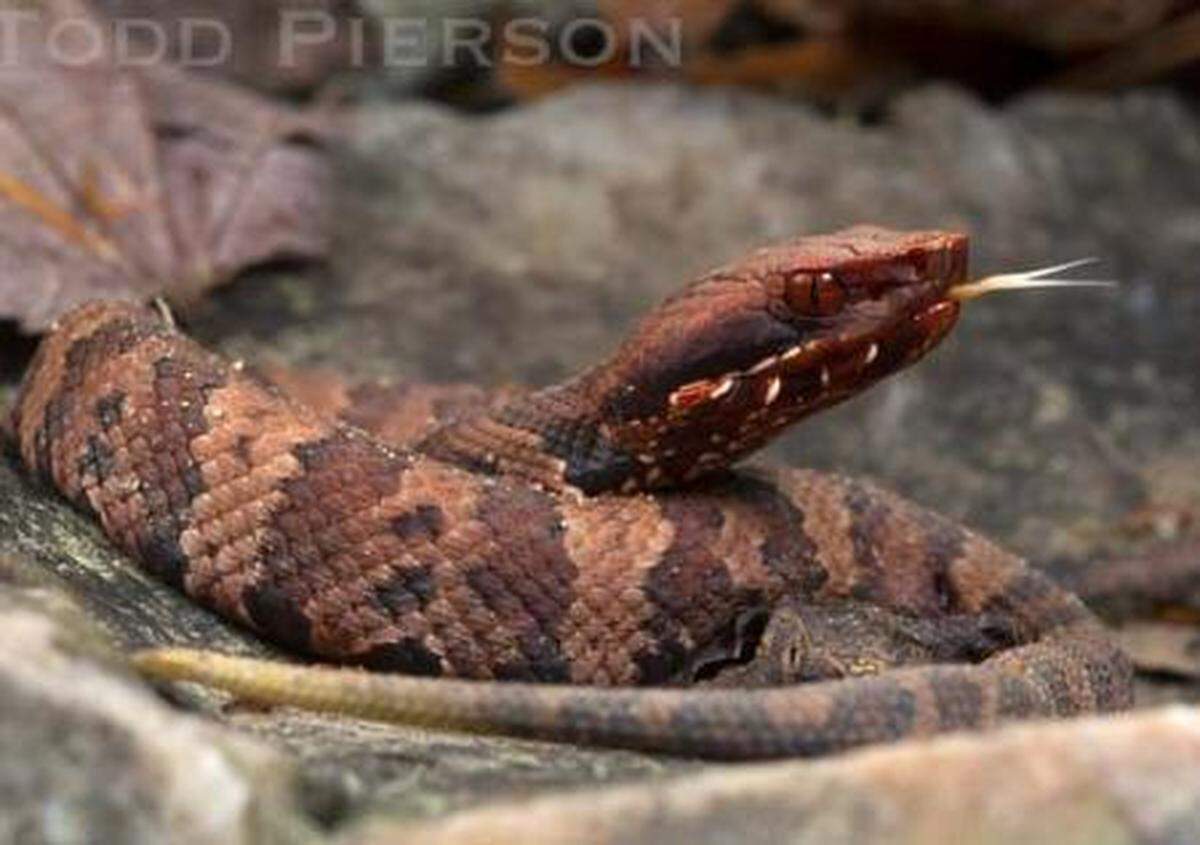
In contrast, a cottonmouth can be spotted by looking for the following:
Adults are chocolate brown or black
Their young have an irregular, triangular-band pattern that fades as they mature
In Kentucky, they’re only found in the western half of the state. (Price insists you won’t find them elsewhere.)
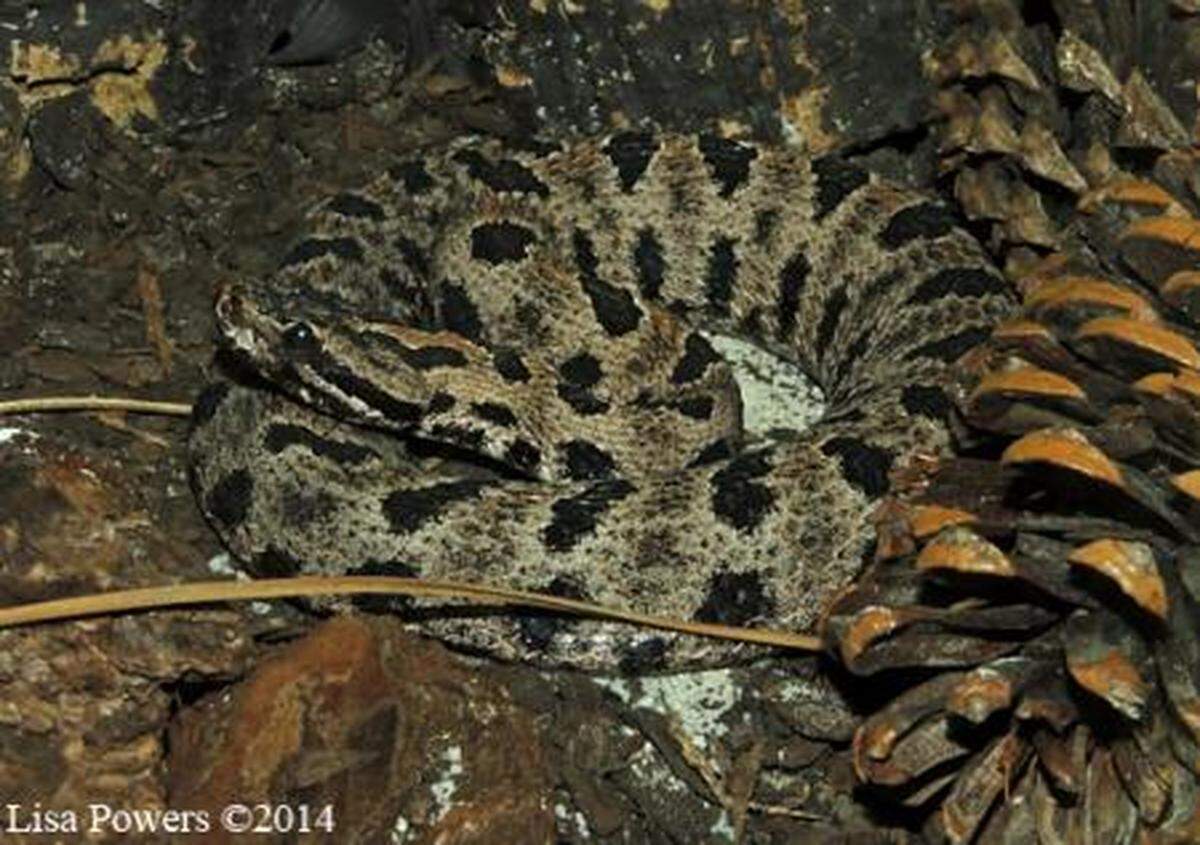
In Kentucky, the pygmy rattlesnake has a very limited range and is only found in the Land Between the Lakes. It has a dusky gray-brown body with black spots along the sides and back.
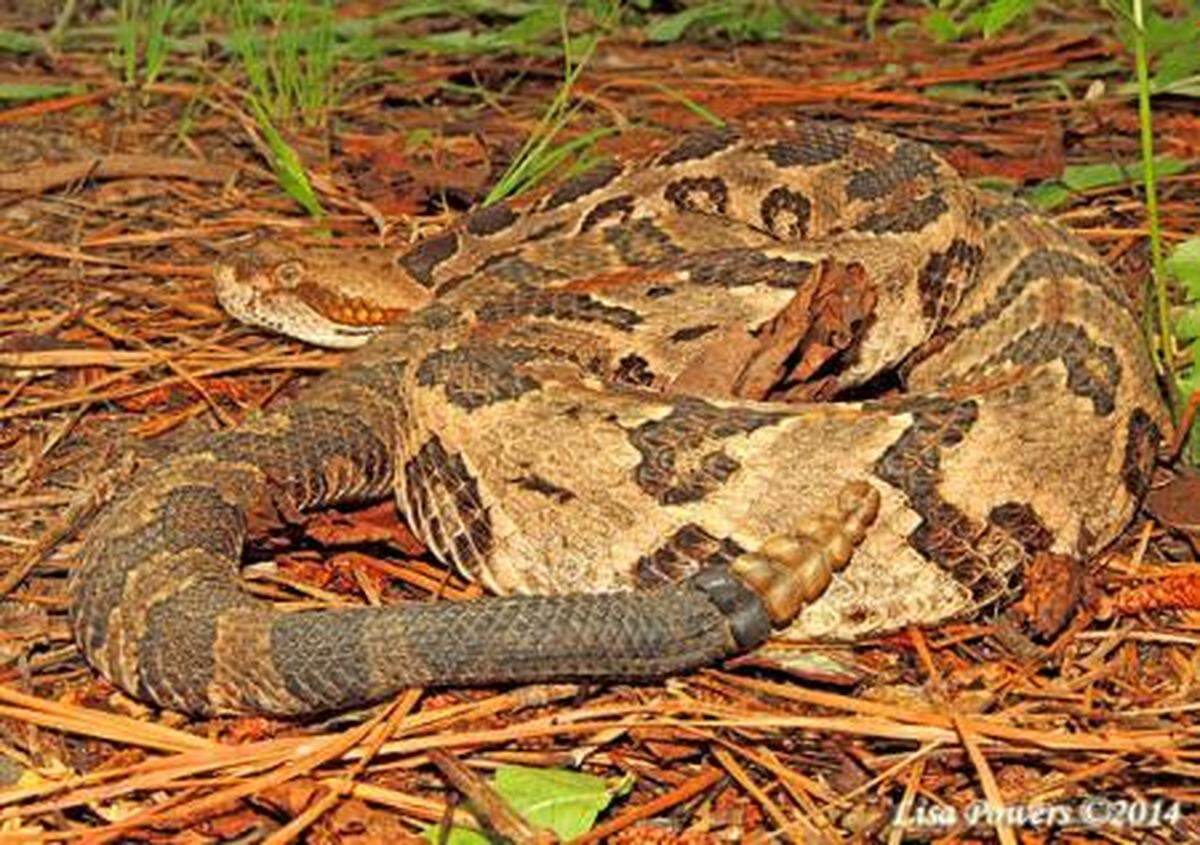
The timber rattlesnake, Kentucky’s largest venomous snake, can reach 5 feet in length. It also has a distinctive rattle on the tail and a banded pattern ranging from light to dark gray. Its imposing appearance has made it a victim of over-killing, which has diminished its population in the state. In fact, you won’t find it in the central, Bluegrass region of the state.
Is a bite from a baby copperhead more dangerous than one from an adult?
This is a common belief, but according to Price, he’s not aware of any research that bears this out. He went further, telling the Herald-Leader he’d actually rather be bitten by a baby copperhead than an adult, if it came down to it.
Venom costs a lot of resources for a snake to produce. So generally, they try to conserve it, preferring to bite and release their prey, wait for the venom to do its work and then follow the trail. According to Price, this way the snake avoids a confrontation that could injure it.
In the case of a baby copperhead, it actually has less venom to inject and they won’t necessarily use it to defend themselves.
Adult snakes have been known to deliver a “dry bite” with no venom when pushed to extremes.
However, Price cautions that you seek medical attention immediately if you are bitten, instead of waiting around to find out if the bite was venomous.
According to National Geographic, the odds of being bit by a venomous snake are 1 in 37,500. For comparison, you’re much more likely to die in a car accident, with the odds at 1 in 112.
Given that fact, Price says it’s worth appreciating a snake encounter, especially if you encounter a timber rattler, which is becoming increasingly uncommon.
“Treat it the same way as if you saw a black bear,” Price said, meaning you should keep your distance in the moment, but definitely file it away as a cool story worth sharing with your friends.
Correction: This story has been updated to clarify the description of Kentucky’s venomous snakes, which generally have thicker, spade-shaped heads. Their non-venomous counterparts tend to have narrower heads.
Photographs of the western cottonmouth, pygmy rattlesnake and timber rattlesnake are courtesy of the University of Kentucky’s Department of Forestry snake identification resource.
If you enjoyed this story and would like to know more about Kentucky’s critters, please submit your questions to our service journalism team through our Know Your Kentucky Form. You can also include your own ideas of what you’d like us to write about.
This story was originally published June 16, 2022 at 4:04 PM.