
Ky. sees more deer vs. vehicle crashes this time of year. These counties had the most
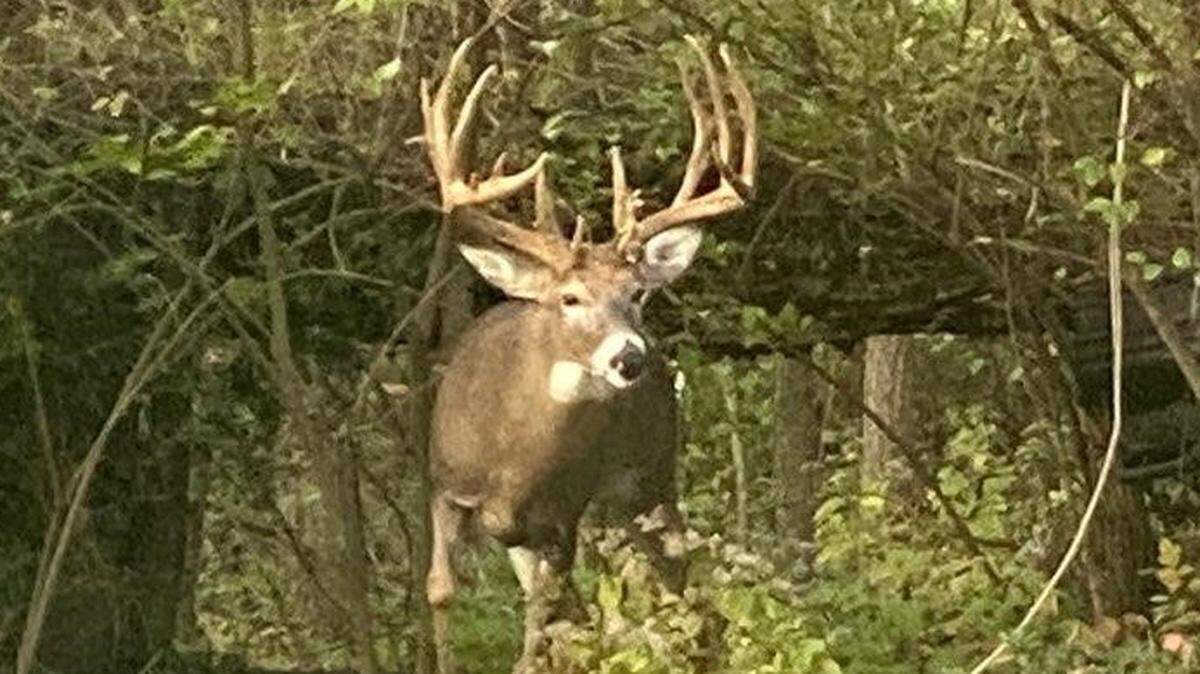
Spurred on by the fact that about half of deer vs. vehicle collisions take place in the final three months of the year, the Kentucky Transportation Cabinet issued an “Antler Alert” Tuesday.
“October, November and December bring a noticeable increase in highway collisions involving deer,” KYTC Secretary Jim Gray said. “We’d like to remind drivers to be especially watchful for deer and other wildlife on the move at dusk and at night when poor visibility is already an issue.”
Why are deer crashes more common in the fall?
As the days shorten and the nights grow cooler, this triggers a change in male deer as mating season begins. Bucks naturally begin producing more testosterone. Their necks get thicker and they chase females with abandon — even if it means barreling into oncoming traffic.
Each year between the months of October and December, the number of deer vs. vehicle collisions can easily increase five-fold, according to crash figures provided by Kentucky Department of Fish and Wildlife biologist Kyle Sams, who studies deer.
However, humans also play a role in disrupting deer behavior, according to Noelle Thompson, who coordinates the KDFWR’s deer program. That’s because the annual autumn harvest forces deer to range farther afield to forage for food and find cover.
How many deer vs. vehicle crashes happen in KY each year?
The latest figures from the KYTC show 2,988 such crashes were reported to police in 2021. That was about 100 additional crashes compared to figures from 2020, the agency said in its news release Tuesday.
The agency reported three fatalities as a result of deer-involved vehicle collisions and 25 serious injuries in 2021.
The state also provided county-by-county data for the last year. Boone County topped the list with 126 such crashes, Christian County had 111 and Hopkins County rounded out the top three with 103.
Fayette County reported 29 deer vs. vehicle crashes last year.
How does Kentucky compare to other states?
State Farm Insurance rates Kentucky at a high risk for such crashes – putting the likelihood of an animal vs. vehicle collision at 1 in 88.
Kentucky actually ranked 20th in the nation for these types of crashes, just behind Kansas, but ahead of Louisiana.
West Virginia continued to top this year’s list of states where an individual driver is most likely to hit an animal, per the State Farm data. In West Virginia that likelihood is 1 in 37. That’s followed by Montana (1 in 39), South Dakota (1 in 48), Michigan (1 in 54) and Pennsylvania (1 in 54), all topping the list.
Staying safe on the road: How to avoid hitting a deer
According to travel firm AAA, drivers should generally keep these tips in mind while out on the road:
Check for signs. The obvious is often overlooked. Deer crossing signs, marked with a leaping buck, are often placed by local highway departments where there have been frequent deer-vehicle collisions. Spotting one can put you on your guard.
Use your high beams. You can use your high beams to startle off deer you spot along the roadway. Just make sure not to use the beams in oncoming traffic. If that doesn’t work, resort to beeping your car’s horn.
Remember the time of day. Keep in mind that deer are most active at dawn and dusk. Be extra vigilant or plan your trip at another time of day.
Stop, don’t swerve. Swerving to avoid a deer could make the situation worse. It could put a fleeing deer back in your path and cause you to lose control of your vehicle.
Watch for groups of deer. If you see one deer, there will almost always be others nearby. Once a deer crosses, check both sides of the roadway to make sure another one isn’t following.
Do you have a question about wildlife in Kentucky for our service journalism team? We’d like to hear from you. Fill out your Know Your Kentucky form or email ask@herald-leader.com.
This story was originally published September 1, 2022 at 6:00 AM.