NASA postpones launch of rocket carrying satellite built at a Kentucky university
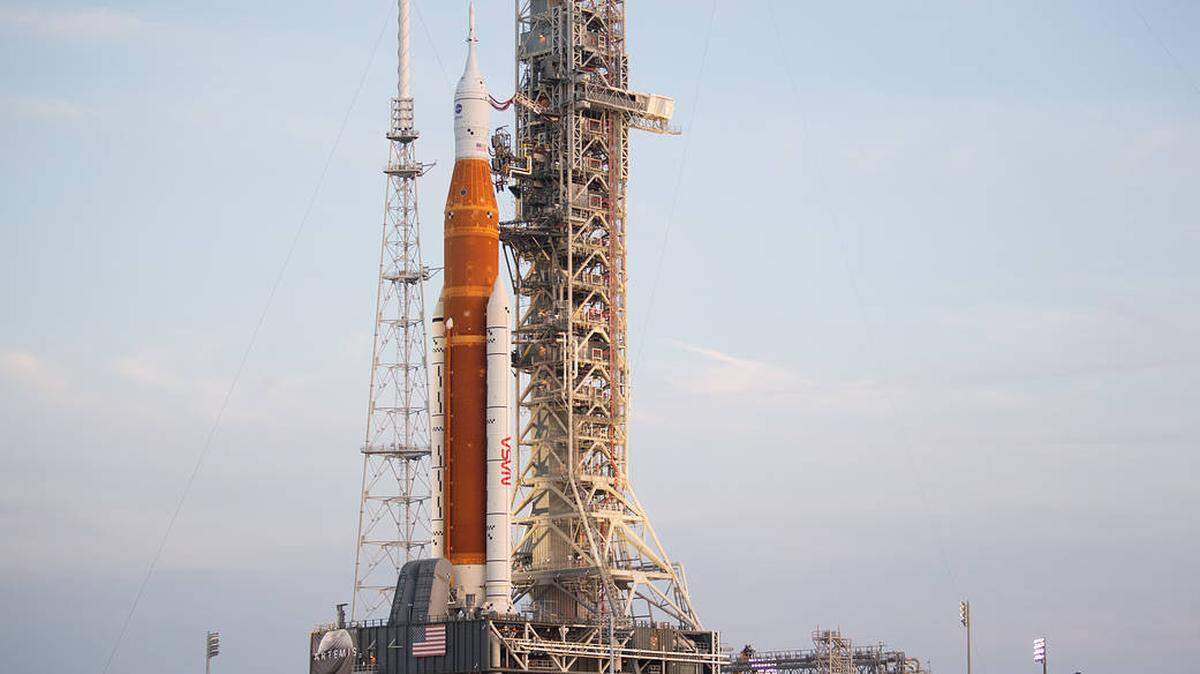
NASA on Saturday again scrubbed the launch of a rocket carrying a satellite built at Morehead State University.
NASA’s Artemis I rocket and spacecraft combo was set to launch Saturday afternoon from Kennedy Space Center in Florida. But NASA announced late Saturday morning that the launch had been postponed because of a liquid hydrogen leak.
Aboard Artemis are a number of science and technology experiments intended to help further prospects for human space exploration. One of those experiments is the Lunar IceCube satellite built by faculty, staff and students at Morehead’s Space Science Center.
The IceCube satellite will orbit the moon hundreds of times over an 18-month period, gathering information about the ice on the moon that NASA hopes could help support the water needs of a lunar outpost, according to the university. The satellite’s mission will be directed from Morehead.
Artemis I, which will travel 40,000 miles past the far side of the moon during a six-week unmanned flight, will test the performance of the Orion spacecraft and what NASA calls “the most powerful rocket in the world.”
“The first in an increasingly complex series of missions, Artemis I will pave the way for long-term lunar exploration, providing the foundation for extending human presence to the Moon and beyond,” NASA’s website states.
A previous launch attempt was halted Aug. 29.
On Saturday, NASA said in a statement on its website, “teams encountered a liquid hydrogen leak while loading the propellant into the core stage of the Space Launch System rocket. Multiple troubleshooting efforts to address the area of the leak by reseating a seal in the quick disconnect where liquid hydrogen is fed into the rocket did not fix the issue. Engineers are continuing to gather additional data.”
Transylvania University has indirect ties to the Artemis mission.
The university said in a blog post that NASA scientist Les Johnson is a 1984 Transy graduate who is the principal technology investigator for a Near-Earth Asteroid Scout that was created at Marshall Space Flight Center in Alabama and will be carried into space by Artemis. And a 1978 Transy grad, Dana Havron, “is a system safety engineer (Boeing employee) for the Interim Cryogenic Propulsion Stage of NASA’s Artemis 1 moon mission,” the blog post stated.
This story was originally published September 3, 2022 at 1:24 PM.