
Stink bugs are back to swarm your old KY home. How to get rid of them this winter
As the days grow shorter and the nights cooler with the arrival of autumn, Asian lady beetles and smelly stink bugs begin to invade our homes.
Both species are known to emit acrid odors when threatened, and in the case of the Asian lady beetle (scientific name Harmonia axyridis), leave behind yellow secretions that can stain your walls and other home surfaces.
Appearing in Western Kentucky in the early 1990s, Asian lady beetles migrated north from where they were first found in the U.S. in Louisiana fields.
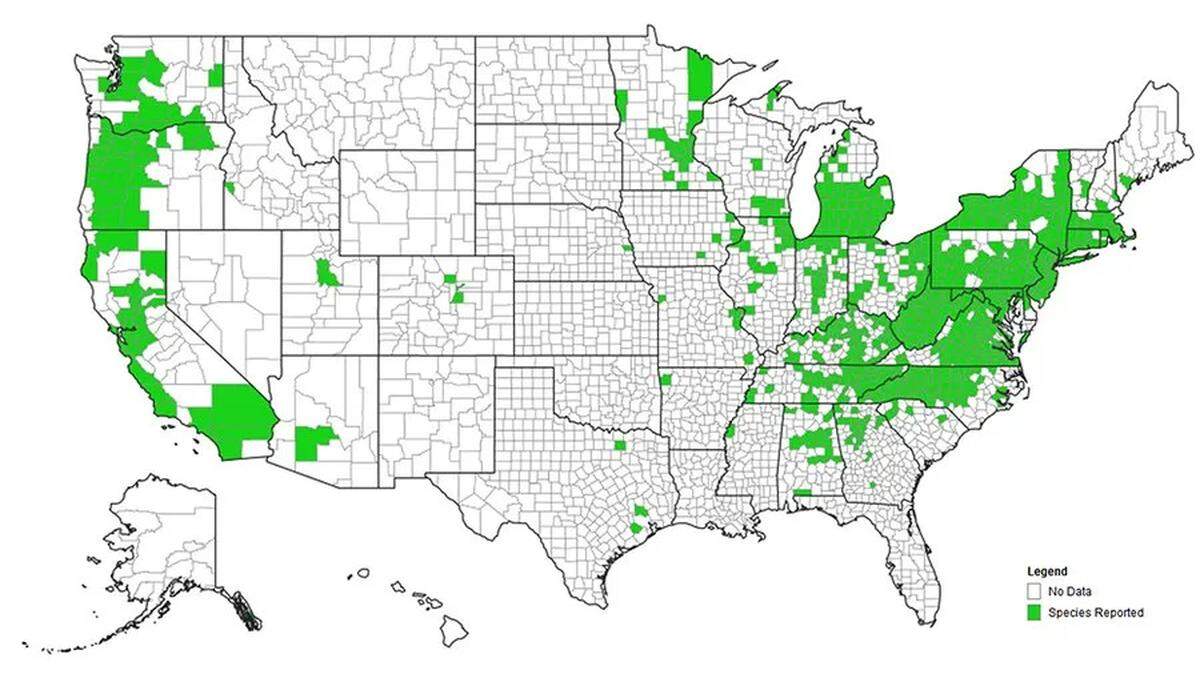
While the invasive brown marmorated stink bug (Halyomorpha halys) is a more recent transplant, first detected here in 2010, it’s found in multiple eastern and central counties.
We’ve got everything you need to know about stink bugs, including how to get rid of them, where they’re all coming from and other pest management tips from a University of Kentucky Extension entomologist. Though these strategies will likely also be helpful for managing Asian lady beetles, as well.
Where are all of these stink bugs coming from?
Stink bugs and other overwintering insects squeeze themselves into your home via cracks, crevices, gaps and holes in foundations, window and door frames, soffits, attics and underneath siding.
Jonathan Larson, an assistant professor of extension entomology at UK, recommends inspecting the exterior of your home to look for gaps in windows and doors, holes in screens, openings in caulk or other sealants and patching them.
“If you see clusters of pests on the exterior of your home, you can spray them with soapy water to kill them before they start squeezing their way inside,” Larson wrote in an email to the Herald-Leader.
Pesticide applications on your home’s exterior may help ward off these unwelcome house guests, but only if they’re timed properly, Larson points out. If they’ve already infiltrated your home, those bug bomb treatments you can buy at the grocery store likely won’t do you much good.
“If these pests are already in your home, interior applications of pesticides are usually unnecessary, especially ‘bug bomb’ type applications which usually don’t reach the hiding spots of overwintering pests,” Larson wrote to the Herald-Leader.
“If you find bugs inside, simply vacuuming or sweeping them up for disposal is the best method for management,” Larson suggests.
Are bugs choosing my home because it’s warm and convenient?
Yes and no. Stink bugs also appreciate humans’ taste for interior design. Well, sort of.
According to Larson, the brown marmorated stink bug – first collected domestically in Allentown, Penn., in 1998 – confuses our homes as “sort of a deluxe, heated pile of rocks.”
“Some factors of construction, location and paint color confuse them into thinking our buildings are where they want to be,” Larson wrote.
As an invasive species, the brown marmorated stink bug damages local ecosystems by taking up resources that could go to native species. Those native species have spent thousands upon thousands of years adapting to be in sync with their environment, unlike their invasive counterparts.
The brown marmorated stink bug has also been known to wreak havoc on farmers’ fields, so if you see one, you don’t have to feel bad about squashing it.
How do other insects survive the winter?
Monarch butterflies migrate thousands of miles from the U.S. and Canada to the warm embrace of central Mexico’s forests. As of this year, they are considered an endangered species by the International Union for Conservation of Nature.
Most insects don’t have such a highly evolved migratory pattern, however, and have to find somewhere within their local environment where they can find shelter from the cold, Larson notes.
Adults weather the winter months by snuggling into the leaf litter, cozying up under logs or rocks or fashioning some sort of protective “clothing” to shield themselves.
For some, their mother will lay their egg somewhere to protect them, while others will pupate, according to Larson. These immobile life stages don’t need much to survive and they do well in winter.
There’s some recent evidence that climate change will greatly expand the stink bug’s range – perhaps as much as 70% by 2080 – one study found, according to CBS News.
Do you have a question about wildlife in Kentucky for our service journalism team? We’d like to hear from you. Fill out our Know Your Kentucky form or email ask@herald-leader.com.