Louisville Zoo’s 3-year-old elephant calf, Fitz, has died
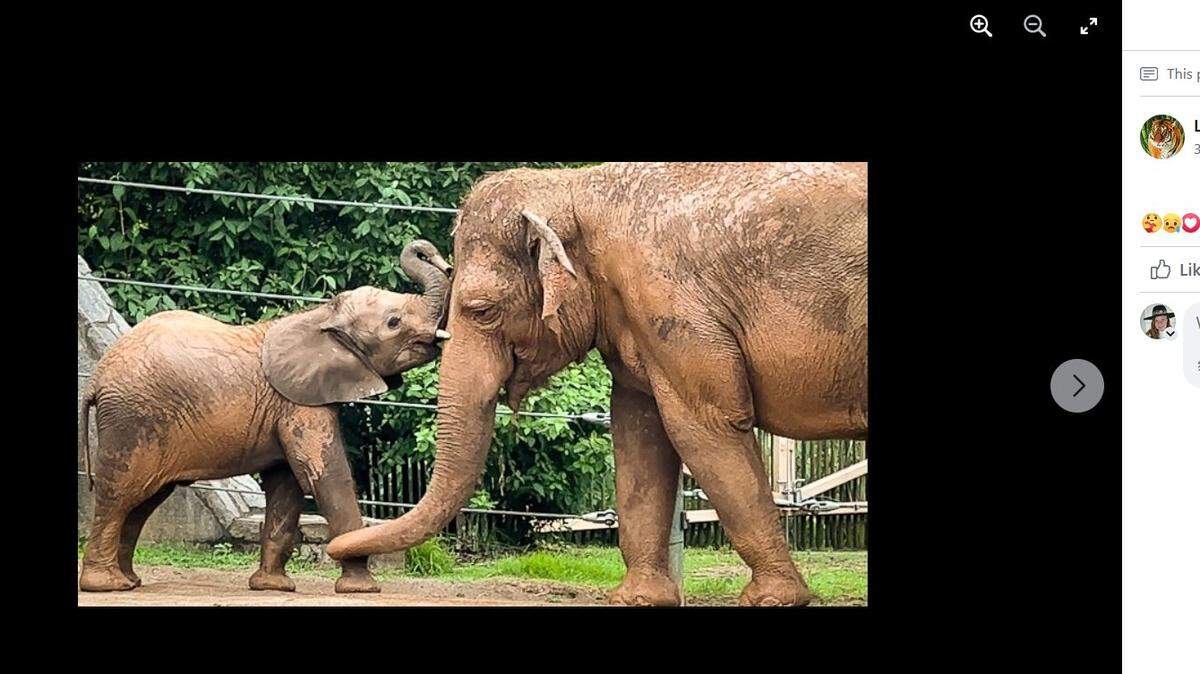
The Louisville Zoo is grieving the death of its 3-year-old elephant calf, Fitz.
The young elephant died Friday evening as a result of elephant endotheliotropic herpesvirus, or EEHV, which the zoo said is “one of the most serious medical issues facing zoo and wild elephants,” according to a news release.
The zoo had announced on its Facebook page Friday that Fitz was battling the viral illness but said he was in stable condition at that time.
He had been receiving plasma transfusions every eight hours, along with antiviral medications, fluids and other therapies, and he took a turn for the worse and died during his treatment just after 11 p.m., Saturday’s news release stated.
Other zoos throughout the country had offered to donate blood and plasma, as well as providing support and advice, the zoo said.
EEHV is “a hemorrhagic disease that aggressively affects blood cells” and has a survival rate of just 20 to 30 percent, the zoo said in the release. While most baby elephants are born with the virus or exposed to it soon after, it can remain latent until later, and weaned calves like Fitz may have more trouble fighting it because they don’t have the benefit of their mother’s antibodies from milk, the zoo said. There is no vaccine.
Mikki, Fitz’s mom, carries a latent form of EEHV, but it is a different strain from the one Fitz had, the zoo said in a news release Saturday.
EEHV does not pose a threat to other animals or people, and the zoo said Friday that Mikki and its other elephant, adult female Punch, “are behaving and eating normally.”
“Fitz held a special place within our entire extended Zoo family,” Louisville Zoo Director Dan Maloney said in the release. “His presence at our Zoo touched the hearts of our members, patrons and our entire community, inspiring a profound appreciation for elephants and their conservation. Fitz’s impact will live on, along with his memory, in the hearts of all who encountered him. He will be deeply missed.”
Fitz would have turned 4 Aug. 2. The zoo said staff had been on the lookout for signs of EEHV, and they noticed Sunday that he was lethargic. They began “preemptive” treatment for EEHV Tuesday, and a blood test that had been sent to the national EEHV lab confirmed the diagnosis Wednesday.
A necropsy will be performed, the zoo said.
The zoo said it will soon announce information on how the public can participate in memorializing Fitz.