Carnivorous plant found hanging in Kentucky gorge, experts say. See the sticky discovery
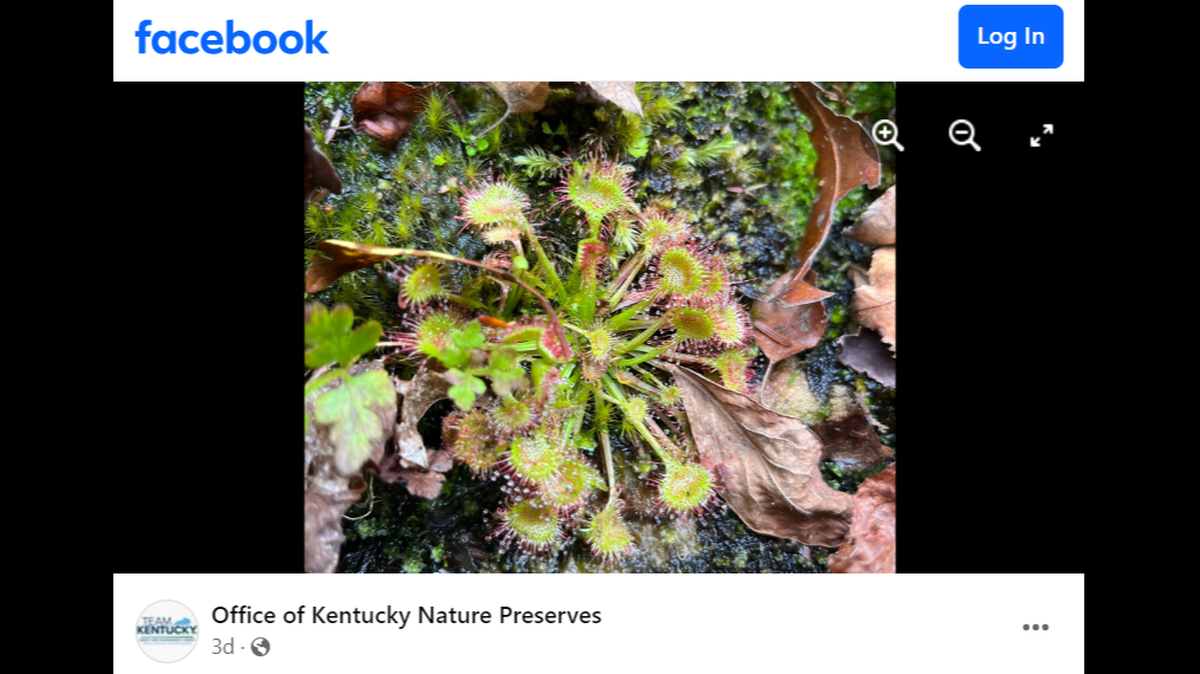
A brightly colored carnivorous plant with “sticky secretions” was discovered as a native species in Kentucky, experts say.
Botanists with the Office of Kentucky Nature Preserves, Devin Rodgers and Toby Shaya, found the “first known population” of round-leaved sundew living in the state, according to the office’s Nov. 7 Facebook post. The pair came across the new species while conducting rare plant monitoring, the office said.
The round-leaved sundew is a carnivorous plant with “hair-like tendrils,” according to The Wildlife Trusts. Its leaves can be a greenish-red, and during summer, it blooms with white or pink flowers, the organization said.
Spotted clinging to a “sunny, wet cliff above a stream,” Rodgers and Shaya found the plant in a “remote gorge” in Cumberland Plateau, according to the office. It wedged itself in tiny, mossy cracks in the cliff’s bedrock, the office said, which was a “nutrient-poor environment.”
The harsh habitat of the round-leaved sundew isn’t a problem for the plant, as its carnivorous diet helps it get the nutrients it needs. Covered in “sticky glands,” the plant traps insects when they become gummed to the leaves, the office said. The bugs then dissolve, and the round-leaved sundew takes in all the nutrients.
While the sticky plant is a first for Kentucky, it can be found in wide-ranging population across Ohio, West Virginia, Virginia, North Carolina and Tennessee, according to the office.
Because the native flora only has one known population in the state, it’s now considered endangered in Kentucky, the office said.
Cumberland Plateau stretches through eastern Kentucky and Tennessee, as well as northern Alabama and Georgia.