More Kentucky deer are being sickened by suspected viral illness. Here’s what to know.
Cases of suspected hemorrhagic disease, an illness that can sometimes kill off deer in large numbers, are on the rise among white-tailed deer in Kentucky, according to the state Department of Fish & Wildlife Resources.
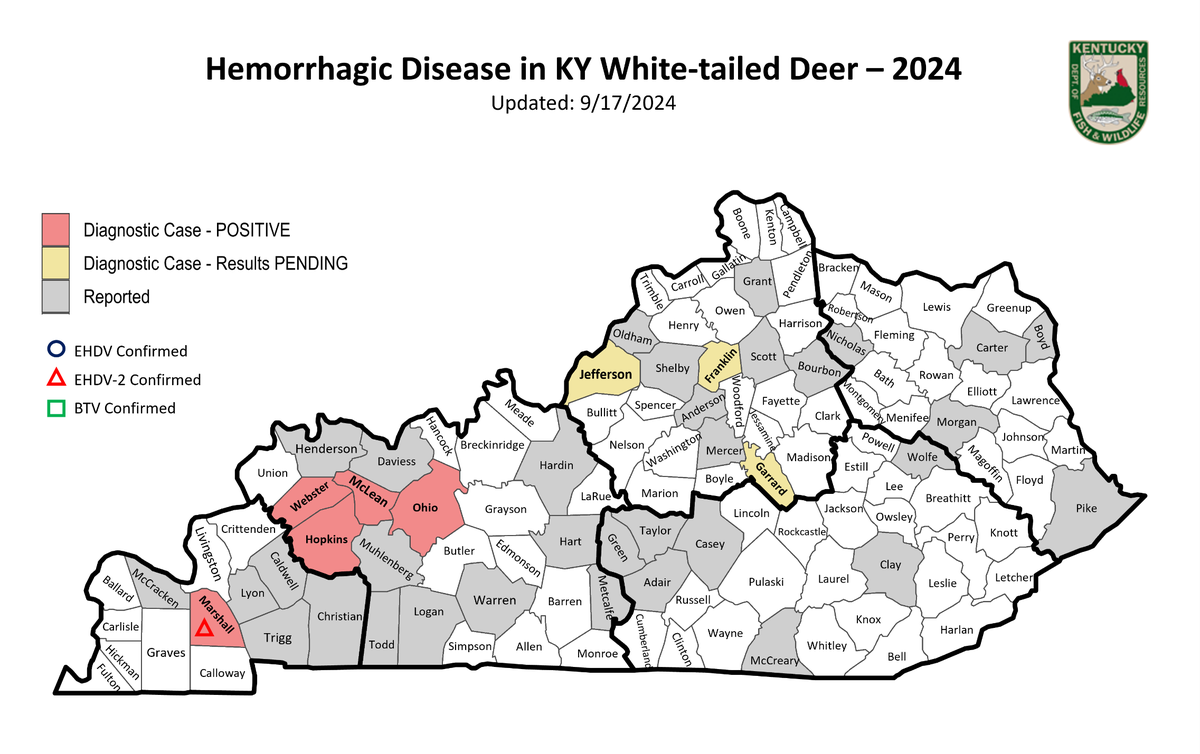
Cases of the illness have been confirmed in deer in five Western Kentucky counties, though reports of suspected cases had been received from several dozen counties across the state as of last week, according to the department’s website.
Test results were pending on suspected cases in Garrard, Franklin and Jefferson counties.
Several other states, including Michigan, Indiana and Illinois, have also recently had outbreaks, according to media reports.
Deer that have been infected with hemorrhagic disease may be may be very thin, seem feverish or depressed and may stay near water. They may also have swelling of the head, neck, tongue or eyelids, according to the fish and wildlife department.
Deer that have died from hemorrhagic disease are often found near water, since deer that are sick with the illness often look for water to cool off.
Those that recover may have lesions in their mouths or the lining of their stomachs, or their hooves may be sloughing.
Hemorrhagic disease, or HD, is a viral illness that spreads through midges, flies that bite the deer.
The fish and wildlife department says midge populations thrive during summers when there’s a lot of early rainfall, followed by a dry period, and cases of hemorrhagic disease are generally reported in late summer or early fall. The insects that spread the virus die off after a hard frost, so cases of HD in deer are expected to decrease after that.
“The viruses that cause hemorrhagic disease do not infect humans, and people will not contract these diseases from eating meat from infected deer,” the fish and wildlife department’s website states. “Deer with hemorrhagic disease may be more susceptible to other diseases, however, and consumption of a sick-looking animal is not advised.”
Pets cannot become infected by the illness, and livestock that are exposed to it usually live, according to the department.
The department says deer hunting season will not be affected by the illness.
Outbreaks of hemorrhagic disease, or “blue tongue,” that cause die-offs among deer populations happen about every five to 10 years, the department says, but there are likely sporadic cases every year. Kentucky’s last large-scale outbreak was in 2017.
There are no known treatments for the illness, or ways to prevent it.
To report a sick or dead deer, particularly near water, call 1-800-858-1549 from 8 a.m. to 4:30 p.m. Monday through Friday or use the online reporting tool set up by the Kentucky Department of Fish & Wildlife Resources.