Where mammoths, ancient bison & giant sloths roamed in KY is now a national landmark
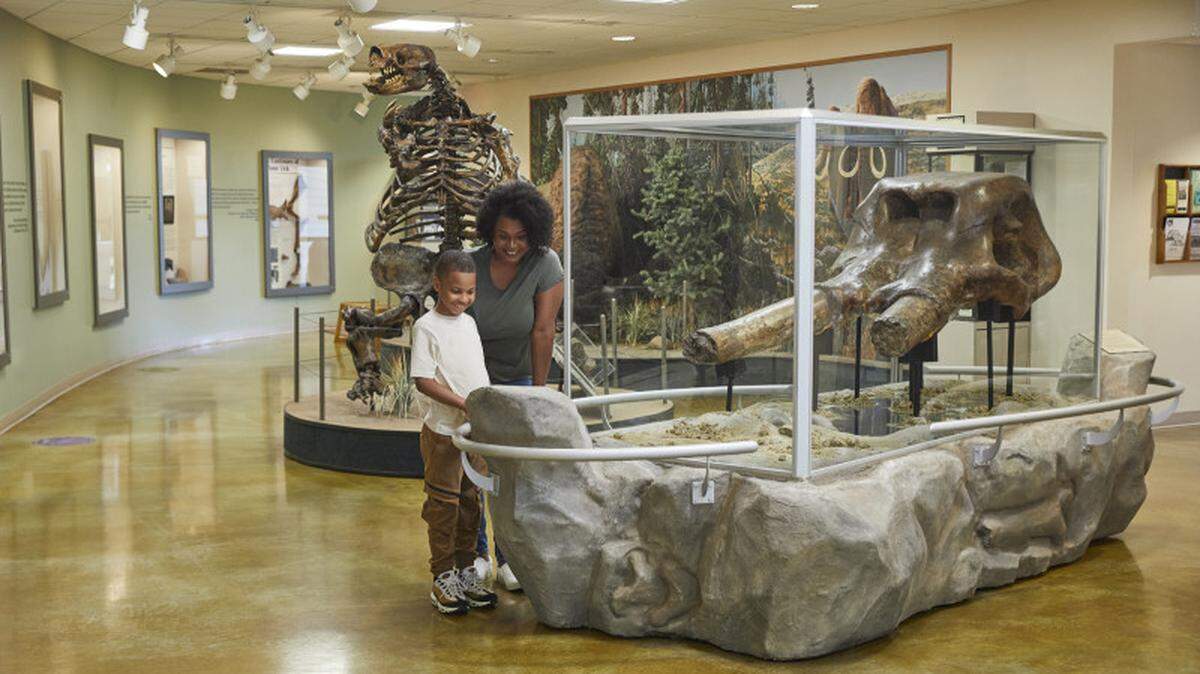
Big Bone Lick was already a Kentucky state historic site, known for its salt springs, Ice Age archaeological finds and modern-day bison herd.
Now, the Boone County site has been designated a National Historic Landmark, which the Department of the Interior says “is the highest federal recognition of a property’s historical, architectural or archeological significance.”
The National Park Service said in a news release announcing the designation Monday that Big Bone Lick “is considered the birthplace of vertebrate paleontology in North America and a world-class collection site for large Pleistocene epoch mammal fossils.”
Bones from ground sloths, mammoths, mastodons, ancient horses and other mammals have been found there. The earliest recorded find at the site dates to 1739 by a French-Canadian soldier, though Native Americans had long used the site for hunting and salt-making, according to the Kentucky State Parks website.
Today, visitors to the state-operated site in Union can tour museum exhibits, check out live bison, walk along a trail to the salt springs and enjoy overnight camping, miniature golf, tennis courts and playgrounds.
“These newly designated historic landmarks join a list of the nation’s premier historic and cultural places, all of which were nominated through voluntary and locally led stewardship,” Secretary of the Interior Deb Haaland said in a news release.
There are 2,600 National Historical Landmarks, most of which are privately owned, and the National Park Service has been making a concerted effort to make the list more inclusive.
The National Park Service said Big Bone Lick is one of 19 sites chosen for their national significance “for lesbian, gay, bisexual, transgender and queer Americans, African Americans, Asian American Pacific Islanders, and women’s history in addition to moments important in development of American technology, landscape design and art.”
Some of the other newly-designated sites include the Blue Ridge Parkway in North Carolina and Virginia; the Greensboro, N.C., F.W. Woolworth Company Building, where a 1960 sit-in at the lunch counter drew attention to racial segregation; the Boulder County Courthouse, where marriage licenses were issued to six same-sex couples in 1975; and the Manenggon Concentration Camp on Guam, where “the Japanese military incarcerated about half of the island’s 21,000 Indigenous Chamoru inhabitants in the weeks before the July 1944 American recapture of the island,” according to the news release.
This story was originally published December 18, 2024 at 4:45 AM.