
How many jobs could medical marijuana bring to Kentucky? What one state official estimates
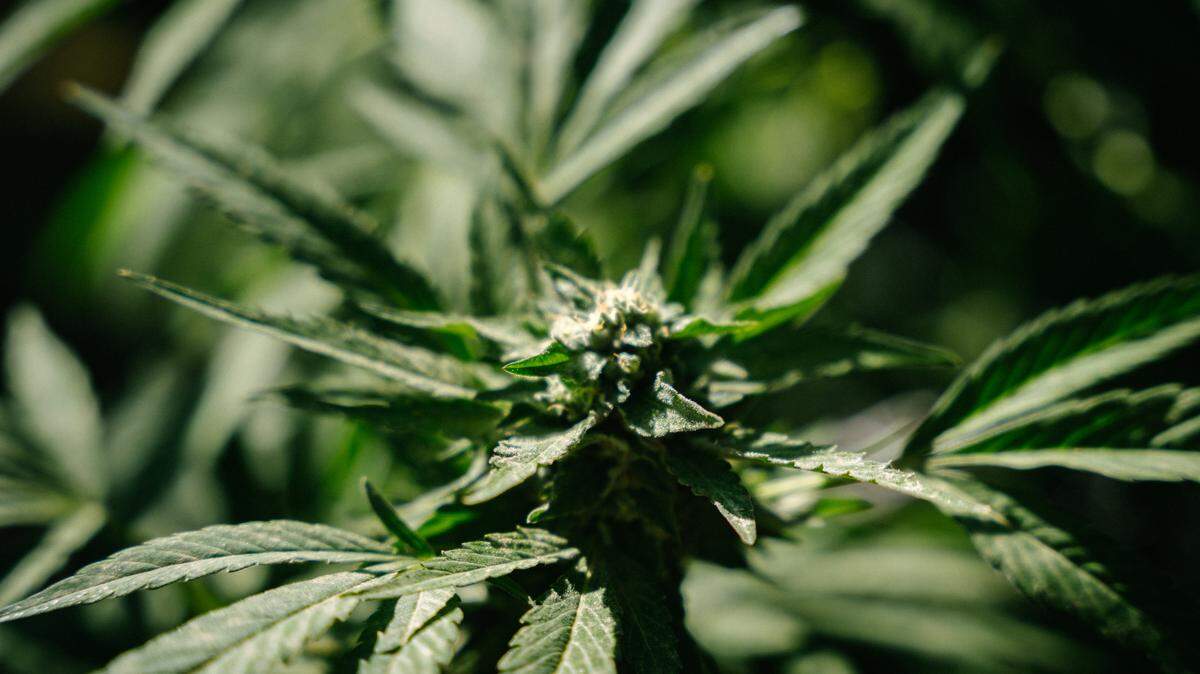
Kentucky’s medical cannabis businesses have the potential to bring hundreds of jobs to the commonwealth, particularly in the coming months as the state’s cultivators and processors work to set up operations.
Starting next month, Kentucky residents with qualifying health conditions can begin applying for state medical cannabis cards. A state portal for patient applications is set to officially open Wednesday, Jan. 1, and at least 2,000 people have signed up for a series of cardholder webinars the state is organizing, the first of which will be Sunday, Jan. 15.
Despite this, card-carrying medical cannabis patients aren’t likely to find products on dispensary shelves immediately after the state program’s launch. For several reasons, including that the interstate commerce of marijuana is still federally illegal, Kentucky’s medical cannabis program requires the drug to be grown and processed here.
That means Kentucky’s licensed medical cannabis cultivators, processors, safety compliance labs and dispensaries have their work cut out for them in the coming months. Gov. Andy Beshear has not given a firm time line of when he expects products to be available for sale, apart from anticipating sales will begin “months into 2025.”
Licenses for the two largest cultivator facilities, each for facilities of up to 25,000 square feet, have been granted to businesses in neighboring Warren and Barren counties.
“Some of these facilities could have over 100 employees. That’s very well within reason for either one of those facilities,” Sam Flynn, the executive director of Kentucky’s medical cannabis program, told the Herald-Leader in a November interview.
“Those facilities are going to have a significant amount of economic development and workforce development impact,” Flynn said.
That prediction of jobs would be in line with a $35 million, 25,000-square-foot medical cannabis cultivation facility that opened in the Cincinnati area last year.
King City Gardens, Hamilton County’s first medical cannabis cultivation facility, employs about 100 people, and can produce between 400 to 500 pounds of marijuana in a week at peak production, according to WCPO 9 News in Cincinnati.
The Herald-Leader has reached out to the governor’s office with questions about the economic impact the industry is expected to have on Kentucky, but has not received a statement.
Kentucky has awarded 26 business licenses to cultivators and processors across the state. It will initially award 48 dispensary licenses across 11 regions throughout the commonwealth. It’s not clear at this point how many licenses will be awarded going forward beyond the initial round.
What kind of demand for medical cannabis will Kentucky see?
At least initially, Kentucky’s medical cannabis market is likely to be small given how limited its state program is. The list of qualifying medical conditions is short, and patients are limited to edibles, oils, tinctures and vape products — smoking marijuana is not allowed.
Ohio’s medical cannabis program offers perhaps the closest comparison, though not a perfect one.
First established in 2016, Ohio’s program launched with 21 qualifying medical conditions, compared to the six Kentucky’s program will launch with. In the decade since, Ohio has expanded the list to 26 conditions, including terminal illness, Alzheimer’s, HIV positive status and brain injuries, among others.
After the launch of Ohio’s recreational weed market in early August, sales in the state have generated $350 million to date, according to data from the Ohio Division of Cannabis Control.
By contrast, Kentucky residents are eligible to be cardholders in the state if they have any type or form of cancer, chronic or severe pain, epilepsy or other seizure disorders, multiple sclerosis, chronic nausea or vomiting syndrome or post-traumatic stress disorder. The Bluegrass State has not legalized recreational cannabis use.
State officials haven’t gone into detail on what kind of demand they expect Kentucky’s medical cannabis program to see once it starts taking cardholder applications Wednesday, Jan. 1.
Flynn said several factors are likely to drive demand, including any possible expansion of qualifying medical conditions, which Beshear’s administration has expressed support for.
“First, it’s driven by the list of qualifying conditions that are provided for in our law. It’s a limited scope … The governor has pushed for the expansion of those conditions. For example, we don’t have terminal illness as one of the conditions in Kentucky, but it’s one that’s in virtually every other state” with legal medical cannabis, Flynn said.
The number of authorized medical cannabis health care practitioners is another big factor, Flynn said.
To apply to become cardholders, residents need to obtain electronic certifications verifying they have one of the qualifying medical conditions.
These certifications can be issued by doctors or advanced practice registered nurses who are authorized by the state. To be authorized, practitioners have to be licensed by a state medical board, register with the state’s Office of Medical Cannabis and issue their certifications electronically so they can be tracked, Flynn said.
Dr. Andrew Peterson is a professor of pharmacy at St. Joseph’s University in Philadelphia, and he has studied doctor and patient communications about medical cannabis, or rather, the lack thereof.
Doctors are often reluctant to bring up the topic with their patients for several reasons, Peterson explained. Marijuana is still federally classified as a Schedule I drug, which means the federal government considers it to have “no currently accepted medical use.” As a result, many insurance companies are unwilling to cover medical cannabis treatments. That often leaves patients covering the cost themselves.
“Some of our patients, they’re spending upwards of a couple hundred dollars a month in purchasing the product, plus the $150 that they have to pay to get the physician to certify them and then the $50 a year card,” Peterson said of medical cannabis patients in Pennsylvania.
Apart from those reasons, however, many doctors simply don’t know enough about the drug and its clinical uses, Peterson said. As the executive director of St. Joseph University’s Substance Use Disorders Institute, Peterson led the development of a state-approved medical cannabis training program for physicians, pharmacists, nurses and physician assistants to become recommenders or prescribers.
“Many of the doctors have not had education about it in school. So it’s an unknown to them, and they maybe get the anecdotal experience” from others, Peterson said.
“People are definitely hesitant about recommending it,” Peterson said. “People have a stigma against it.”
Do you plan to apply for a medical marijuana card in Kentucky? Our service journalism team would like to talk with you. Give us some information with the Know Your Kentucky form below or email ask@herald-leader.com.