Why don’t London, KY police wear body cameras? Question raised after fatal shooting.
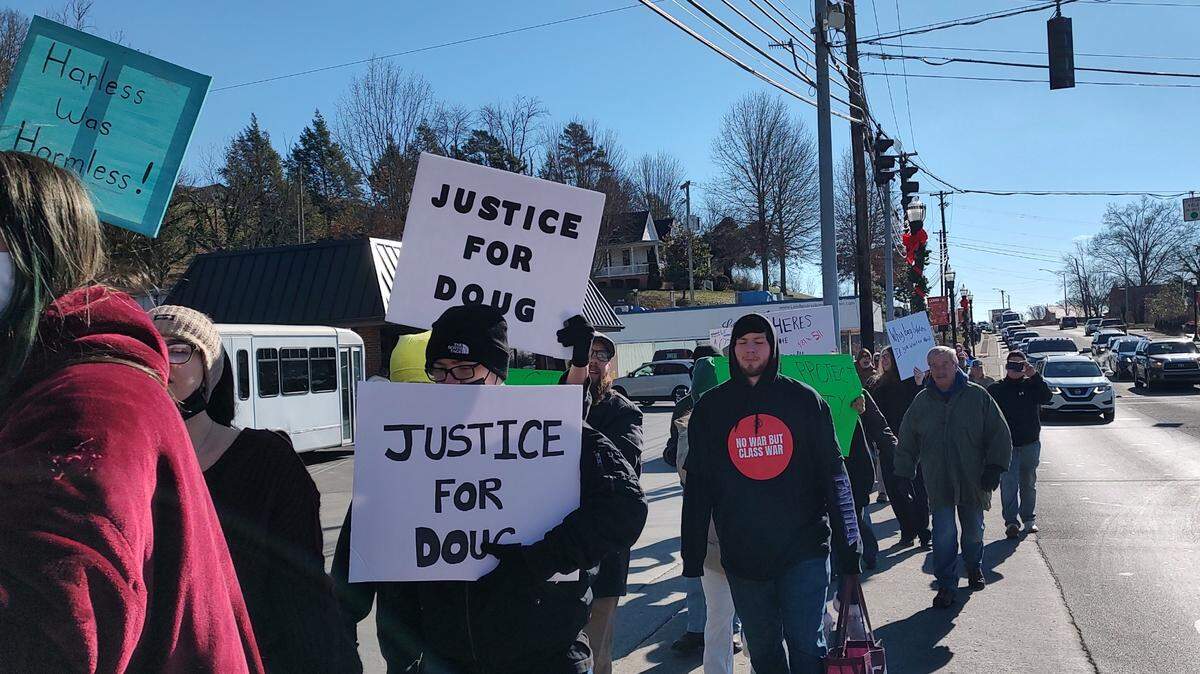
Police body cameras have been a major topic of discussion in London in recent weeks.
Officers from the city police department weren’t wearing them when they tried to serve a search warrant at a home in rural Laurel County late Dec 23, an effort that ended with an officer killing a man inside a home.
Kentucky State Police said the man, 63-year-old Doug Harless, pointed a gun at police before a London officer shot him. The warrant was for one address on Vanzant Road, but according to Kentucky State Police, which is investigating the incident, the shooting happened at a different home about 250 feet away.
At a meeting of the London City Council Monday night, residents wanted to know why officers at the scene weren’t wearing cameras that would have recorded their interaction with Harless.
“Because none of us know what really happened,” one woman in the audience, who did not give her name, told the council. “Accountability, that’s what we need.”
The London Police Department used body-worn cameras for several years, but then-Chief Chuck Johnson suspended that program in March 2023, according to a directive the Herald-Leader received through an open-records request.
Johnson said the cameras used by city officers were four to six years old, many were broken, and the city couldn’t get them serviced because the manufacturer had been bought out by another company, according to the memo.
Johnson said the police department was evaluating the feasibility of body-worn cameras “based on the cost and benefits.”
“It’s been a couple of years since they haven’t been wearing body cams. So how long does it take to do a cost analysis?” the woman asked at Monday’s council meeting.
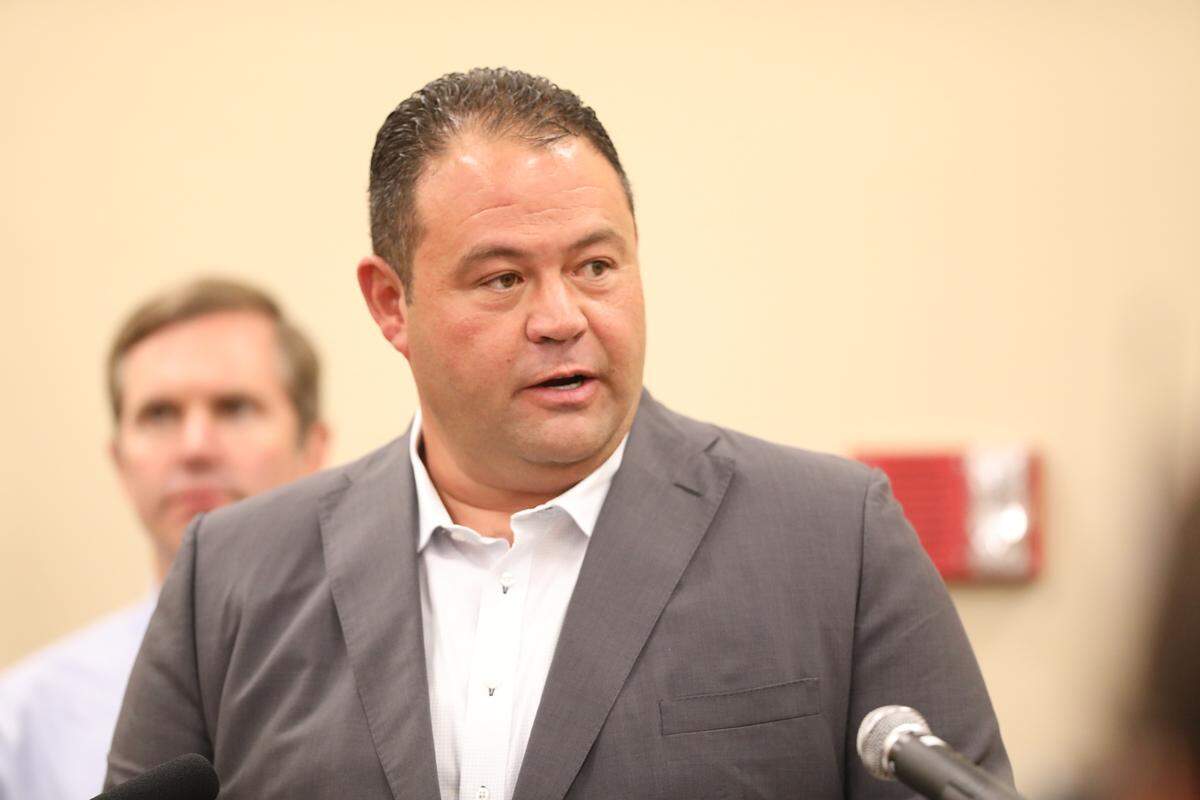
London Mayor Randall Weddle said the city wants to reinstate a body-camera program as part of a larger project to upgrade systems at the department that is in the works.
“It was never that we just did not want them,” he said.
State law on cameras
State law does not require cities and counties to equip officers with body cameras that record interactions with the public, according to the Kentucky League of Cities.
There were two bills introduced in the state legislature in 2021 that would have required police to wear body cameras in many circumstances, including when serving search warrants.
Lawmakers sponsored the bills in the wake of the 2020 police killing of Breonna Taylor in Louisville.
Police shot and killed Taylor, an emergency room technician, in March 2020 while serving a search warrant at her apartment.
Taylor’s boyfriend shot at police after they broke down the door of the apartment, and they fired back.
Both 2021 bills, sponsored by Democrats in chambers dominated by Republicans, died in committee.
Costs a factor
Despite no state directive, Kentucky State Police and many local police departments and sheriff’s offices in the state equip officers with body cameras.
An analysis of the potential cost of one of the 2021 proposals, House Bill 21, said that a 2020 survey by the Kentucky League of Cities showed 95% of city police departments with 50 or more full-time officers used body cameras.
That number dropped to 65% of departments with 10 to 49 officers and 39% of departments with fewer than 10 officers.
Cities without body cameras cited costs as the reason. Those costs include buying and maintaining equipment, storing footage and responding to requests for the footage.
The analysis said the cost of having a program to use body-worn cameras appeared to average between $35,000 and $41,000 each year for each department.
The analysis said the Kentucky Fraternal Order of Police, the Kentucky Sheriff’s Association and the Kentucky Association of Chiefs of Police supported the use of body cameras, but “acknowledge that smaller agencies struggle with costs and availability of staff to manage the program.”
State police received an appropriation from the legislature to implement a body camera program, but the proposals in 2021 to require local police to use body cameras did not include money to cover the costs.
In Lexington, every police officer has a body-worn camera and is required to activate the camera for all contacts with residents while on duty, according to the Lexington Police Department.
Research on body cameras
Research on the benefits of body cameras has shown mixed results, according to the National Institute of Justice.
The agency said in a January 2022 report that the main reasons city police departments and sheriff’s offices cited for getting body cameras were to improve officer safety, improve the quality of evidence, reduce complaints by the public and reduce liability for the agency.
Some studies showed benefits from body cameras, but others concluded there was no real impact, the report said.
It cited one study from Boston, for instance, that showed statistically significant reductions in the number of citizen complaints against officers, and police use-of-force reports, for officers who wore cameras compared to those who did not.
But another study of several departments in the U.S. and the United Kingdom found no statistically significant differences in police use of force or the number of citizen complaints involving officers wearing cameras, the report said.
Of the 10 studies cited, however, six showed results rated as effective or promising, while four showed no effect. The studies did not all look at the same issues.
The report noted that more research is needed.
In a separate report, the National Police Foundation said research showed the use of body cameras increased the rate of guilty pleas and convictions, and could be useful in prosecuting domestic violence cases, especially if the victim didn’t want to testify.
The report said some studies showed that wearing body cameras reduced the use of force by police, but other studies showed no change, according to the report.
One consistent finding was that officers wearing cameras appeared to have fewer complaints filed against them by citizens.
The report cited research by Cynthia Lum, a professor of criminology, law and society at George Mason University, on police and citizen attitudes toward body cameras.
“Police and the public both like BWCs (body-worn cameras) because they think that BWCs can protect them from the other,” Lum said.