Trump pause on federal farming conservation funds leaves KY farmers with unpaid bills
Some Kentucky farmers have been left in the lurch after the United States Department of Agriculture paused funding for various conservation programs that help farmers install water lines, plant ground cover and move to no-till operations.
As part of President Donald Trump’s order to freeze federal funding for some programs, some farmers and farm group associations were notified Friday billions of dollars in conservation money that was approved under former President Biden’s Inflation Reduction Act and Infrastructure and Jobs Acts have been paused.
That’s despite a federal judge’s Monday ruling the Trump administration must release federal funding it had previously put on ice.
The move also comes after the Trump administration had also said in a Jan. 27 Office of Management and Budget order that programs directly affecting farmers would not be part of the federal grant freeze.
It’s not known how much money Kentucky farmers are owed through various USDA programs or how many Kentucky farmers are affected.
“It has to be millions of dollars,” said Myrisa Christy, the executive director of the Community Farm Alliance in Berea, a nonprofit that represents farmers and helps connect farmers to programs and services.
Christy has heard from more than a dozen farmers or agricultural businesses that have either struggled to access funding or have been told the programs that pay them have been paused. Two such entities are owed more than $50,000, she said.
“This is literally the family farm on the line,” Christy said.
The pauses in payments could not have come at a worse time, farmers said.
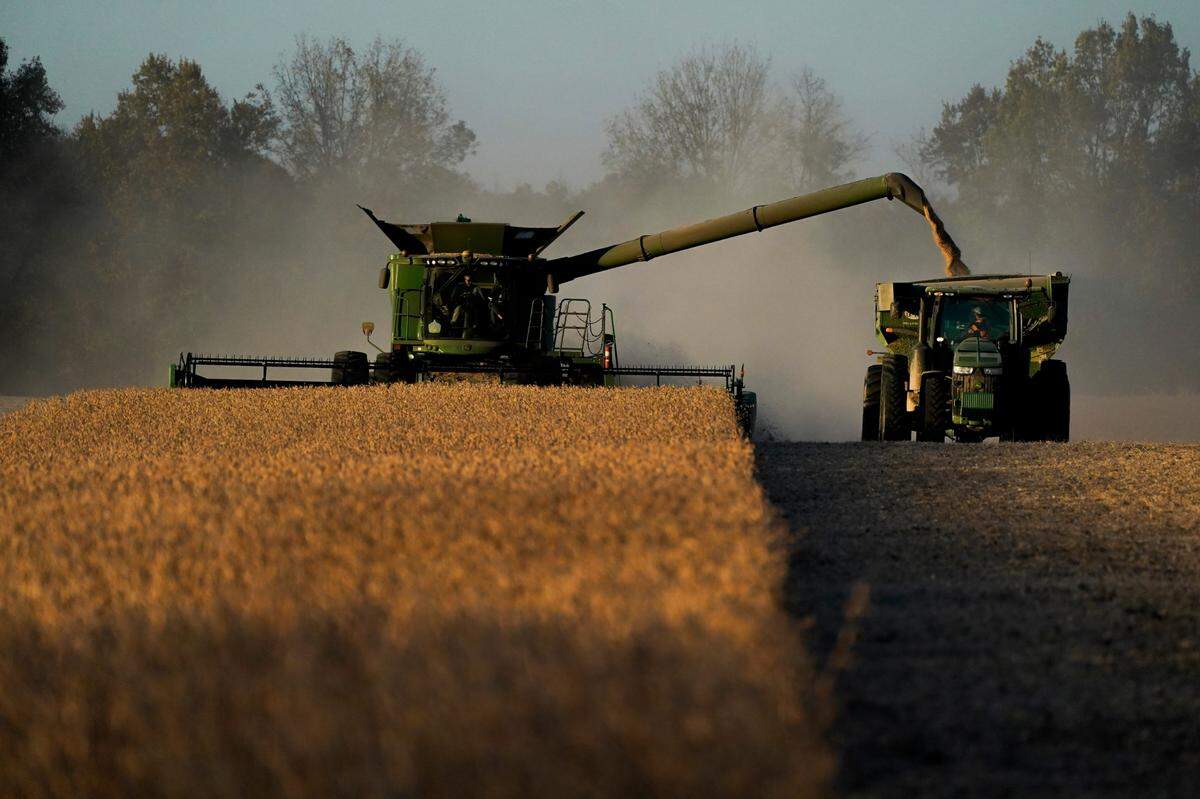
Sale prices for soy beans, corn and other commodities have tanked in recent years. Meanwhile, production costs have soared.
“We have budgets and payrolls to make,” said Hoppy Henton, a longtime Woodford County farmer who is enrolled in several programs possibly affected by the funding freeze.
Christy agreed.
“This is not the time to have an unexpected cash flow problem,” Christy said. “This is not only bad for current farmers but it’s bad for future farmers who want to get into farming.”
What programs have been frozen?
A spokesperson for the USDA said many conservation programs that were authorized under Biden have been put on hold until a review is completed to determine if the programs are align with the Trump administration’s policies. Most of the frozen programs are funded through one of USDA’s National Resources Conservation Service.
“USDA leaders have been directed to assess whether grants, loans, contracts, and other disbursements align with the new administration’s policies,” the USDA statement said. “Once Brooke Rollins is confirmed—hopefully later this week—she will have the opportunity to review the programs and to work with the White House to make determinations as quickly as possible.”
Rollins is Trump’s nominee for agricultural commissioner.
One of the programs affected includes the NRCS’ Environmental Quality Incentives Program, or EQIP, according to multiple national media outlets and Kentucky farmers.
That program is designed to help farmers up production at the same time implement sometimes costly infrastructure changes designed to conserve soil quality. Those changes can include installing water lines, planting ground cover crops or moving to no-till operations.
The other program is the Partnership for Climate-Smart Commodities. At the time that program was announced, the USDA said it was investing $3.1 billion in 141 projects. Those projects also involve various conservation efforts.
Farmers sign contracts with USDA and USDA-affiliated programs to make those capital improvements. The farmers are then reimbursed, said Caleb Ragland a farmer from Magnolia, Ky, who is also the president of the American Soybean Association.
“Many farmers have met the requirements of that contract and are waiting to be paid,” Ragland said. EQIP and Climate-Smart Commodities programs do not fully reimburse farmers for those costs, Christy said.
“Some are just 75% of the cost,” Christy said.
Programs that were not part of Biden’s inflation and infrastructure legislation also appear to have been caught in the USDA pause on spending. There are programs that help grow food markets — such as bringing locally-grown food to local markets — that have also been frozen, Christy said.
“Some of these programs were part of the Farm Bill but they added more money for those programs in the Inflation Reduction Act,” Henton said.
There were also two key food programs in the United States Agency for International Development, USAID, which were cut when the Trump administration gutted the program, Ragland said.
“These are programs with a long track record of putting food into the hands of people who need it,” Ragland said. “As a taxpayer, I understand and appreciate the effort to make sure money is spent wisely. However, we want to make sure innocent programs and good people are not victims of a few bad programs.”
Other pressures in farm economy
The Farm Bill, a massive five-year agriculture spending plan, has not been renewed in nearly three years. Congress has continued to extend 2018 Farm Bill rather than pass a new one.
That has created additional uncertainty in the farm economy and rural America, multiple farmers and farm groups said.
Farming is the backbone of the rural Kentucky economy.
Kentucky’s agricultural receipts were projected to top $8 billion in 2024, according to the University of Kentucky Martin-Gatton College of Agriculture, Food and Environment.
But that doesn’t mean farmers got rich, particularly crop farmers.
From March 2022 to January 2025, soybean, corn and wheat prices have plummeted, Ragland said.
Soybean prices dropped 38%, corn dropped 33% and wheat dropped 43% during that time period, he said.
Congress passed an extension to the 2018 Farm Act in December 2024 that pledged $10 billion in additional funding to farmers who have struggled to keep their balance sheets in the black. The bill also included $31 billion to farmers affected by flooding, hurricanes, wildfires and drought. That money was supposed to be delivered to farmers 90 days after the legislation was passed. Farmers in several central Kentucky counties will be eligible for the $31 billion due to drought conditions.
Ragland and others said they are still not sure if that money is coming and when.
“That money will help and we deeply appreciate that it passed,” Ragland said. “But it’s like putting a Band-Aid on a very large wound.”
This story was originally published February 12, 2025 at 5:00 AM.