
Carpenter bees can chew through your Kentucky deck. Can they sting you as well?
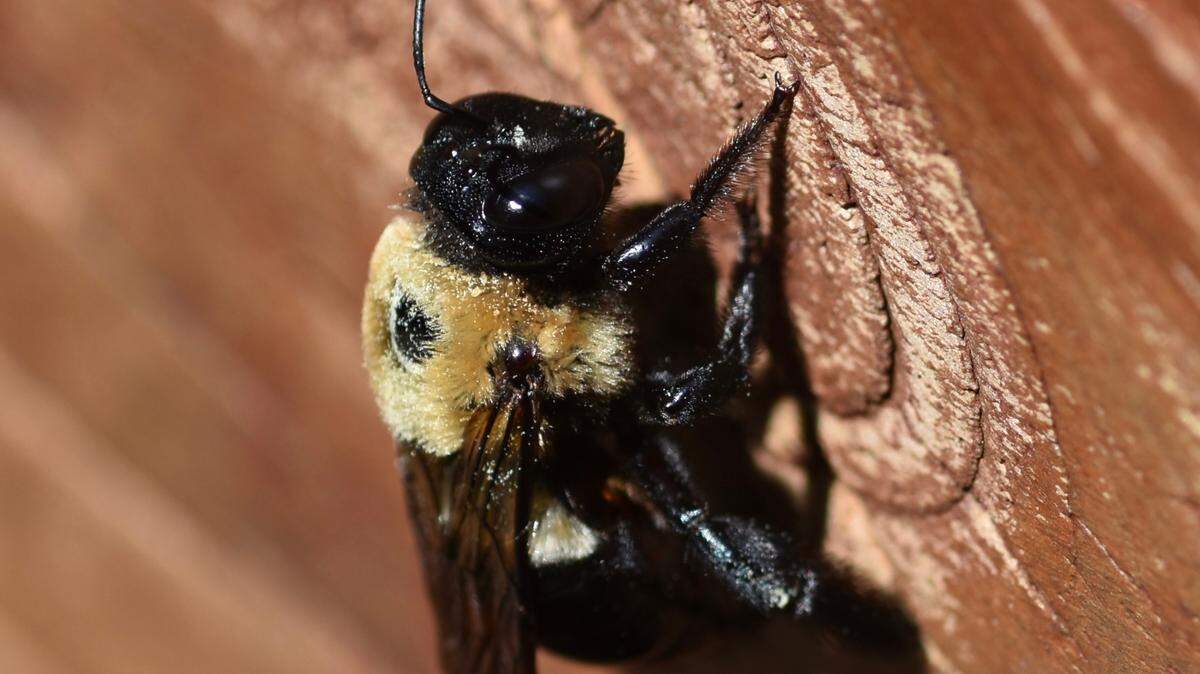
If you’ve spent any time outdoors in Kentucky this spring, you may have noticed those large, black bees hovering about the eaves and rafters of your porch or deck, carving holes in the wood.
Carpenter bees, also called wood bees in Kentucky, dig holes in wooden surfaces to rear their young. The males are known to be aggressive and may even hover at face level to intimidate you, but do they actually pose a threat?
We spoke with University of Kentucky entomologist Jonathan Larson to get at that question, plus included some tips to handle an infestation.
Do carpenter bees sting?
According to Larson, you don’t need to fear carpenter bees in the same way you would a nest of yellow jackets. Carpenter bees are generally less social bees. They don’t have hives or nests to defend, which makes them much less aggressive, Larson said.
That said, female carpenter bees do have stingers they can use, though they typically only make use of them under severe stress.
“If you pick up a carpenter bee, and you kind of manhandle her, she can avert her stinger and then attack you,” Larson said.
If you’ve noticed carpenter bees buzzing around your porch or deck, you may have had stare downs with them. These are the males trying to assert their turf. Larson describes them as little bee “dude bros,” who are all buzz and no sting.
“They try to deter you from getting near the area where the females are nesting, and they will hover in your face and try to push you back,” Larson said, adding the males don’t possess a stinger or even a psuedo-stinger.
“They can’t really do anything,” Larson said. “They’re counting on you being sort of frightened by their appearance. They have that same coloration as the female, and your mind is imprinted with the warning coloration … telling you, ‘this is something that can sting me. I gotta get away from it.’”
How to get rid of carpenter bees
While they aren’t as much of a nuisance as termites, carpenter bees can riddle wooden surfaces around your home with holes. They also invite woodpeckers who love digging out carpenter bee larvae from the wooden tunnels they nest in.
Luckily, there are a couple different ways you can either prevent or get rid of them if you have a carpenter bee problem on your hands.
These include:
Prevention: Use a carpenter bee insecticide. A dust-based insecticide typically works best because it lingers in their carved wooden tunnels for longer. Additionally, if you have any unpainted wooden surfaces around your home, consider painting over those.
Treatment: Ask about dowel rods at your favorite hardware store. A dowel rod that’s half an inch in diameter should do the trick. Insert the dowel into the bee tunnel and cut off the exposed end, making it flush with the exterior wood. Seal the hole with wood glue.
Build a trap: You can make a trap by taking a simple wooden block fitted with a plastic water bottle or jar. Drill a hole into the wooden block through to the attached jar or water bottle. The bees will fall into the jar and not be able to climb back out.
Do you have a question about Kentucky’s critters for our service journalism team? Send us an email at ask@herald-leader.com or fill out our Know Your Kentucky form.