Report: Fatal KY plane crash caused by instructor’s decision to fly into storm
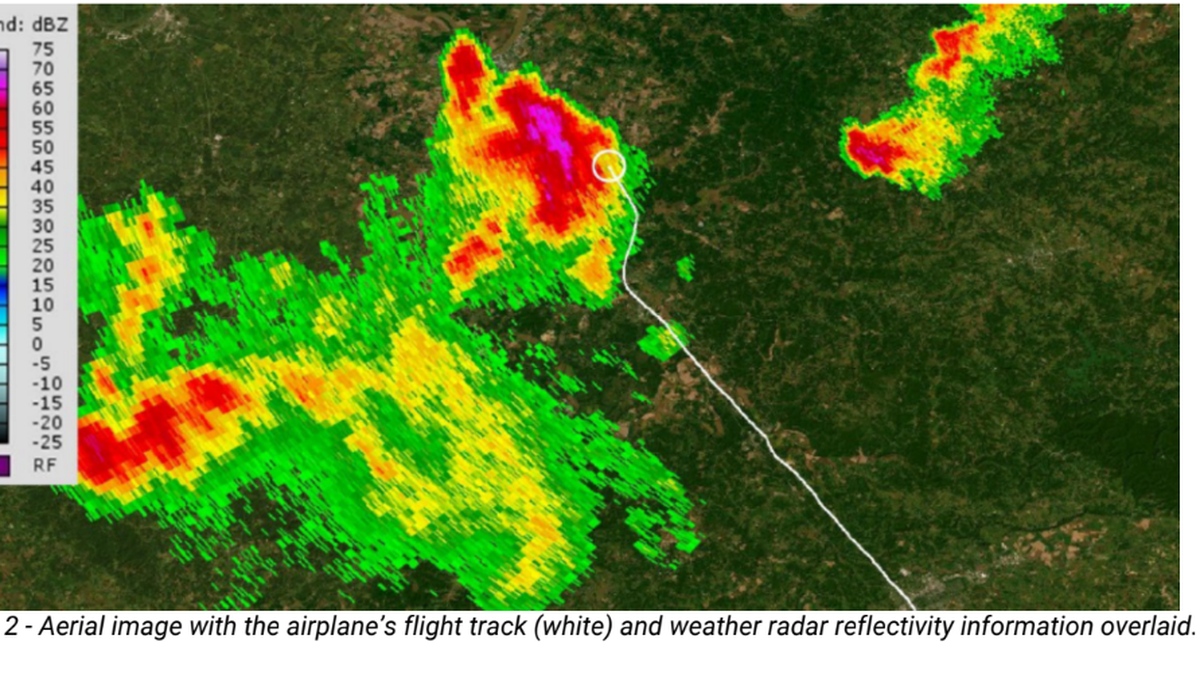
A plane crash that killed a flight instructor and student pilot in Western Kentucky two years ago happened because of the instructor’s “improper decision” to fly into an area with thunderstorms, causing the plane to break mid-flight, according to a recently released federal report.
The small plane crashed in a heavily wooded area near Whitesville in Ohio County late on the night of Sept. 27, 2023. The flight instructor, identified by Kentucky State Police as Timothy A. McKellar Jr., 22, of Custer, and the student pilot, Connor W. Quisenberry, 18, of Beaver Dam, both died.
Quisenberry’s parents have filed a lawsuit against the flight school that employed the instructor, as well as the flight school where the instructor was trained.
At the time of the crash, Quisenberry and McKellar, who had not flown together before, were on the second half of a cross country flight, en route from Bowling Green to Owensboro, as Quisenberry worked to satisfy his night flight training requirements before taking the exam to become a private pilot, according to the National Transportation Safety Board report.
The report, dated Sept. 3, does not identify McKellar by name. But it says the instructor got a weather briefing online before the flight that warned about “severe thunderstorms” that could bring winds of up to 50 knots — or 57.5 mph — and hail measuring 1.25 inches in diameter.
During the flight, he also made a social media post that included a screen capture of weather radar data that indicated the storms, along with the plane’s flight path.
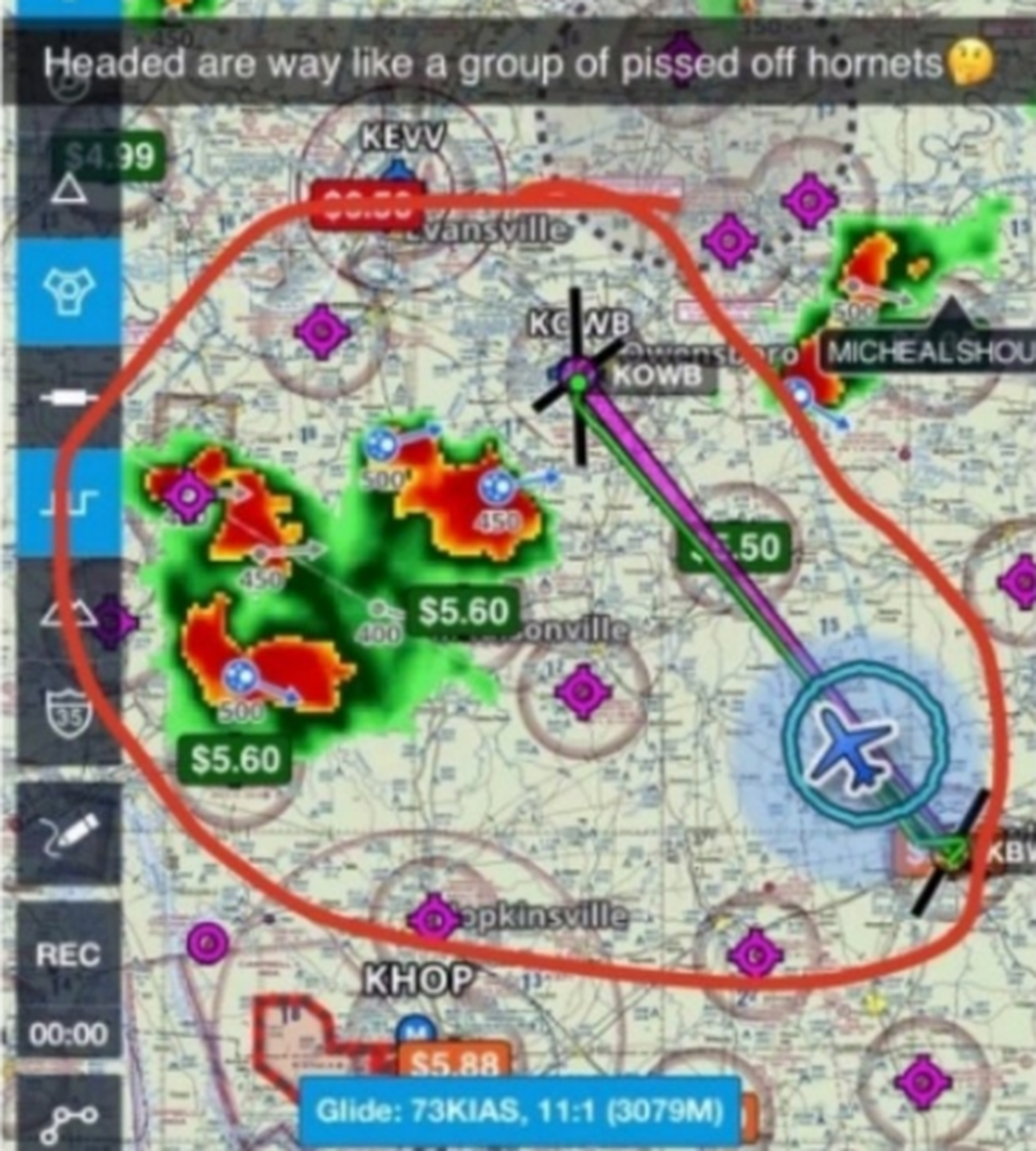
The report suggests the weather radar information the pilot relied on was about 10 minutes old, and that he likely tried to fly past the approaching weather, not realizing there was a delay in the information he received.
About five minutes before the crash, an air traffic controller told the pilot about “heavy to extreme precipitation at the airplane’s nine o’clock position.”
“The airplane continued its northwesterly course; about 2 minutes later, the flight instructor requested an instrument flight rules clearance,” the report states. “The controller issued the clearance and provided an easterly radar vector to assist the flight in getting out of the weather.”
Asking for instrument flight rules clearance suggests poor visibility.
The report says McKellar told the air traffic controller the plane was “getting blown around like crazy.”
“The air traffic controller and the airplane’s flight track showed a turn to the northwest followed by a right circling turn. The controller reiterated the heading of 090o, and the flight instructor responded that they were in ‘pretty extreme turbulence,’” the report states.
The NTSB says the plane’s “structural limitations were exceeded, which resulted in an inflight breakup.”
The debris field covered 25 acres, the NTSB said.
The NTSB report says the flight instructor, McKellar, had just gotten his flight instructor certificate about five months before the crash and had 447 hours of flight experience, including 20 hours at night and 6.6 hours “in actual instrument meteorological conditions.”
Quisenberry had 37 hours of flight experience, according to the report.
The NTSB report said pilots should be aware that the weather radar display data they see in the cockpit “depicts where the weather WAS, not where it IS.
“The age indicator does not show the age of the actual weather conditions but rather the age of the mosaic image. The actual weather conditions could be up to 15 to 20 minutes OLDER than the age indicated on the display.”
The report also urged pilots to get a pre-flight weather briefing.
The plane, a Piper PA28, was owned by Eagle Flight Academy.
Quisenberry’s parents filed a lawsuit in September 2024, accusing Eagle Flight Academy of negligence in employing McKellar.
“Eagle Flight Academy knew, or by the exercise of reasonable care should have known, that McKellar was not a safe, qualified and competent flight instructor, by reason of, among other things, his demonstrated lack of appreciation for, and exercise of, safety measures, lack of professional airmanship, and lack of adherence with industry standards of care,” the lawsuit states.
Eagle has denied responsibility for the crash.
The suit also alleges negligence by several corporations associated with ATP Louisville Flight School, where McKellar was trained.
The lawsuit says ATP “breached the applicable standard of care in failing to take corrective remedial action with respect to McKellar, failing to properly disclose, and/or affirmatively concealing, concerns about McKellar’s qualifications and competency as a flight instructor which were known to ATP and which demonstrated McKellar was not presently qualified to be entrusted with the lives and the training of student pilots as a flight instructor.”
In its answer to the lawsuit, ATP denies liability.
ATP said in its answer that McKellar was “trained and certified at ATP Louisville Flight School” and worked there “for a brief period” as a flight instructor. However, the company says “he was discharged from employment by ATP due to unsatisfactory performance.”
Included in the lawsuit are screenshots from social media posts McKellar is said to have made during the preflight portion of the training exercise and during takeoff with Quisenberry.
The suit accuses the instructor of “making disparaging comments about Connor, expressing his impatience with Connor not being faster.”
The lawsuit asks for compensatory and punitive damages and interest.