
Kentucky has a dire health care worker shortage. Burnout is making it worse
.jpeg "From left, Bradley Firchow, Amber Schifano, Madison Meister, Alison Marcum are members of UK’s Rural Physician Leadership Program, based in Morehead. Together, they founded the Caring for Appalachians Through Service Clinic, or CATS Clinic, this year in partnership with Gateway Homeless Coalition in Morehead.")
Kelli Cremeans has been a first-hand witness to Kentucky’s long health care crisis.
For 11 years, she tended to patients in one of the sickest states in the country — second in chronic lung disease rate, third in Hepatitis C. Ketucky also has some of the highest mortality rates for diabetes and addiction.
As a registered nurse at a rural health clinic in Stanton, Cremeans sometimes treated upwards of 40 patients per day.
She was the only adult provider at a small practice in a county where medical care was hard to come by.
“I felt a sense of duty, like I owed these people. I would very rarely turn people away. It is a much heavier workload,” she said.
After 11 years, it caught up to her.
She was burnt out.
“It was a really, really, really stressful job. It was taking a toll on my health – mentally and physically,” Cremeans said.
She packed her bags and left the practice.
Cremeans wasn’t the first health care worker to bear the brunt of Kentucky’s poor health and health care worker shortage, and she won’t be the last.
More than half of the nation’s health care workers are considering leaving their jobs, with burnout among the top cited reasons.
Kentucky is already in dire need of health care workers, especially in rural areas.
The crushing workload is pushing health care workers to take early retirement or change careers, worsening the existing shortage.
That leaves the state with fewer health care professionals to treat the areas of Kentucky that most need the help.
Kentucky’s health care workforce is too small
A 2022 study from the Kentucky Medical Association found that 44% of Kentucky’s physicians are more stressed now than they were before the COVID-19 pandemic.
That problem is not unique to Kentucky. Nearly half of all physicians in the U.S. experience at least one symptom of burnout, according to a 2023 study from the American Medical Association.
But in Kentucky, losing physicians has worse consequences. The state is already in a doctor deficit, and it’s going to get worse over the next five years.
The state is projected to be almost 3,000 doctors short by 2030. And that’s just doctors.
Kentucky needs 2,871 more nurses, according to a report from the Kentucky Hospital Association.
While the entire state is affected, rural and Appalachian areas are hit the hardest.
Some counties, like Robertson and Nicholas, didn’t have a single primary care physician as of 2022, according to a report from the University of Kentucky’s Center for Excellence in Rural Health.
Ty Borders, director of UK’s Rural and Underserved Health Research Center, said most rural communities in Kentucky need more primary care physicians and have enough residents to support more practices.
Only 25% of Kentucky’s doctors practice in rural areas, even though that’s where 41% of the population lives, according to U.S. Census data.
It is more difficult for rural patients to get care than their urban counterparts, Borders said, because health care workers in rural areas are so dispersed.
That lack of density means longer travel times, which can lead to patients delaying care. The longer patients put off treatment, the worse the outcomes are.
Health care workers are staying in Kentucky’s few urban areas, because the burdens in rural parts of the state are harder to carry. Patients are sicker, and the few health care providers are siloed.
Rural hospitals and primary care practices in Kentucky, especially in Appalachia, are poorer than those in larger cities, so health care workers in rural areas make less money than those who work in Lexington or Louisville.
“Burnout is particularly acute in rural settings where providers don’t always have the collegial community of other providers. They might be the only one,” said Bradley Firchow, a fourth-year rural medicine student at the University of Kentucky College of Medicine.
“There’s no one else to lean on, and there can be this feeling of isolation.”
Providers who practice in rural areas often end their careers early because of burnout, Firchow said. Some never retire because they feel a sense of obligation to their patients.
Firchow, who also serves as the chair of the National Rural Health Association’s student constituency, said preventable health issues often manifest into larger, more difficult-to-treat diagnoses because patients put off care.
He said Kentucky not only needs more doctors, but also needs to retain those already practicing.
Cremeans said she planned to work in Stanton for only two years. Once she saw how the lack of health care affected the people who lived there, she decided to stay for as long as she could.
“I was sucked in. I couldn’t leave those people. Who was going to help them?” she said.
Traveling clinics in Kentucky
In addition to long travel times, rural patients often don’t have access to reliable transportation. Cremeans said that makes it “really hard” for rural Kentuckians to stay up to date on appointments.
Firchow sees that in his own community everyday.
As a student in UK’s Rural Physician Leadership Program, based in Morehead, Firchow said he has treated patients who can’t get to the doctor when they need to.
His cohort founded the Caring for Appalachians Through Service Clinic, or CATS Clinic, this year in partnership with Gateway Homeless Coalition in Morehead.
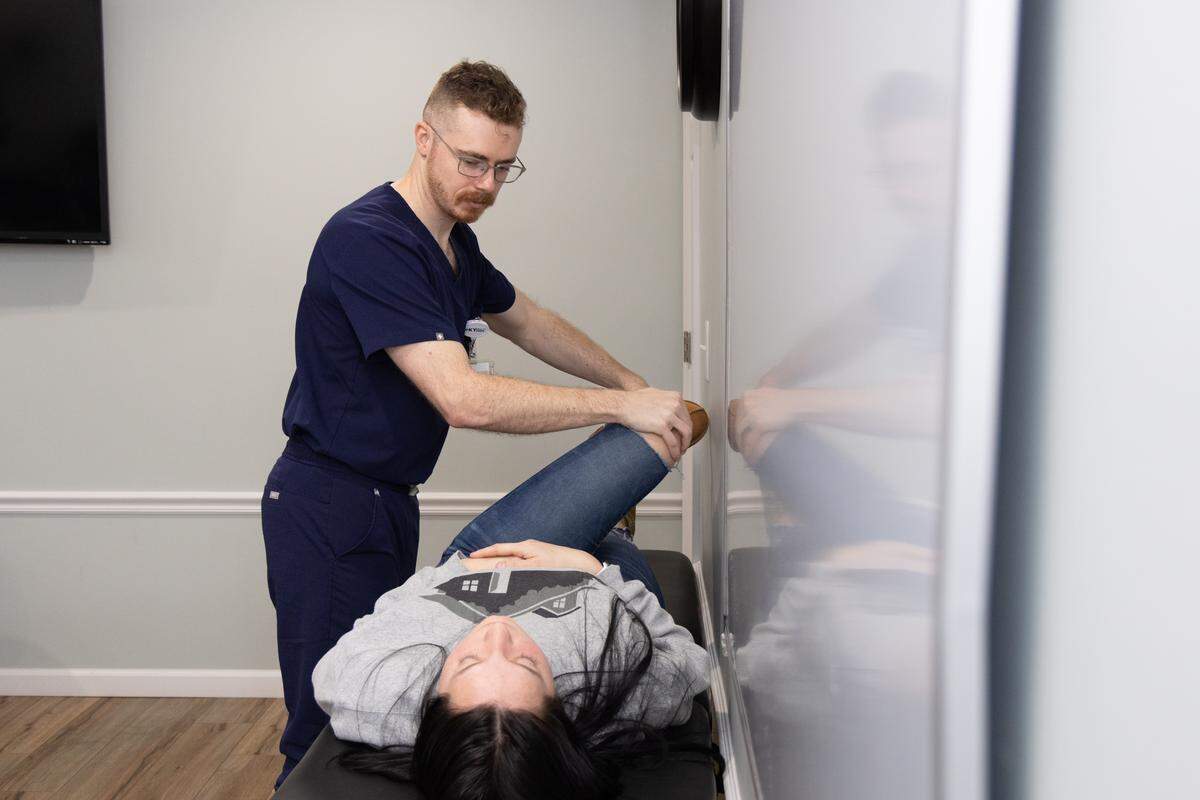
The clinic was designed to address the hardship lack of transportation access brings to unhoused people who need healthcare.
“We’re really trying to bridge care because they’ve experienced housing instability. They often don’t have their own vehicle or access to reliable transportation,” Firchow said. “By bringing healthcare to them, we’re able to bridge care.”
Other traveling medical clinics are also trying to bring care to patients, instead of making patients find their own way.
Rural Area Medical Clinic, a traveling clinic based in Tennessee, is trying to ease the burden on doctors and patients.
The clinic, also known as RAM, brings care to people in underserved areas. It has served patients in 42 states, as well as countries like Haiti and Guyana.
RAM stops in Kentucky a few times each year. Clinic coordinator Brad Sands said the organization bridges gaps in care for people across the country.
In Kentucky, specifically, he said patients often have issues getting reliable transportation to permanent health care services because the geography is so spread out.
Sands said the traveling clinic is “limited” in what it can do.
The RAM clinic tries to connect patients it serves with local health care professionals for follow-up care, but it’s all dependent on capacity.
“We have to find those providers that are willing to take on new patients, and that’s not always easy,” he said. “Sometimes there’s just not access.”
The RAM clinic is a temporary solution to a growing problem.
Fighting burnout in the classroom
To keep the workforce strong, experts say Kentucky needs to lessen the burden of high patient volumes, especially in rural areas.
More health care workers means fewer patients per employee and, ideally, less burnout.
A few programs in Kentucky are working toward that goal.
Kentucky’s Area Health Education Centers aim to recruit and retain more health care professionals, specifically in medically underserved areas of the state.
By increasing the workforce and evening the distribution, Kentucky will be healthier, Director Kelli Bullard Dunn said.
“People are more likely to seek care if it’s not hard to get,” she said.
“If you’ve got to drive three hours and figure out where to park in Louisville, and navigate the big city, you’re a whole lot less likely to seek care.”
But the issue is not just having more workers, it’s keeping them.
“Retention is just as important as recruitment. It’s not just about placing physicians in spots, it’s about ensuring that they feel supported, connected and able to thrive where they’re needed most,” Firchow said.
Bluegrass Community and Technical College is fighting burnout early, starting in the classroom.
Patricio Meneses, BCTC dean of nursing and allied health, said burnout is a “big problem” in Kentucky. To fight that, nursing students at BCTC learn how to manage the grueling schedule of a Kentucky nurse during their time in school.
“Our population is getting sicker, and they stay longer in the hospital. Now, you’re taking care of more patients,” he said.
“Burnout is real, and it’s a reason why we need more individuals to come into health care so we can begin to ease the burden.”
Realistically, he said, there is only so much space in health care education programs across the state. Lack of interest is not the problem, but rather a lack of adequate space to train more professionals.
More health care capacity in Kentucky classrooms
Kentucky’s Council on Postsecondary Education has its own potential solution, too.
The council, a government board that oversees education institutions in Kentucky, is trying to make it easier for people interested in the medical field to get certified and join the workforce.
It started a health care workforce collaborative in 2022 with $10 million from the American Rescue Plan Act, or COVID relief money.
Institutions across the state applied for grants through that program to expand access to graduate more students, said Leslie Sizemore, the Council on Postsecondary Education’s vice president for workforce and economic development.
Those grants end in June 2026, but Kentucky still needs more health care workers.
Now, the council is calling on private institutions to help stimulate the health care workforce by investing in education through the Healthcare Workforce Investment Fund.
Private companies can give money to the fund to support a student scholarship, which CPE matches dollar for dollar. The person who receives the scholarship then spends one or two years, depending on how long they received funding, working at the private institution post-graduation.
In the 12 months since the program started funding students, it has put $17.5 million into health care education across the state by approving 74 proposals, said program director Michaela Steverson.
Around 12% of the workforce investment fund went to Kentucky Community Technical Colleges.
Over 790 students have received full scholarships through the program, according to a report from CPE obtained by the Herald-Leader.
As Kentucky’s schools pump out more health care professionals, the state is using incentive programs like the Healthcare Workforce Investment Fund to get more workers in the areas that need it most.
Policy intervention is a step in the right direction, Firchow said, but only time will tell if the investment is enough to fill the ever-growing gap.
“There’s no one-size-fits-all fix, but rural Kentucky deserves the same continuity and quality of care as anywhere else in the state and anywhere else in the county, or anywhere else in the world for that matter,” he said.
“That requires partnerships across institutions, communities and levels of government that prioritize long-term solutions over temporary stop gaps.”
This story was originally published September 30, 2025 at 1:14 PM.