
Central KY community preps state of emergency over dwindling water supply
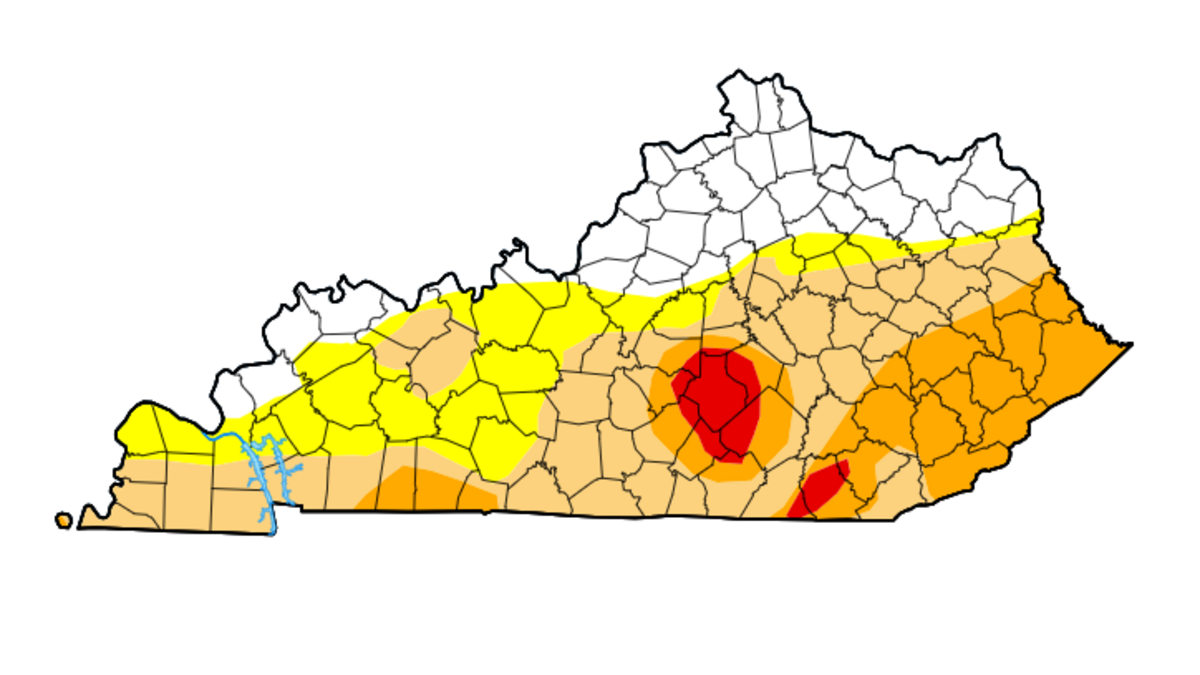
A Central Kentucky community experiencing once-in-a-generation drought conditions is preparing to declare an emergency to preserve what’s left of its dwindling water supply.
Liberty Mayor Sam Haddad and Casey County Judge Executive Randy Dial will meet Monday to declare a joint, city-county water emergency giving authorities the power to mandate severe water-use restrictions.
The 88-acre Lake Liberty, which serves as the city and county’s only drinking water supply, has dropped 14 1/2 feet this year. It sits at the epicenter of severe Kentucky drought conditions — the product of an unusually dry spring worsened by aging infrastructure and heavy agricultural use.
“I’ve lived in the county for 31 years, actually, and I have not seen anything like this,” Haddad told the Herald-Leader this week.
Since the fall, storms moving eastward across Western Kentucky plains have diverted north and south as they encountered elevation changes near The Knobs that encircle Lexington. Rainy conditions have mostly redeveloped in Central and Eastern Kentucky during that time, but the point of separation right above the City of Liberty, population about 2,000, has stayed dry.
The situation has grown so dire, said Liberty Operations Manager Allen Sparr, that he and his staff are dusting off a water shortage response plan that could escalate conservation efforts to a point where the city is slapping financial penalties on heavy water users.
“When you hit somebody in the pocketbook, they have a tendency to actually do what they need to be doing,” Sparr said.
Lake Liberty was built by the state in 1979 by damming Hickman Creek just south of its confluence with the Green River. The lake was originally built to provide drinking water for a population of fewer than 15,000. Now, the county’s population is more than 16,000, and cattle farms have been increasingly tapping the city-county water supply.
“There are more cows in Casey County than there are people now,” said Sparr.
For the past three years, the city has committed a sizable portion of its resources to fixing potable water and sewer leaks — enough that Sparr said he doesn’t believe the region’s water woes can be chocked up to water lost underground. Still, the underground water infrastructure itself is old and slow to move water to and from areas of need, he said.
That’s a problem that isn’t unique to Central Kentucky. Across the commonwealth, rural water-sewer systems are increasingly experiencing climate change-induced short-term water gaps that prove more difficult to recover from because of outdated infrastructure.
This winter, several Eastern Kentucky communities clamped down on residential water use amid a historic cold snap. In 2022, the Western Kentucky city of Marion’s dammed reservoir was drawn down to about a 10-day supply before the state stepped in to help connect the town to a larger, regional supplier.
Without significant rainfall soon, Liberty and Casey County could be “a few months out” from a similar situation, Haddad said. The city is in contact with the Kentucky Energy and Environment Cabinet and is attempting to strike a dialogue with federal authorities that could help refill Lake Liberty directly from the Green River.
Meanwhile, plans to dam Moccasin Creek just north of Lake Liberty are in the works but are still several years out from completion.
“We stand ready to help Liberty,” Kentucky Gov. Andy Beshear said Thursday during his weekly Team Kentucky press conference. “I mean, there’s not a magical way to hook them up and everything be fine immediately, but, let me say, taking steps a month or two out is really smart.
“I also hope we’ll have a dialogue in the longer term about what might be able to be done so that, if they hit this the next time, that there’s another source of water.”