Author explores her family ties to last public execution in US, a ‘legal lynching’ in KY

In August 1936, an estimated 20,000 people descended on Daviess County to watch as a young Black man was hanged from a gallows near the shores of the Ohio River.
It was the last public execution in the United States and what author Sonya Lea describes as a “legal lynching.”
An all-white jury had deliberated for just 4 1/2 minutes before convicting Rainey Bethea, a young Black man, of the rape and murder of Lischia Edwards, a 70-year-old white Owensboro woman.
Bethea’s defense said “not one word” during the trial, according to Lea.
The atmosphere around Owensboro during the execution and in the days beforehand was that of “a brutal carnival,” Lea said, with vendors selling popcorn and “necktie parties” being held the night before.
Lea first learned of her family’s connection to the execution at her grandmother’s funeral, when a neighbor handed her an interview her grandmother had given about her life.
That’s when Lea found out her grandparents had attended the execution in their hometown as newlyweds.
“There were some racist comments,” she said of her grandmother’s interview. “I recognized that voice that had been part of my upbringing.”
The result is Lea’s 2025 book “American Bloodlines: Reckoning with Lynch Culture.”
The book, published by the University Press of Kentucky, received the Kentucky Historical Society’s 2026 Kentucky History Award for university press publications earlier this month.
Lea said she spent years researching and writing the book, as well as “trying to understand my own ancestry, and also dealing with the grief that comes up when you really realize what you’re complicit in.”
“Nobody really wants to walk through, sometimes, these really hard things,” Lea said in a telephone interview during a visit to Kentucky earlier this month, when she spoke to the Filson Historical Society in Louisville and attended an event at the Daviess County Library. “For me, as a writer and as a human, there was no other story that was possible until I really looked closely at this one.”
And the deeper she looked, the more she uncovered about her roots.
Lea learned that the man she considers most responsible for Bethea’s death, prosecutor Herman Birkhead, was her second cousin.
Circumstances of the execution
Lea said Birkhead chose to prosecute Bethea on the rape charge rather than murder, since it allowed him to be publicly hanged.
“Some significant things happened in order to execute him, and one was Kentucky had brought an old law out of hiding,” Lea said.
She explained that in 1920, a white mob in Lexington had been thwarted in their efforts to lynch Will Lockett, a Black World War I veteran who had confessed to murdering a 10-year-old white girl. Lockett, who made his confession while in police custody and without legal counsel, was executed in the electric chair in Eddyville.
“They were so upset that they didn’t have a chance to take on the role of the law (in Lockett’s case) ... what they decided to do is to, in cases of rape alone, there would be a public execution,” Lea said of the law. “So Lischia Edwards was raped and murdered, and Bethea was charged on the rape charges alone, so that a public hanging could take his life. Herman Birkhead was the one who made that choice. Otherwise, Bethea would have been electrocuted at Eddyville Prison.”
Lea said Black communities began to organize, and civil rights activists filed a motion for a new trial, but the judge denied the request.
Lea said the execution drew public attention because the sheriff in Daviess County at the time was a white woman, and many people hoped to see a white woman acting as hangman serving out their idea of justice for the death of another white woman.
She said the media’s reporting about Bethea’s case also played a role.
“They’re kind of fanning the flames, they’re enacting this story that it’s violence done by Black people in our communities,” Lea said. “I really wanted to look deeply at not just this one event itself, but what is the whiteness that creates that racialized violence story?”
In the wake of a spectacle that left many Kentuckians embarrassed, hanging was abolished as a form of execution in Kentucky two years later, according to the Death Penalty Information Center.
Author says lynch culture is ‘everywhere in America’
Lea said what happened then is not just something that happened in the past.
“Lynch culture isn’t just active as something that happens out there, or you know, is located in the past. It’s in our communities and in our families right now,” she said.
“The way I define lynch culture is that it’s embedded in every action that upholds a system that makes it easier to punish Black people and people of color and other marginalized groups rather than to create and sustain a culture of justice. Yeah, it’s everywhere. It’s everywhere in America.”
She said that in order for people to “understand and not refuse our racist histories, we have to be able to acknowledge injustice in our workplaces, in our schools, in our places of worship, so that we can start to see the other as ourselves.”
She called out groups like the Owensboro Community Remembrance Project that are committed to helping communities do that work.
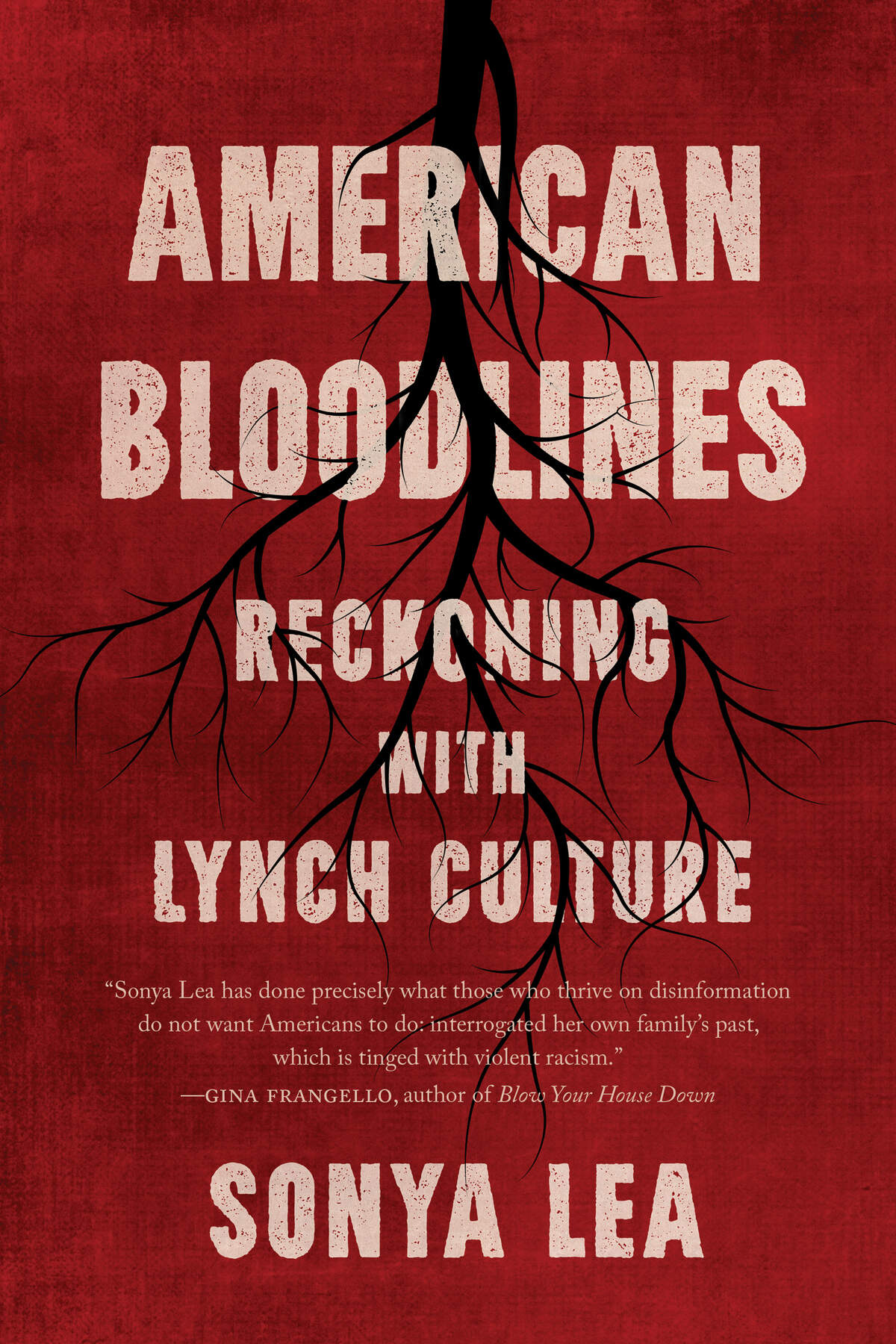
Lea described her book as “a hybrid memoir,” a blend of reporting from the past, memoir and cultural criticism.
“I’m not complicit in the way that my grandparents were, or that Herman Birkhead was, but I am complicit if I keep it in the silence, and I don’t tell the truth about what I know,” she said.
Author Sonya Lea’s close ties to Kentucky
Lea was born in Owensboro and lived there until she was 8.
Her father, a distiller, moved the family to Canada in about 1968 to work in the whiskey industry there, but she said they visited Owensboro regularly for summer vacations and family holidays.
Lea said she and her husband, a Canadian, returned to the area when their children were young, so he could attend the University of Louisville.
Though she now splits her time between Canada and the West Coast, Lea said her family still lives in Louisville and Owensboro.
She felt strongly about the book having a Kentucky publisher.
“When I was writing the book and thinking about sending it out into the world, I was thinking about Kentucky an awful lot, and thinking that for repair to begin to happen, I really felt like a Kentucky institution needed to hold it,” Lea said. “I had at one point removed it from an agent that I was working with, who wanted to make it a different kind of story, make it go bigger, and I just thought, no, I don’t want this. I actually want Kentucky to take ownership of this in some way, and let it begin here. And so, what better press than University Press of Kentucky to make a Kentucky story really its own?”
Lea said her work went through a lengthy peer review process that “allowed me to broaden my understanding of how to see this story, and brought some points of view in that I otherwise would not have had a chance to resolve for myself.”
Reckoning with family histories and moving forward
Lea said it’s important for people to expand their idea of “kin.”
“Lynching is murder endorsed through a kind of kinship,” Lea said. “Why do we need to expose that right now? ... Because I think these stories, if we grapple with them, show us how we might be liberated in knowing the truth. ...The antidote to lynch culture might be to create actual kin culture, that we make kin of those beyond just our relatives.”
Lea said she’s done a lot of work to, as she describes it, bring herself “into alignment” with her ancestors, including her grandmother who attended the execution.
“She’s not the worst thing that she ever did,” Lea said of her grandmother. "She was also a farm woman. She was also a good grandmother to me. She was also racist. You know, none of us are the worst things that we ever made decisions about in our lives.”
She said her family’s Celtic traditions are also part of that reconciliation process.
“I don’t consider myself having a relationship with her just in the past,” Lea said. “This is a current alive relationship with my grandma, and I think that ... she’s proud of the work that I’m doing, as well as my parents, I believe are really proud too.
“I can take this work so far, and then my descendants will have to take it a little further in their lifetime as well. We can only do what we can do in the time that we have, and then they continue it.”