‘Everyone knows The Red’: How Red River Gorge became a hotspot for rock climbers
.jpg "Tom Stoltz, a Louisville resident, climbs a rock climbing wall called “The Motherlode” in the Bald Rock Recreation Preserve in Old Landing, Ky., on June 25, 2026.")
The Red River Gorge is a Corbin sandstone haven, and is generating millions of dollars because of it.
The high-quality, steep sandstone cliffs in Red River Gorge have been a draw for climbers seeking out athletic sport climbing for decades. The cliffs, with their legendary overhangs, have seen climbers push the boundaries of what is believed to be possible, setting endurance and difficulty records for generations.
But as urban climbing gyms and mainstream media have increased both accessibility and opportunity for climbers, participation and profit is booming in the Gorge.
An economic impact study from 2021 found that climbers spent $8.7 million annually in a cross-section of five counties in the Gorge. In 2016, that number was $3.6 million, a similar study found.
In a region of Kentucky that has struggled to find its financial footing since the collapse of the coal industry, climbers’ spending supports 104 jobs and $2.6 million in local wages, according to the study.
Aaron and Laurie Cooper live in the Chicago area, and have been climbing for less than three years. The Gorge’s crags, which are cliff faces developed for climbing, are well-known enough amongst climbers that they’ve visited multiple times.
“At the climbing gym, everyone talks about it,” said Aaron Cooper. “We don’t have a whole lot of experience, but with thousands of world-class routes, everyone knows ‘The Red’.”
.jpg "RedRiverGorge3(reupload).jpg")
Coalition works to protect, maintain climbing access
The biggest strength is the number of climbers who make the trip, said Louie Allen, Executive Director of the Red River Gorge Climbers Coalition. More visitors mean more visibility and a larger voice in conversations for the climbing community.
The Red River Gorge Climbers Coalition was founded in the wake of threats to climbing access in the Daniel Boone National Forest in the 1990s. For 30 years, it has worked to protect and maintain access to climbing in the Gorge, and today manages over 1,800 acres of land.
“The supply has increased as the demand has increased,” Allen said. “Now we do need to make sure that we’re keeping up with how fast we open crags with quality infrastructure, so people can actually spread out the way we know that they can.“
As cuts to the federal budgets limit resources for agencies like the Daniel Boone National Forest, private ownership and stewardship of climbing space, as the RRGCC provides, has made the Gorge a beacon for hope in outdoor climbing’s future.
.jpg "RedRiverGorge8(reupload).jpg")
Last year, the RRGCC made the largest land acquisition in American climbing coalition history, purchasing 718 acres to open up miles of cliffs.
“It’s awesome, it’s a privilege, and a reason why the climbing community is so big in Lexington,” said Ezra Erhardt, a local climber on Lexington climbing gym LEF’s youth team. “We have access to world-class climbing in our backyard basically.”
The research team is currently updating the economic impact data, and findings are expected later this year, according to Allen. But even without exact numbers, the continued growth of climbing is apparent beyond dollar signs.
The RRGCC has not only grown in size physically over the years, but in membership and volunteer numbers too. Today, it has three full-time employees, one being its first-ever land manager.
“It means everything,” Allen said. “Most important thing to know, this is people’s homes, not just a cool place to visit; it’s a community and a piece of history.”
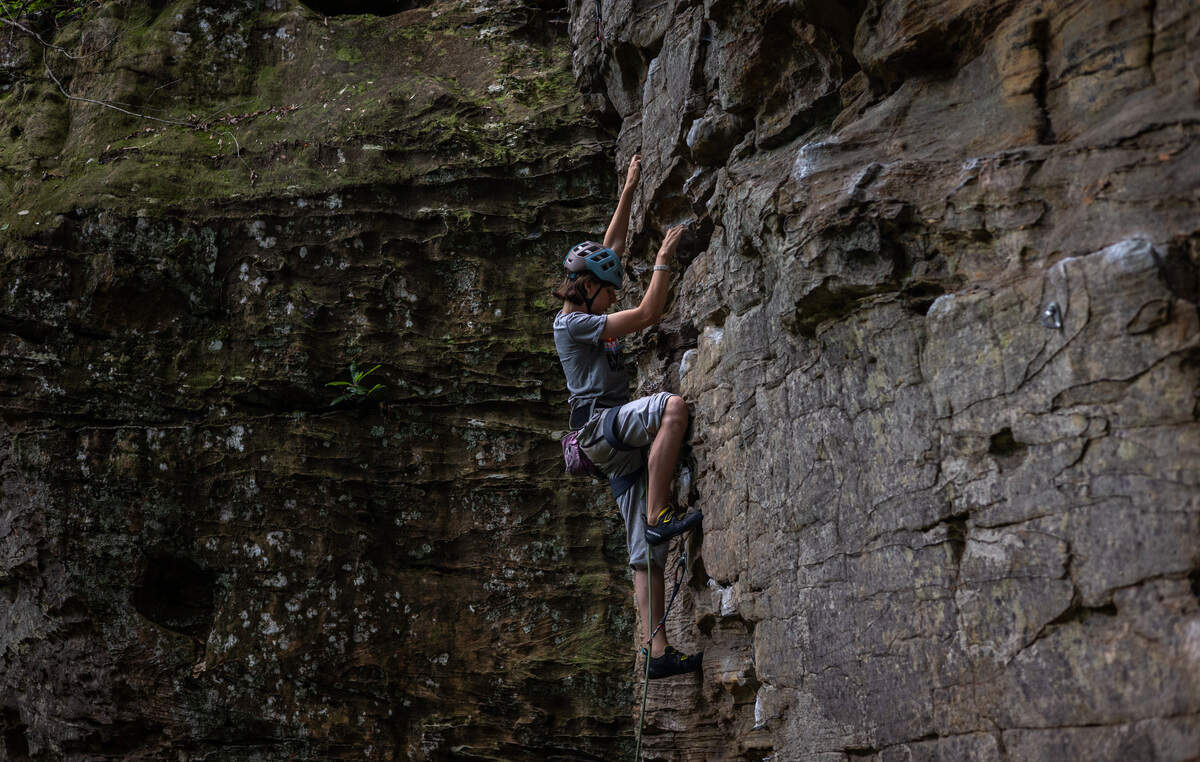
Outdoor recreation has become an economic force
As climbing in the Gorge, similar to outdoor recreation in Kentucky, has developed into an increasingly important economic force, keeping pace with growth presents a balancing act for communities and local organizations.
Since 2021, the number of short-term rentals in Powell County alone has doubled, according to Pete Fingerson, Executive Director for Powell County Tourism Commission. In May 2026, short-term rentals brought in $1.4 million for the county compared to $615,000 in May 2021, and the impact is expected to keep going up.
“In 2025, visitors brought in $19 million into our county, which is amazing,” Fingerson said. “But at the same time, with all of these short-term rentals and all of these visitors, it has put a strain on our local infrastructure.”
With the rapid expansion of rental properties in Powell County, local utility companies have implemented a temporary moratorium on installing new water meters or taps, as the water system is at capacity.
The housing market has also been impacted by the number of short-term rentals that have come in and decreased the inventory of affordable housing, Fingerson said. While this has increased property values for those selling, it can also price locals out of buying in some cases, he said.
Counties have had to work to keep up with the growing number of visitors. Powell County has been designated $20 million in funding for different projects, including expanding the water system and addressing road conditions, Fingerson said.
Investing in a sustainable future doesn’t stop there. As the climbing community grows and more search out the legendary crag in the Gorge, conservation value comes first and foremost, said Allen.
“We need to be diligent about how we grow,” Allen said. “Authenticity cannot be lost due to growth.”
Maintaining trails, opening up new cliffs, belay stabilization and more are all necessary to preserving the land but extremely labor-intensive. A robust volunteer base and support from the community have enabled the RRGCC to grow as it has, said Allen.
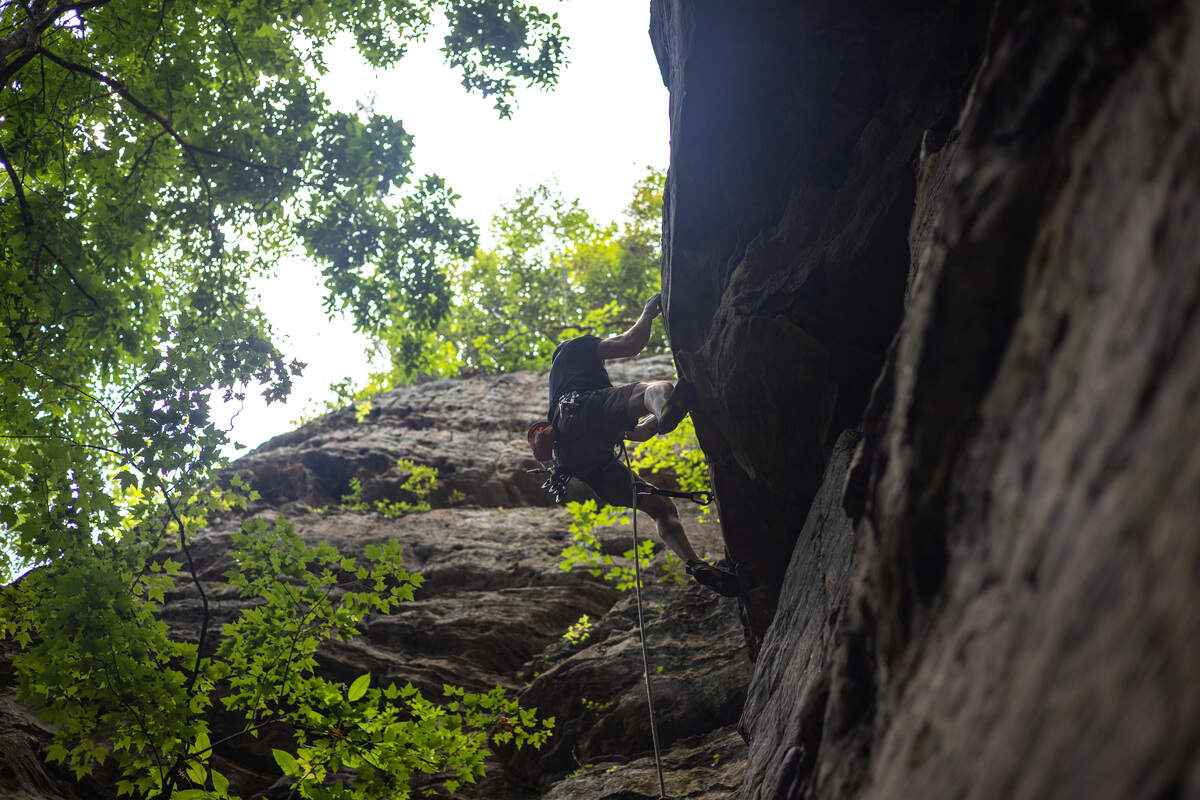
Protecting the environment as climbing grows
Access — though not necessarily easy access — is always a priority, but it cannot happen without continued community engagement.
“As climbing grows and more people are climbing outside, the impacts of climbers on those lands also expand,” said Billy Simek, National Affiliate Director of the Access Fund and former executive director of the RRGCC. “Just getting the kind of buy-in and support of climbers all across the country to help out at their local climbing areas and nationally as well.”
The Access Fund is a national advocacy organization for sustaining climbing access and conservation of the climbing environment. In 2017, the RRGCC granted easements to the Access Fund to strengthen land protection and conservation.
.jpg "RedRiverGorge2(reupload).jpg")
“We could work so hard, and there’s always so much more to do,” said Cadance Rogers, a conservation crew member at the Access Fund working within the Gorge.
The partnership not only provides resources and guidance for the RRGCC in maintaining the land, but also in planning for the future. Predicting how people will engage with the environment and traffic volume to the property is crucial for managing the impact on the land and wildlife while best providing access.
The urban growth in the climbing community has shifted entrance to the sport; now, rather than highly one-on-one mentorship outdoors, people enter the sport through indoor experiences that emphasize technical skills.
“A lot of people that we see visit that come from an urban gym environment don’t necessarily have knowledge of how to mitigate environmental impacts,” Allen said. “And it’s not that we aren’t thrilled more people are getting outside; it’s just the industry has had to get creative with how we educate people about sustainable use and best practices for being outside.”
Community outreach to surrounding towns and legislators enables informed decision-making foster a space for the climbing community to grow, and establishes a productive relationship with the larger community for the future, Allen said.
“We’re really interested in realizing the benefits of climbing and tourism to the communities that we’re a part of,” Allen said. “And climbers are increasingly moving to the region, becoming homeowners, becoming community members, and trying to figure out how we can show up in the community as good neighbors and beyond just some sort of economic impact from tourism.”
But successful stewardship is necessary at every level, from land managers to visitors, to protect current and future access.
“The outdoors are beautiful, but it’s not going to be here if you don’t respect it,” said Felix Skillomen, another climber on LEF’s youth team.