
Arctic, sub-zero wind chills headed to Kentucky. Here’s when and more on the forecast
The National Weather Service in Louisville is warning of a round of storms set to hit Central Kentucky Friday with gusty winds, snow and bitterly cold temperatures arriving by Monday.
“To start, a strong storm system will impact the region on Friday, bringing gusty winds and the potential for snow on the backside of the system late Friday into early Saturday,” the agency warned in a hazardous weather outlook Wednesday.
“Another storm system will take aim at the region as early as Sunday and may bring accumulating snow. Behind that system, an arctic cold front will bring bitterly cold temperatures to the region, with wind chills below zero for many locations by early next week,” the NWS outlook continued.
The latest forecasts from the NWS and The Weather Channel call for rain and high wind gusts Friday, with the chance for snow gradually increasing as the weekend gives way to the start of the work week.
By Monday, the Lexington area should see temperature lows in the single digits, with sub-zero wind chills. Expect a temperature low of about 12 degrees Fahrenheit Sunday night, and Monday evening, the NWS forecasts a low of 6 degrees.
The good news is Thursday should be relatively warm, with mostly sunny conditions and a high near 50 degrees, so you have time to prepare. Here are a few quick reminders and tips for how to drive in icy conditions, along with how to prepare your car and home for consistently frigid temperatures.
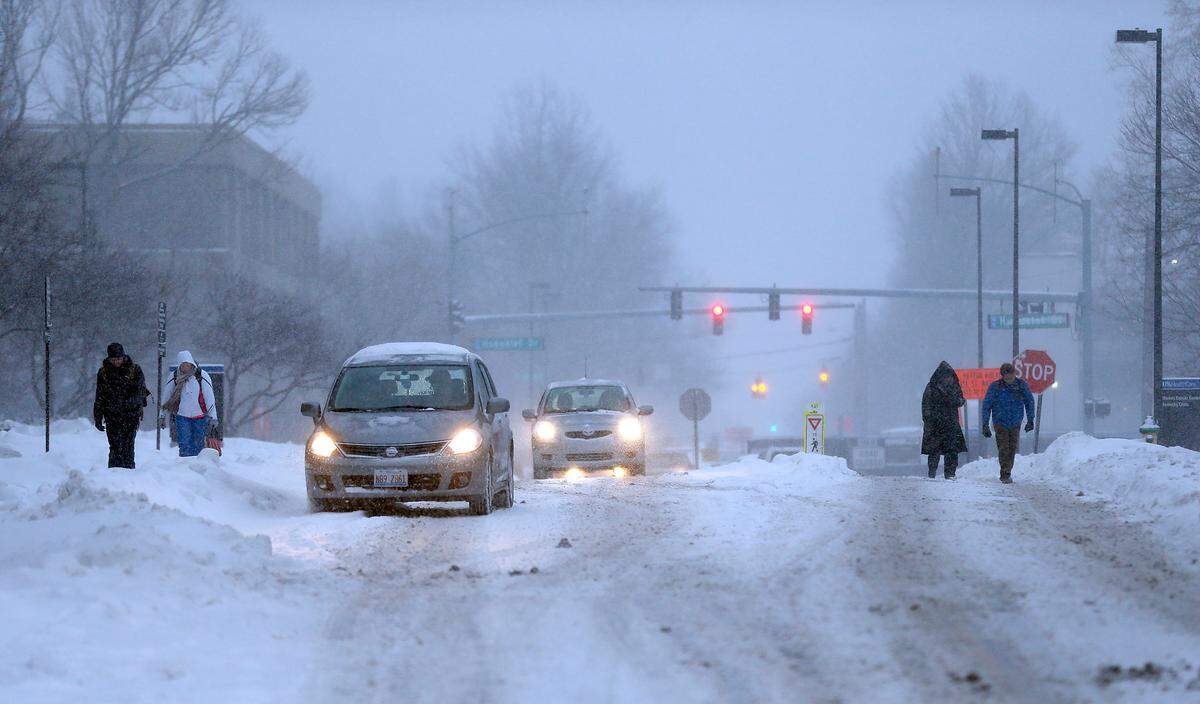
General tips for driving in cold weather
Before you hit the road, make sure you have a cold weather emergency kit on hand. Auto club AAA advises keeping extra food and water, warm clothing, a flashlight, blankets and other essentials in your car in the event you become stranded.
Invest in an ice scraper and possibly de-icer spray. Try to knock as much snow off your car as possible, too.
Be sure your tires have enough air and are properly inflated. They should also have plenty of tread. If your tires are bald, avoid driving.
Don’t warm up your vehicle within an enclosed area, such as a garage.
Keep at least a half tank of gas at all times.
Avoid using cruise control. You want to be in control of your vehicle while driving on slippery surfaces, such as snow and ice.
Tips for driving on ice and snow
If you can, stay home.
Slow down. You have lower traction on ice and snow. Slowing down gives you more control and more time to react.
Accelerate and decelerate gradually, you’ll need more time to slow down on icy roads. Brake slowly and smoothly.
Increase your following distance so you have five to six seconds for reaction time.
Know your brakes. Modern vehicles should have anti-lock brakes, but that may not be true if you’re driving an older vehicle. You can check your owners manual or look for “ABS” to light up on your dashboard when you start the vehicle.
Try to stop as little as possible. There’s much more inertia to overcome when your vehicle is at a full stop versus slowly rolling forward. If you can slow down enough to keep rolling until a traffic light turns green, without running the light, do it.
Don’t power up hills. Hitting the gas on snow-covered hills will have you spinning your wheels. Try to gain inertia first and let it carry you over the hill. Then, as you reach the top of the hill, drop your speed and go down the other side slowly. Conversely, don’t come to a dead stop on an icy hill.
Protect your pipes
While water freezes at 32 degrees or colder, multiple factors influence whether your pipes will freeze. Those include whether the pipe is exposed and uninsulated, if temperatures are consistently below 20 degrees and if there are severe wind chills, which forecasters expect next week.
If the temperatures inside your home are above 55 degrees, your pipes should generally be fine. However, if the temperature drops below that point, keep these tips in mind:
Insulate any exposed pipes to help keep them warm.
Leave the cabinets open under your sink.
Let the water faucets run on a slow, continuous drip.
Know how to turn off your water. Look for the valve either in your basement or around the outside of your home, and make sure you understand how to turn it off. You’ll need to do so immediately if you have a burst pipe.
Do you have a question about Kentucky weather for our service journalism team? Let us know via the Know Your Kentucky form below, or by emailing us at ask@herald-leader.com.
This story was originally published January 10, 2024 at 12:45 PM.