A trip to KY’s Mammoth Cave reminds me how vital our national parks are to the US | Opinion
The entrance to the cave looks sterilized — a stainless steel door that wouldn’t seem out of place in a hospital looks wholly foreign out here in Mammoth Cave National Park.
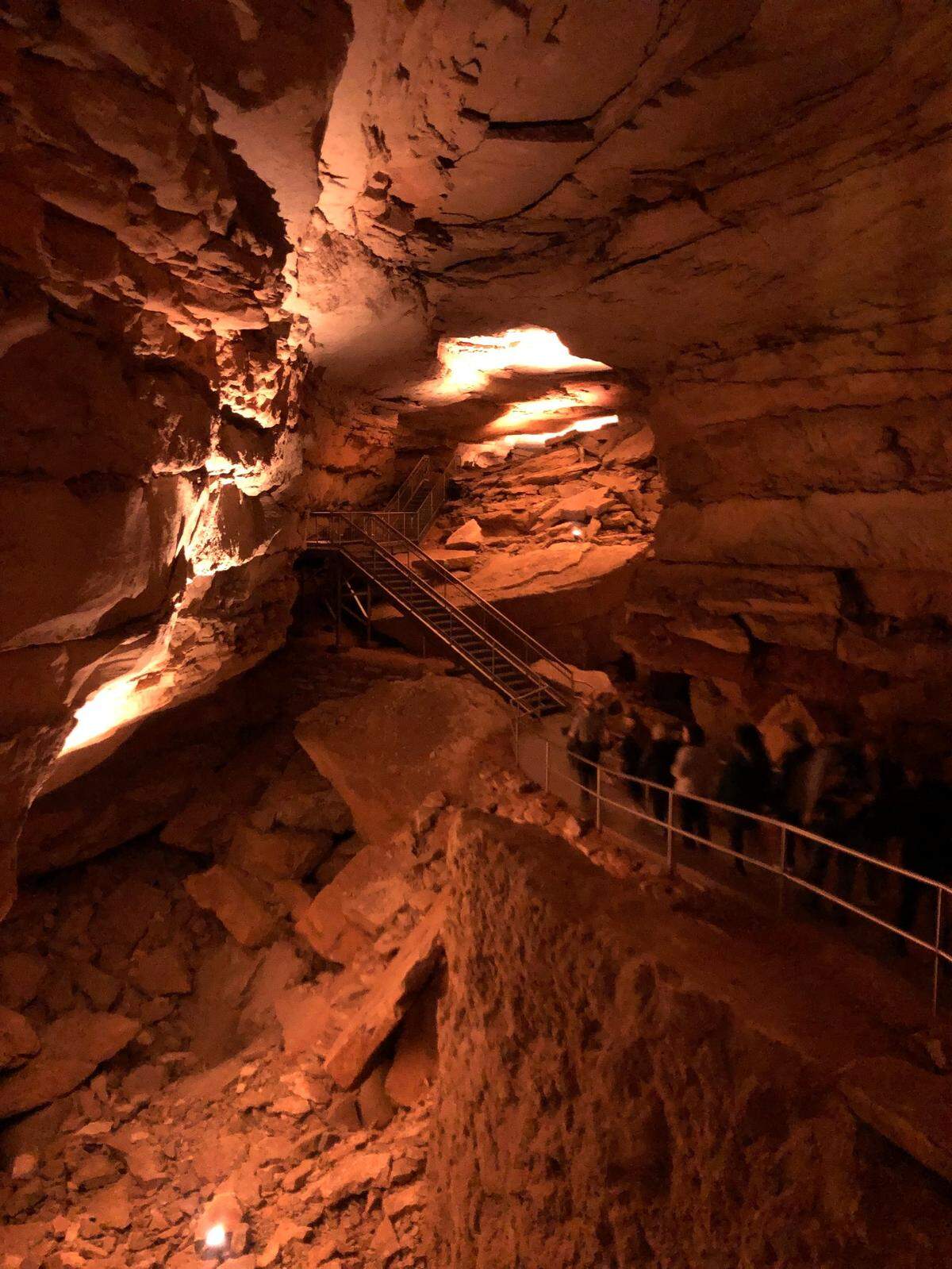
Yet our cave guide that day tells our group of 41 that right beyond this entrance we’ll be heading down some 200-300 feet below ground aided by nearly 300 steps on our trip downward into a sinkhole.
Luckily for those of us gathered on the tour this chilly Saturday in February, we’re able to descend in a much better manner than those used by early explorers in the 1920s who had to rely on rope and later constructed wooden stairs, which I can’t imagine were all that sturdy.
As our guide opens the door we begin our descent, wasting no time at all going down what I believe is the equivalent of several stories to make it a couple hundred feet below the earth. The air as we go down begins to feel thick as the temperature equalizes for us from a cooler 30 degrees outside to a warmer, consistent 50 degrees inside the cave.
The railings of the steps are slightly damp and the occasional drip of water makes its way right between my coat and exposed neck; a drop of cold with pinpoint accuracy to jostle my body through the journey.
It’s incredible the craftsmanship involved with these steps and landings, what must’ve been involved in constructing what amounts to a reverse Tower of Babel around the meandering cave formations. We delicately avoid the cave walls as we bob and weave deeper into the earth.
This particular tour offered at Mammoth Cave is the Domes and Dripstones tour, which includes the route for the Frozen Niagara Tour and a small portion of the Grand Avenue Tour. In all, the tour comes out to just about a mile in length but as our guide assures us at the start it feels like a bit more than just a mile when adding the descent and steep inclines.
Ahead of me, my wife is pointing out several low-hanging ceilings and tight squeezes that I’ll need to maneuver my 6-foot frame around so I don’t knock my head square on a rock. On more than one occasion, I have to limbo my way underneath a particularly low rock hanging.
A project was completed to upgrade and update this particular trail in 2023 to replace deteriorating portions of the trail route, which had not seen a major investment since the 1930s. Other work included replacing the handrails with stainless steel and upgrading the many hundreds of steps along the route.
Eventually we’ve sunk our way down to the bottom of the sinkhole as the ground levels beneath our feet. Our guide tells us a story that, yes, can be found online for anyone curious enough to look, but is truly impactful when told in the echoing space around us.
Kentucky Cave Wars
In 1915, a man named George Morrison came to town. He was searching for oil but all he could find was caves as far as the eye, funnily enough, could not see. Morrison was keenly interested in getting a piece of the cave tourism pie. So much so that he, and a crew of men, broke into Mammoth Cave to get a lay of the land; they were discovered and kicked out for trespassing.
At this point in time, tours of Mammoth Cave had been ongoing for nearly 100 years. In fact, people toured Mammoth Cave before Maine gained statehood.
Morrison was run off, but not for long. In 1921 he returned to the area, bought around 2,000 acres of land and blasted a sinkhole into his own property in the hopes of uncovering his very own caves
With 20 sticks of dynamite and the backing of the “Mammoth Cave Development Company,” a company he himself founded, Morrison discovered a section of Mammoth Cave that was connected to the present day Historic Entrance but was owned entirely by him. This was later bluntly called the New Entrance to Mammoth Cave.
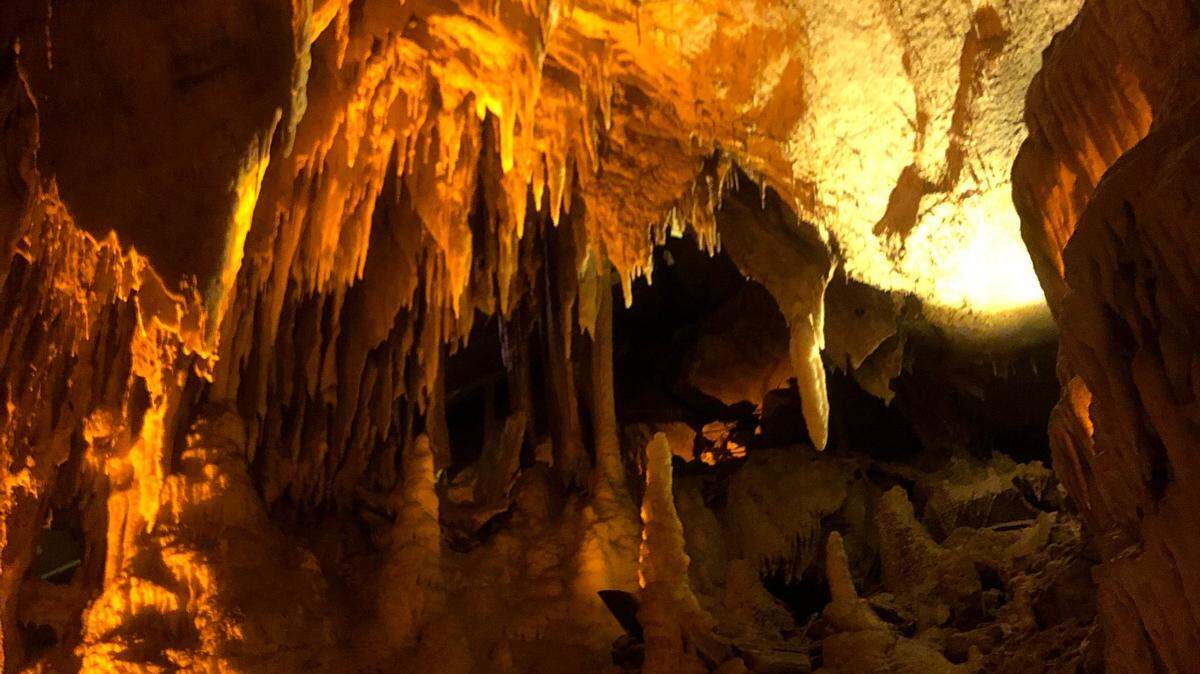
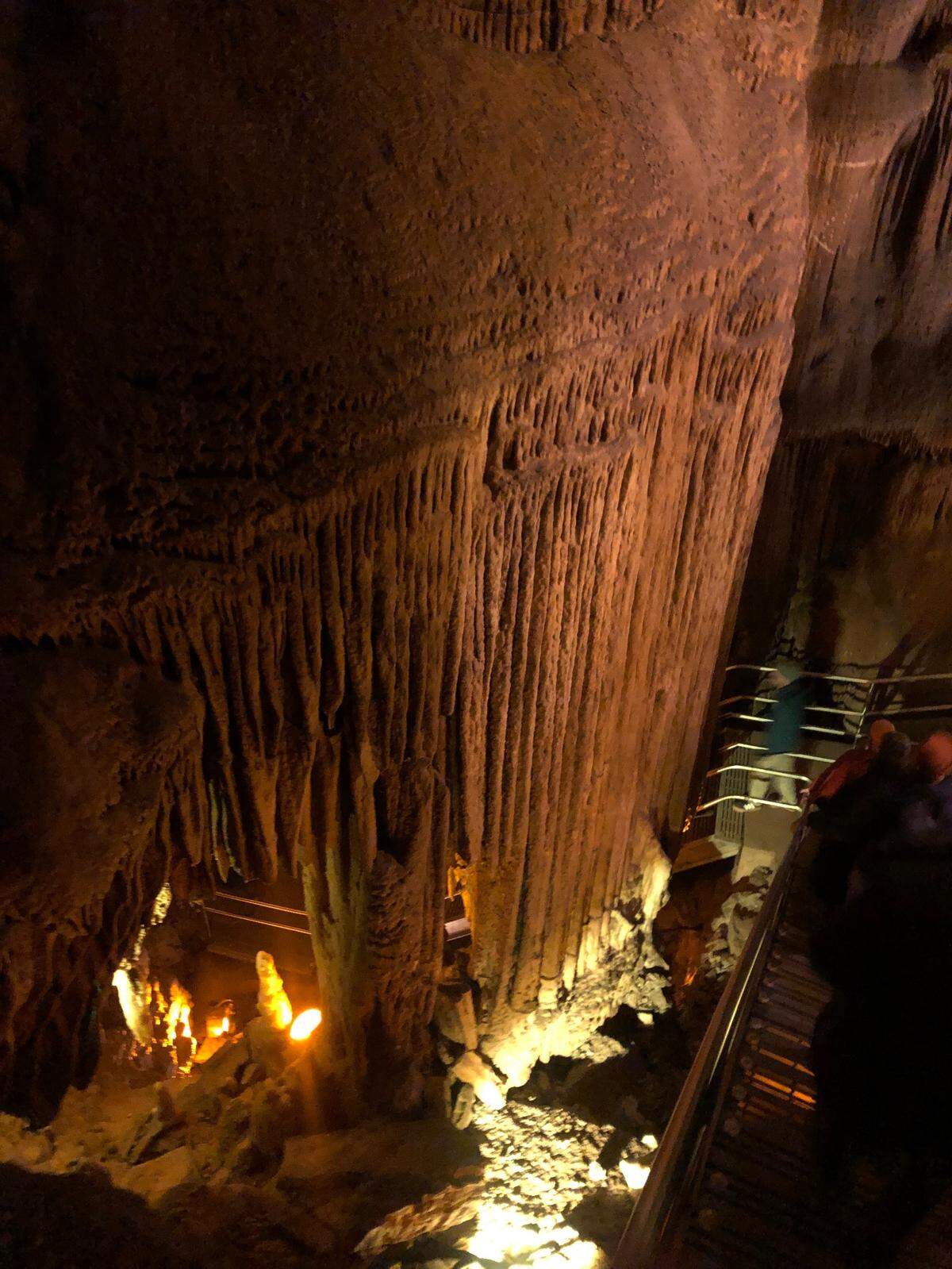
Then in 1923 the Frozen Niagara, the namesake of the trail, was discovered (Morrison had a knack for naming conventions that were a bit yankeeish and widely recognizable to people). The Frozen Niagara is a flowstone rock formation made of calcite deposits where water flows in caves.
Morrison, as our guide aptly put it, was a “thorn in the side” of the Mammoth Cave Estate. Long before the cave system became a national park, it was governed by a board of trustees, and did not include all of the cave systems it does today. Because of his location on the roadways, and the decline of a railway that went straight to Mammoth Cave proper, Morrison was in a great spot to lure travelers to his “Mammoth Cave”
All of this was all part of the larger Kentucky Cave Wars that had engulfed the region.
Despite Morrison’s good fortune, all the rival caves in the area began to consolidate as Congress passed legislation in 1926 authorizing the acquisition of land by public or private donation to create Mammoth Cave National Park. Morrison held out for a couple years, but ultimately sold his land to be incorporated into the park.
Mammoth Cave’s majesty
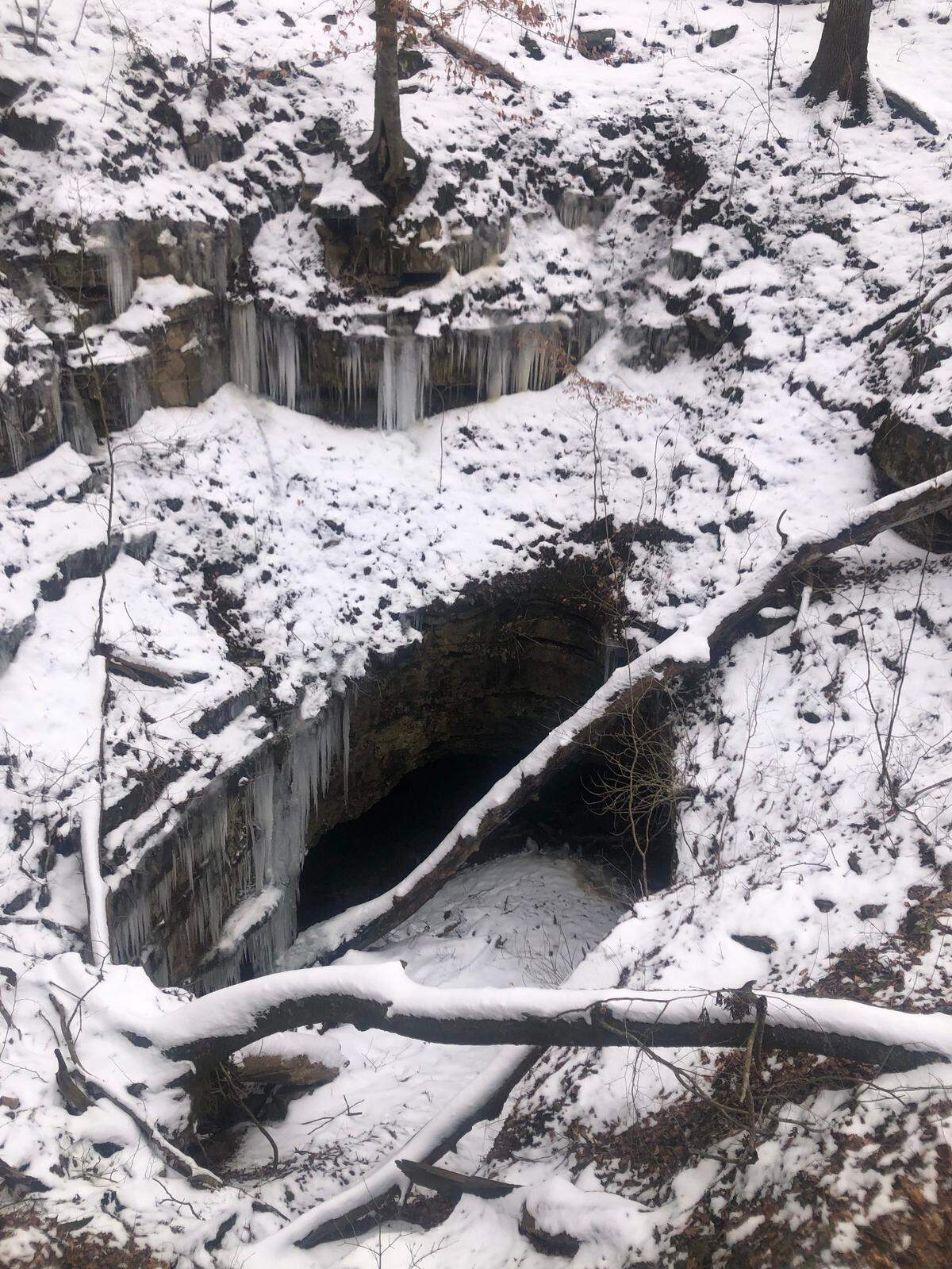
Back above ground, my wife and I decide to embark on a couple more trails around the park. One trail that caught our shared attention was Cedar Sink Trail. The trail was around two miles looped and took us down to Cedar Sink, a sinkhole where a karst window has formed, allowing water to flow down into the cave system.
We watched as icicles slowly melted on the cliff walls and fell down into the water below.
Before leaving Mammoth Cave we visited two historic churches located in the park: Joppa Missionary Baptist Church and Mammoth Cave Baptist Church. My wife works for a library and focuses a lot on genealogy, which means the old cemeteries attached to these churches were of exceptional interest to her (as was a sandhill crane that flew overhead at one point).
One of those cemeteries is home to the gravestone of Floyd Collins who, 100 years ago, was trapped during his exploration of Sand Cave. Over two weeks of attempted rescue operations unfortunately failed and Collins died inside the cave.
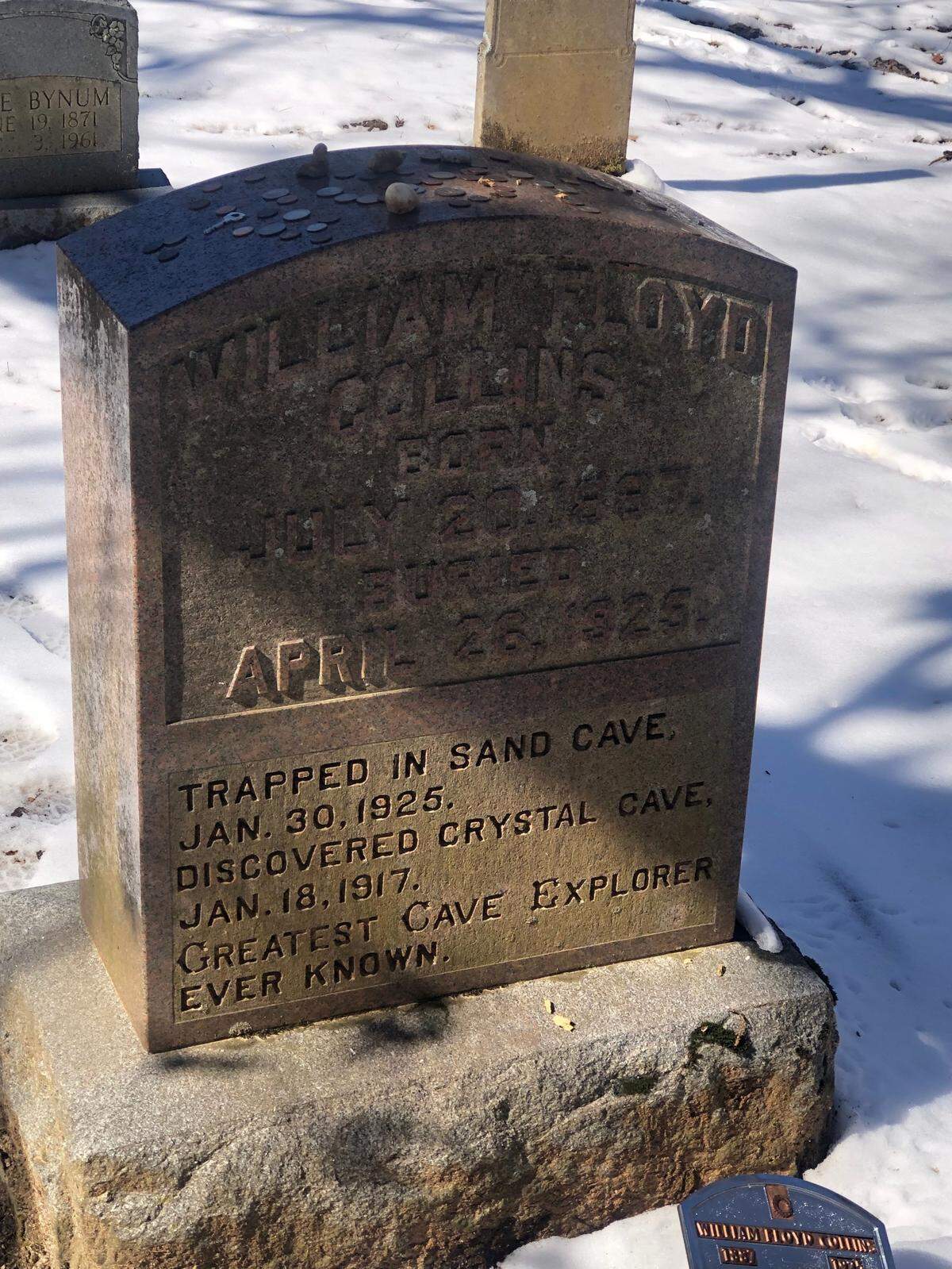
Our tour guide told us Collins’ body was eventually recovered; however, he was later horrifically dug back up and put on display in a glass-topped coffin to get people to visit new cave tour attraction that was owned by Dr. Harry Thomas. It’s rumored that Collins’ family had cement poured over his body at his final resting place in the Mammoth Cave Baptist Church cemetery so he could never be exhumed again.
I’m struck not just by the natural beauty of Mammoth Cave, but by the beauty of the people who poured so much of their livelihood into the area; Collins died while exploring the caves and the attention his rescue garnered across the county could arguably be considered as the momentum that turned the area into a national park.
Not to mention the many enslaved tour guides, like Stephen Bishop, who made Mammoth Cave what it is today.
All of the work that goes into ensuring safety underground, cleaning the trails, the upkeep of the numerous cemeteries that dot the park! If you can trace your lineage back to some of the original landowning families of Mammoth Cave then you are entitled to be buried there in the park and the National Park Service (NPS) will clean and maintain those burial plots.
Yet the federal government, headed by President Donald Trump, and their “cost cutting” Department of Government Efficiency, headed by Elon Musk, has sought to fire thousands of NPS employees, much to the detriment of our country’s national parks.
After pushback, the administration has said it will restore jobs for some of the 1,000 people fired and pledged to hire up to 3,000 additional seasonal employees, according to the Associated Press. But I think we all know this could change at the drop of a hat.
As the Herald-Leader previously reported, the two agencies responsible for staffing Mammoth Cave and the Daniel Boone National Forest, which includes Red River Gorge and Cave Run Lake, either failed to respond to inquiries about reductions in their workforce or did not say how many staff had been laid off.
A spokesperson for the U.S. Department of Agriculture, which includes the Forest Service, said they did not have any information on local Forest Service terminations but said Agriculture Secretary Brooke Rollins supports the cuts. The NPS did not return emails and phone calls asking for comment.
Jeopardizing the livelihoods of the men and women who work for our national parks is abhorrent. Their jobs are not only vital to the environment in contributing to a shared public space for all people, but they also preserve the crucial history of these regions.
This wouldn’t just be about “cutting government waste,” or whatever they say to justify it, these cuts and freezes spit in the eye of our shared history – the lives spent exploring these caves, the work done so everyone can enjoy it, the keen eye to conservation and protection that ultimately benefits everyone. Why would we ever do away with that, and to what end?
Any president who fails to see the importance of these people, the value in their jobs to all of us collectively, must also fail to understand or appreciate the inherent beauty of this country.
This story was originally published February 26, 2025 at 6:00 AM.